Friday, May 1, 2026
Home Blog Page 113

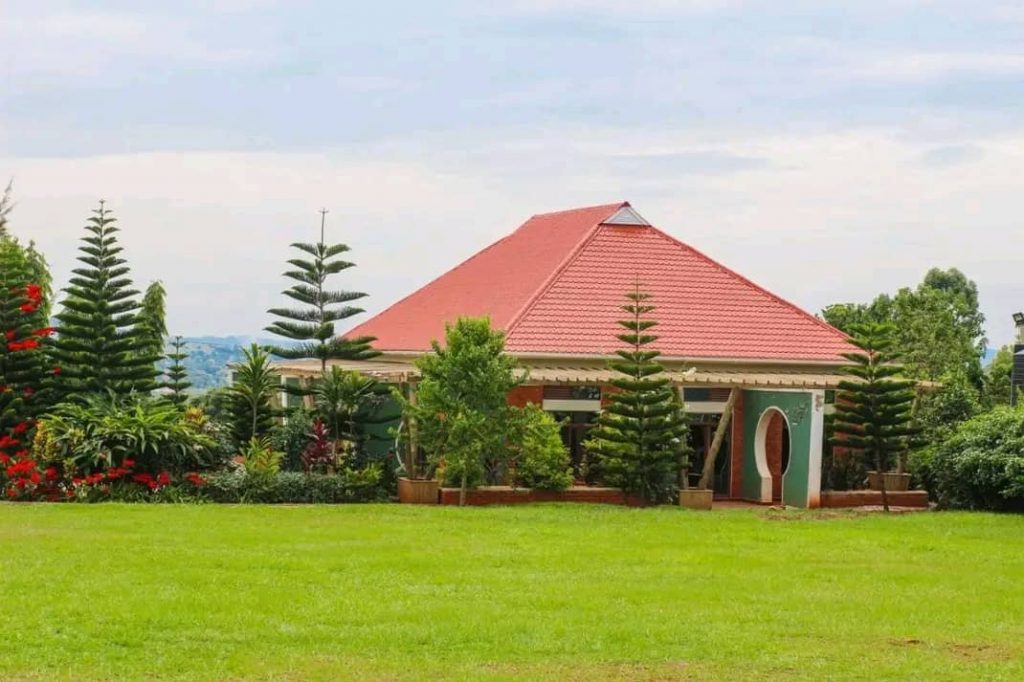
Luxury, Comfort And Elegance Awaits You When You Decide To Spend a Weekend At Kinzi Apartments

0

Are you stuck without any idea of where you would spend your last weekend of July to refresh your minds for a new month ahead, look no further, we’ve got you sorted to meet your needs and desire for comfort.

The only place that will give you a peace of mind is Kinzi Apartments, Bar and Restaurant situated just few kilometers from Jinja’s central business district in Bugembe along Buwekula Road.

At Kinzi you will always feel like staying for more days because it has whatever you would love to find in a self contained and furnished apartment. Two big bedrooms, a fully installed kitchen, DSTV and a spacious sitting room and dining room at friendly prices.

Kinzi offers both long stay and short stay residencies and it’s upon the client to have lunch, breakfast and dinner from the modern restaurant or cook for themselves.

Besides the apartments for accommodation, Kinzi also has spacious gardens that can handle any kind of event from birthday parties to Concerts with a bar in the same place.

Call or WhatsApp +256 705 533833 to place your booking today or visit their website via https://akkinzi.com/

If you have a story in your community or an opinion article, let’s publish it. Send us an email via editorial@accordconsults.com or WhatsApp +254797048150


Museveni Gov’t Runs To Foreign Bank For Loan To Facilitate Appetite To Buy Roke Shares

0
MP Keefa Kiwanuka

The Government will borrow over Shs202billion from the Trade and Development Bank (TDB) to acquire preference shares in a local firm, Roko Construction Limited.

Formerly the PTA Bank, TDB with operations in 22 countries is the financial arm of the Common Market for Eastern and Southern Africa (COMESA) where Uganda is a member.

The Minister of State for Finance (General Duties), Hon. Henry Musasizi on Wednesday, 13 July 2022 told the Committee on Finance, Planning and Economic Development that the funds will be used to ‘bail out’ the construction firm with the necessary liquidity to meet its operational needs.

Musasizi was appearing before the committee to defend government’s proposal to acquire 150,000 preference shares in Roko worth Shs202.13 billion.

“We proposed that government injects US$42 million, an equivalent of Shs152billion in the company through acquisition of 150,000 preference shares at the nominal value of Shs1million per share and the share premium of Shs57.13 billion. The share premium consists of financing cost and exchange rate costs associated with payment of preference shares over five years from the Trade Development Bank,” Musasizi said.

Government’s plan to acquire shares in Roko started in 2019 after President Yoweri Museveni in his letter directed the finance ministry to negotiate with Roko, but cautioned that all required legal procedures must be followed.

Musasizi said Roko has faced severe liquidity challenges that have hampered its operations, saying it is prudent that government take up shares to salvage the firm from possible liquidation.

“The company owes Shs46.8 billion to suppliers and subcontractors who would also collapse or left to near death if the company was to be wound up. The company owes Shs154.7 billion in terms of loans and Shs130.9 billion in bank guarantees which would cause further burning sector instability if in the midst of the constraints, the banking sector is faced with the results of the COVID-19 pandemic,” he said.

The meeting hit a stalemate after MPs on the finance committee questioned why Roko is selling preference shares to government yet the company’s Articles of Association does not allow any sale of shares.

“Government wants to buy shares, but how do we proceed when the seller [Roko] has not offered any shares for sale? We cannot proceed to process this proposal because due diligence needs to be done. We are here to support the process, but we must proceed correctly,” Hon. Patrick Isiagi (Kachumbala County) said.

Minister Musasizi retorted that Roko directors on 22 October 2021 during an extraordinary general meeting of shareholders sat and amended the company’s Articles and Memorandum of Association to approve the creation of 150,000 preference shares to be allotted to government.

However, according to Musasizi, Roko has not yet registered the new resolutions with Uganda Registration Service Bureau, a government body that registers all businesses for fear of incurring a stamp duty amounting to Shs800 million.

“The resolution by Roko is available. What is missing is the registration. Resolutions require to be registered with URSB and there was a provision of stamp duty which has since been waivered. I promise the committee that the registration of the resolution will be done soon,” Musasizi said.

His statement was not well received by the MPs who wondered why the minister is “putting the cart before the horse.” The committee declined to proceed with the process until the legal procedure of registering the resolution to allow government acquire shares is concluded and legitimized.

“Roko has never registered the resolutions because of the cost implication and yesterday [Tuesday, 12 July 2022], they opted to give us a draft resolution which was rejected. So I believe the minister should go back and ensure that this resolution is registered for us to proceed with the process,” Hon. Enos Asiimwe (Kabula County) said.

Even with that some MPs still think that it is not economically viable for government to acquire preference shares in Roko.

“Government will only be given dividend of 4.7 per cent in return, but will incur over 6 per cent in costs. Is this really an investment or it is a bailout for Roko?” Hon. Karim Masaba (Mbale Industrial Division) asked.

Mukono Woman MP, Hon. Hanifa Nabukeera foresees a situation where this Share Subscription Agreement could push government to pay liabilities that Roko has incurred over time.

SOURCE: Parliament Of Uganda

If you have a story in your community or an opinion article, let’s publish it. Send us an email via editorial@accordconsults.com or WhatsApp +254797048150

OWEYEGHA-AFUNADUULA: Understanding Why So Many Development Projects Have Always Failed In Uganda (PART TWO)

0
President Museveni Launching the Parish Development Model

By Oweyegha-Afunaduula

Success and failure are not necessarily antagonistic. They are cyclic, one feeding into the other. They are just like life and death, which are also cyclic, one feeding into the other.  When you succeed, the next experience is failing, and when you fail the next experience is succeeding.

We can learn from both success and failure, and thereby improve our situation. If we don’t learn from success and failure, then we cannot unlearn and relearn. The aim should be to improve on success and reduce possibilities of unwelcome failure.

One thing is true. Most people, countries or institutions do not see success as an essential aspect of failure and vice versa. They hate failure, as if failure does not teach how to succeed. All they want is success. They get disappointed when they fail, and refuse to take lessons from failure.

Many people have committed suicide rather than face failure and make good out of it. Some institutions have wound up because they failed. But we should accept failure as a necessary evil, although we must not strategize to create opportunities for it to dominate. We should take it as sorhing that spurs or should spur us to do better.

De-regulation (the removal of restrictions and regulations) has failed to fulfill its promises of vigorous competition and rising production. The country is now heavily dependent on foreign “aid” rather than domestic production.

Competition is being undermined by Government itself, specifically the Presidency and State House ( the official home of the First Family). These prefer certain economic actors and spoon-feed them by availing them with free money, free land, free electricity, free water, no taxes, – all at the expense of indigenous economic actors.

Businesses of political businessmen and business women beat whatever deregulatory laws are in place to avoid competition and cheat the citizenry. Besides, whatever deregulatory laws are in place have left consumers at the mercy of a volatile and insensitive market place.

Life has become difficult for the absolute majority of Ugandans because business actors seem to have connived, or are conniving to rob citizens to the bone, often in league with preferred foreigners in business.

Liberalization, which in Uganda involved relaxation of government controls in economic terms, not political terms, has meant that it is not entirely successful. Politicians in power have often undermined it with their own choices in trade and business.

For example, while it is government policy to trade and do business with any country competitively, President Tibuhaburwa Museveni has just announced that Uganda will engage in (failed Barter Trade) with Iran.

Besides, increasing Business and Trade in Uganda, and between Uganda and other countries is now almost the exclusive right of a small group ethnically connected to the occupiers of State House or those connected to them economically, politically and socially.

Liberalization is a failed project in Uganda. It continues to be mentioned because it helps conceal the truism that trade and business in Uganda and between Uganda and other countries are largely in the hands of the First Family and those connected with it socially, economically and politically.

Privatisation, the transfer of everything public to private ownership and control (which is robbery from the poor) was, in 2015, pronounced failed in Uganda by the President of Uganda, Tibuhaburwa Museveni.

That was 20 years after World Bank and IMF enforced it. All that time the President defended it as the best approach to economic development. Even then the President and politicians in Government continue to evoke it to justify their ineffectiveness to intervene when citizens demand that Government acts to relieve their suffering at the mercy of private actors, as if it is a success story.

When told that privatisation is disadvantaging indigenous business, the President defends it when long ago he admitted it was not working and is not working. The beneficiaries of dysfunctional privatisation are the business entities preferred, floated and supported financially by the President with public money, free land, tax holidays, free electricity and free water, or those private individuals connected to power.

This cannot be privatisation.  There are claims the firms taken as islands of privatisation in Uganda are propped up and protected by power, however much their activities hurt the citizens because power has special interest in them.

A good example, is Roko which works in other East African countries where it does not get favours from power, but in Uganda Uganda it does, even when its performance meteorically falls to intolerable levels.

Today, the President wants Parliament to allocate some 200 billion shillings to Roko even when the number of unfinished Government projects entrusted to itto construct  has risen to an intolerable level.

When it would have been wiser to give the money to UPDF Construction firm, whose performance has been rising from Government Project to Government project, the President is ignoring it as if it does not exist or has not performed.

There also very many other construction firms of indigenous Ugandans that have performed better than Roko, but the President is by-passing them. Of course, if the President does not consider them as useful to the economy, they cannot be supported with public money the way the President wants Roko to be supported.

In spite of the failure of the four principles of neoliberalism in Uganda, the World Bank and IMF are still very much at the centre of Uganda’s economy. The reason is that the NRM government opened the avenue for them to pump more  money in the economy and possess it in terms of loans.

Uganda can no longer do anything, including paying salaries, without loans from both World Bank and IMF, but also from China. For example, following the Covid 19 pandemic in 2020, the two IFIs came in with another Uganda Economic Recovery Programme. A lot of money has been pumped into the economy, ostensibly to manage the pandemic and spur the economy.

However, on the ground little has been registered as development, transformation and development of our health sector and other sectors of the economy. Instead we saw lots of construction of skyscrapers, hotels, arcades, petrol stations and supermarkets.

Many believe money got as loans ended up in the hands of unscrupulous people. However, power believes corruption builds the economy. The question persists: “Who in foreign aid helps who?” It continues to be relevant in the case of Uganda.

The Era of Presidentially-dominated Projects is not mutually exclusive from the Era of World Bank/IMF dominated Projects. Ever since the application of the Principles of neoliberalism failed in Uganda,  the Government of Uganda propose projects and the two IFIs provides the necessary finance to support them.

Unfortunately, the majority of the projects fail because of poor management corruption and failure of the two IFIs  to adhere to World Bank’s “Social and Environmental Guidelines”

This way, in Uganda, the two IFIs have become like the China Development Bank (CDB), the Industrial and Commercial Bank of China (ICBC), Sinosure, China Export and Credit Insurance Corporation ( CECIC)  and China Export and Import Bank (CEIB), all of which are unbothered about human rights abuses and social and environmental impacts of the projects they support.

This explains why President Tibuhaburwa Museveni has preferred Chinese financial support of the projects he initiates, such as roads, railways, Kampala-Entebbe Highway and Entebbe Airport. Unfortunately, the easiness with which President Tibuhaburwa Museveni secures Chinese loans has led to overindebtedness of Uganda.

Apart from being at the centre of international finance coming into Uganda via loans and grants, President Tibuhaburwa Museveni is at the centre of money moving between the Parliament of Uganda (which approves funds for projects, programmes and institutions) the economy; Treasury; the  Parliament of Uganda and State House; the Parliament of Uganda and the programmes and projects that he personally initiates and. Ecome cast as Government programmes and projects. Many of them have collapsed but many that survive operate below capacity at very high cost to the tax payers of Uganda.

Money draining presidentially-initiated projects that have collapsed include: Bonna Baggagawale and Emyooga. Those that are operating below capacity at very high cost include Bujagali Dam and Operation Wealth Creation (OWC).

In many cases, money is released even before their feasibility is assessed. When the money is released, those in the decision chain say, “The President has directed”. What this often means is  that normal project process will not be followed.

Therefore, the overriding factor responsible for the high failure rate of Government projects is that the President of Uganda, Tibuhaburwa Museveni, has positioned himself at the centre of the process of each project, making them more or less political projects.

This has obscured the normal project process phases of initiation, planning, execution, monitoring/controlling and closing. Sometimes projects are initiated even before they get parliamentary approval, because the President of Uganda has desired them.

Many are managed by people who are not professionals or experienced in managing projects, but whose main justification for being in charge is either royalty or interconnectivity to the powers that be – politically, ethnically or by kith and kin.

A lot of money that would otherwise be invested in development, transformation and progress of Uganda’s communities in particular and Uganda in general is being invested in potentially failed projects or ending up swindled by people not committed to the projects initiated by the President.

If we are to effectively combat corruption and wastage of public resources we must “depresidentise” Government projects, allow institutions to work and ensure the normal project process is followed and managed by professionals, not nicompoops.

When a project is proposed, we should rely on our intellectual capital to publicly debate the pros and cons of the project. Parliamentary debates are not enough because they are of very poor quality, if they take place, and based on the dictum that “What the President Desires Cannot be Contradicted”.

In one sentence “We must deburden development with Presidentialism, which is responsible for militarizing development projects and institutions that used to effect development professionally”. Otherwise myths will continue to dominate development in Uganda to the detriment of Ugandans and our country.

For God and My Country

The Writer is a Ugandan Scientist And Environmentalist

DISCLAIMER: The views expressed in this article are solely for and belong to the author/ writer. They don’t portray, reflect or represent Accord Communications Limited, it’s affiliates, owners or employees. If you have a story in your community or an opinion article, let’s publish it. Send us an email via editorial@accordconsults.com or WhatsApp +254797048150

A BIG OFFER TO GRAB: Free Venue for Your Party, Event at Kinzi Apartments and Gardens

0
Kinzi Gardens

Kinzi Gardens
It’s always a headache for people organizing parties to find a convenient place for their event which will save them the time, the hustle of moving up and down with other service providers to make it happen successfully.

Look no further, Kinzi Apartments located in Jinja City just few kilometers from the Central Business District (CBD) are presenting to you a big offer where you will stage your birthday, house party, anniversaries, surprise parties among others for free in their gardens.

Kinzi Gardens

According to management, any client who is purchasing their drinks, their food in their restaurant is free to stage a party in their gardens at no cost. As other businesses are hiking prices to stay afloat in businesses, Kinzi Apartments is giving its clients offer after offer after offer to enjoy their lives to the fullest.

Their gardens can host as big as 15,000 people at ago so it’s a perfect fit for all your needs, Call or WhatsApp +256 705 533833 or visit their website https://akkinzi.com/ to place a booking at this luxury place.

Kinzi also boasts with a fully stocked bar, a restaurant that prepares all dishes. They also in another of the same place have luxury apartments that are designed with modern interior furnishings, a fully stocked and installed kitchen, DSTV, a well spacious sitting room and bedrooms.

If you have a story in your community or an opinion article, let’s publish it. Send us an email via editorial@accordconsults.com or WhatsApp +254797048150

CROSSFIRE: UNATU Bosses Blasted For Betraying Suffering Teachers And Insisting on a Fruitless Strike

1

CROSSFIRE: UNATU Bosses Blasted for Betraying Suffering Teachers and Insisting on a Fruitless Strike

The good news that every parent wants to hear is that of arts teachers ending their sit-down strike which they launched last month demanding a pay rise as their science counter parts who will start taking home a whole UGX4m.

But the bad news is that they are returning to classes unhappy and without doubt the innocent children will definitely pay the price like it has always been because their mentors were forced to resume duty without striking any money deal with government.

It was Sunday when all UNATU district heads thronged Kampala for a meeting at their headquarter located at teacher’s house, by the end of the meeting as the teachers spoke in unison to continue with the strike, it was revealed that they were set to meet president Museveni the following day.

The UNATU secretary General Filbert Baguma who has been speaking with determination changed his tone regarding the industrial action from “No money, no returning to classes” to things like “Museveni our father, we are his children”.

And indeed they met him at Kololo, the father managed to convince his children (the striking arts teachers) without a money deal to return to class an attend to his grand children who have spent three weeks without arts lessons.

However, like never before the bitterness is visible on those who were standing in solidarity with the teachers in their cause of action because they deserve better. The comments on UNATU’s update which ended the strike is evident in the comment section where majority are blasting UNATU for insisting and finally giving in to president Museveni’s promises which will probably come after some time since his stance towards arts teachers clearly shows they are not that important like their science counterparts.

This publication managed to get you some of these bitter comments.

RELATED STORIES
Government Threatened To Fore The Striking Teachers (Read Story Here)

Teachers Fired Back And Vowed To Continue With Their Strike (Read Story)

Government Calls Them for Talks (Read Story)

Teachers Remain Unmoved And Continue With Strike(Read Story)

Boom!!! Teachers End Strike Without any Deal With Government (Read Story)

If you have a story in your community, let’s publish it. Send us an email via editorial@accordconsults.com or WhatsApp +254797048150

TOP STORY: Gullible Striking Arts Teachers Forced Back to Class Without a Single Money Deal with Gov’t

1

All arts teachers who have been on strike since 14th’s last month over pay rise have finally accepted to end their sit-down strike after government insisted there’s no money for arts teachers and there’s totally nothing that government can do for them at the moment.

This followed a long meeting with president Museveni, his wife Janet who is also the minister of education, ministry of public service Muruli Mukasa, in the meeting president insisted on his earlier stance that scientists first then others will follow process by process.

According to president Museveni, his government is committed to improving the welfare of all public servants but even after 36 years in power, they are dealing with the most immediate ones and those are the scientists as they find ways of appeasing other public servants who did napoleon Bonaparte and Shakespeare.

While announcing the end of the sit-down strike by the arts teachers country wide in a video update from Teacher’s house, Filbert Baguma, the General Secretary for Uganda National Union who yesterday informed the teachers that after government insisted that there’s no money, they had two options.

The first option was to continue with the strike and close the door for negotiation or end the strike and keep the door for negotiations if government can have a second thought in this very financial year and be merciful to add something on their ka money as science teachers take their UGX4m home. They opted for option number two of ending the strike and keep the door for negotiations open.

This brings three-week long strike for arts teachers who are resuming to classes without a single deal with government as other public servants also prepare to launch their sit-down strike in few days with Lecturers in public universities, local government workers including Chief Administrative Officers (CAO) who had been directed by government to record the striking arts teachers to be removed from payroll.

Others set to strike are non-teaching staff at universities who also alerted the ministry of education that they are not comfortable with what government gives them.

It has always been the language of laying down tools that government has always heard, it heard that of doctors last year but for the arts teachers it has insisted and teachers were left with only two options either to quit and do other jobs or go back to class unhappy and teach the children.

Related Stories

Government Issues First Threat To Teachers (Read Story Here)

Teachers Hit Back At Government (Read Story Here)

Government Invites Striking Teachers For Talks (Read Story Here)

No Money, No Returning To Classes (Read Story Here)

UNATU leaders Blasted For Ending Strike Without Deal (Read Story Here)

If you have a story in your community or an opinion article, let’s publish it. Send us an email via editorial@accordconsults.com or WhatsApp +254797048150

VIDEO: “No Money, No Returning to Classes”- Striking Arts Teachers Insist Ahead Of Meeting With Museveni

0

Striking arts teachers who laid down their tools have insisted to continue with their protest until government avails funds to increase their pay in this very financial year 2022-23 as their protest enters fourth week.

Teachers under their umbrella Uganda National Teacher’s Union (UNATU) started their sit-down strike on 15th June 2022 immediately after the national budget of 2022-23 was read. This followed a salary increment of their science counterparts who will be taking home a fat UGX4m.

Science teachers won the battle to increase their salaries after striking and it seems to be the only language the Museveni government hears.

Last year, Heath workers under their umbrella Uganda Medical Association (UMA) also laid down their tools for almost 3 weeks, Nurses under their umbrella Uganda Nurses and Midwives Council also laid down their tools, science teachers too laid down their tools, Arts teachers are also on a strike as Lecturers in all public universities, Local government workers and non-teaching staff in public Universities are also set to strike due to low pay.

As UNATU met all their district representatives, they all spoke one language in unison of NO MONEY, NO RETURNING TO CLASSES and they’re set to meet president Museveni for further discussions on how their ka money will be increased to match their science counter parts.

As of today Monday 04th, July 2022, the sit-down strike of all arts teachers is still ongoing until their strike a deal with government.

VIDEO OF NTV Uganda

Government Threatened To Fire Striking Teachers (See Story Here)

Striking Teachers Fired Back To Gov’t (See Story Here)

Government Called Striking Teachers For Talks (Story Here)

If you a story in your community or an opinion article, let’s publish it. Send us an email via editorial@accordconsults.com or WhatsApp +254797048150

OWEYEGHA-AFUNADUULA: The Use And Misuse Of Public Resources To Wrong Ends In Uganda (PART TWO)

0
President Museveni Launching the Parish Development Model

By Oweyegha-Afunaduula

Virtually all my children were not old enough to understand the dynamics of governance and leadership in Uganda by the time Tibuhaburwa Museveni and his National Resistance Army (NRA) rebel outfit, composed of many refugees ( previously constituted as Front for National Liberation, FRONASA, and some Ugandans), captured the instruments of power in 1986. Most refugees had roots in Rwanda, while others had roots in the Mulenge area of Congo (now Democratic Republic of Congo DRC).

One of my children was 15 when NRA arrived in Kampala from the bushes of Luwero. My twins ( a boy and a girl) were 6 years old, another was 3 years old, another was 2 years. Two others were born after 1986 – one in 1987 and the last one in 1990. They have grown up and developed into adults during the more than 36 years of President Tibuhaburwa Museveni’s rule

One may say the use and misuse of public resources to wrong ends is corruption, and that it is proliferating throughout the country, mainly politically, to benefit a small group of people at the expense of the rest of Ugandans.

For example, the sectors of education, agriculture and health, and the Institutions of police, army and prisons, and even business and commerce, have all been captured to benefit the group, using the Competitive Exclusion Principle (CEP) to disadvantage those traditionally and constitutionally recognized as the indigenous cultural groups of Uganda.

But while excluding the Banyarwanda that were inserted in the Uganda Constitution 1995, to make the once migratory refugees (seeking grass and water for cattle across the border between Rwanda and Uganda) access everything – jobs, political offices, judicial offices, land, money, et cetera unabatedly.

In this article I want to focus a little more on the natural public resources of air, water, forests, swamps, wildlife, and humanity, which is the most critical resouce in development, but are all being increasingly used and misused to wrong ends for power, money, glory, domination and control of indigenous communities for the livelihood benefit of a small, exogenous group of people.

The use and misuse of the public resources is now institutionalized, starting with the fused Presidency and State House and ending with the fusion. Parliament and Judiciary are now tuned to facilitate the use and misuse of resources in the country.

I will call the resources collectively “The Commons”, and what is happening to them “Tragedy of the Commons”. Let me define the Commons as: “The cultural and natural resources accessible to all members a society, including natural materials ( such as soil gold, Iron ore, copper and platinum), air, water, forests, swamps, wildlife, waterfalls and a habitable Earth”.

The resources are held in common, even when they are owned privately or publicly. However, as I have intimated above, the tendency is for the private to predate on what is public, diminishing it to small proportions. The private is tending to increasingly transmute into being owned by a small group linked ethnically and in terms of kinship.

Power and money are being used and misused by a few politically and militarily influential people to dispossess the public and convert public resources and the Commons into their individual possessions.

Not by accident, virtually all of the dispossessed belong to the invasive ethnic group of Uganda, and a few of those assimilated by it. Swamps, forests, Lakes, Land and River Nile are under siege.

The air is being polluted unashamedly, with dire Consequences for the stability and sustainability of our climate. Climate Change is now a constant threat, despite Institutionalization and centralization of Environmental Management. In one short sentence: Power, money and ethnicity pose the greatest threat to Uganda’s public resources”.

This is the Tragedy of the Commons of Uganda. According to William Forster Lloyd (1833) the Tragedy of Commons refers to a situation, in which individuals with access to a public resource (also called a common) act in their own interest and, in so doing absolutely deplete the resource.

However, according to Gorret Harden (1968), the Tragedy of the Commons describes a situation where shared resources are overused, overexploited and eventually depleted, causing risks to everyone involved. Whatever definition we use, the ultimate end of abuse of the Commons is destruction and depletion, consciously or unconsciously.

It is conscious destruction when a government allows polluting industries to be established, and their pollutants directed into the air or in the Lakes. It is conscious destruction when a government converts a natural forest into oil palm or sugarcane plantations.

It is conscious destruction when a government converts a swamp into an industrial estate.
It is conscious destruction when a government erases the waterfalls of River Nile, which even God himself mentions as ” rising, and falling (Amos, 8:8) and flooding (Job, 38:36) of the Nile” , thereby acting anti-God.

It is conscious destruction when politically and militarily powerful people, or even foreigners from a neighboring country grab miles and miles of land in wildlife corridors or other natural ecosystems to establish artificial monocultures for individual aggrandizement without consideration of present and future generations.

It is conscious destruction when a government allows foreigners from China to mine sand from the shores of Lake Victoria, deplete natural fish and transfer them to their country, and introduce genetically modified fish in the Lake.

It is conscious destruction to mine gypsum or oil in natural ecosystem, destroy ecological and environmental values of the country in favor of money value.
It is conscious destruction to erode the quality of life of human beings and other beings just to satisfy one’s insatiable greed and selfishness.

All this and more are what my children and other children of Uganda have grown up witnessing: the use and misuse of God’s creations, which we need to enjoy wholesome living. But they have seen more.

They have seen their country, which was once divided into 15 Nation States (i.e., Acholi, Ankole, Buganda, Bugisu, Bukedi, Bunyoro, Busoga, Karamoja, Kigezi, Lango, Moyo, Sebei, Teso, Toro and West Nile), but now also include the Rwenzururu Nation State, being dismembered through bantustanisation, by creating numerous, meaningless, unviable districts, just to enhance the power of the President over Uganda, people and its public resources.

This process has not only disconnected, peoples, cultures and resources, but has intensified the the use and misuse of public resources and, hence, destruction of natural public resources. The destroyers are tending to be a small ethnic group, who are also increasingly the Resident District Commissioners (RDCs) reminiscent of the British Colonial District Commissioners that I grew up seeing.

My children, my grandchildren and all children and grandchildren of Uganda have seen what abuse of office and power means in real terms. The Colonial British District Commissioner were dispatched to the British Colonial Governor resident in Entebbe State to extend his sovereign power over the natives.

Similarly, the post-colonial Resident District Commissioners are dispatched by the President of Uganda to extend and proliferate his power and authority over Ugandans, which is increasingly absolute and dictatorial.

It is making the claimed liberation of Uganda a myth. It is no longer security of Ugandans and their properties, security of Uganda or security of future of or future generations. It is security of the President, the small ethnic group dominating power, its unchallenged access to the natural public resources, and the diminishing State of Uganda, now reduced to a Deep State of people that are closely related ethnically and in terms of kinship, and sub served by people of other ethnicities eager to make ends meet in an increasingly unjust status quo.

If there is going to be another and genuine liberation it will be from this status quo. The liberation promises to be more bloody than any socio-polical conflict so far witnessed in Uganda, unfortunately. If other socio-political conflicts have involved foreign elements, the next liberation will involve foreigners who will manifest as Mercenaries. Mercenaries are soldiers paid to reign terror in the heart s of civilians and nations.

However, the mercenaries are likely to be Blacks. not Whites. This will this be unlike the sociopolitical conflicts of the 1960s and late 1990s in Congo, which involved White Mercenaries. The White Mercenaries of Congo were small bands of armed soldiers of Fortune.

But the coming sociopolitical conflict in Uganda, will involve Black mercenaries in their thousands. Some may come from Rwanda and others may come from Eastern Congo. According to the Revelation God has given me they will reign terror all over Uganda to retain it and it’s resources for themselves.

The recent announcement that Uganda has Gold reserves worth $12 trillion, half the Gold reserves of Congo; and the fact that the country has proven oil reserves and numerous elements of power (such as Cobalt, Platinum and Aluminum), which are used in high-tech industries, suggests that at the centre of the coming social political conflicts in Uganda will be natural public resources, some of which are already monopolized by power and are being used and misused to wrong ends.

It goes without saying that foreign powers such as China, Russia and USA, will position themselves to benefit greatest from the sociopolitical conflict. The socio-political conflict will reduce the population of Uganda, which is already almost the youngest in the world. The old will succumb to the combined vicissitudes of Nature and the terror that will be reigned.

Uganda will remain as one huge mine with small pockets of people. Ugandans who are abroad will remain there permanently, completely unconnected from their country. My children and grandchildren, and all the children and grandchildren of Uganda, should awaken to the coming reality.

Ugandans might be the Maoris, Aborigines and Red Indians of Uganda, reduced non-entries in their own country, and to nothing more than a cheap source of labour, with everything taken away from them.

One thing is true. It is not your security or the security of Uganda that is driving the over-militarization of Uganda, but the protection of the interests of a small purist group of people with all eyes focused on the natural resources of Uganda.

Ensuring the quality of life of Ugandans through strategies such as minimum wage, fair prices, equal opportunities, and equality in salaries for similar qualification, experience and professionalism is not a priority.

Besides, Money bonanzas to a few individuals, partially-oriented to the ruling class, are not about to end. So other schemes like Bonna Baggagawale, Emyooga, Operation Wealth Creation and Parish Development Model, promising illusionary richness, will be unleashed.

Divide and Rule will continue to be developed and applied as a formidable tool for disempowerment, domination and control unless Ugandans themselves reject and resist divisions, especially along political lines.
For God and My Country

The Writer Is a Ugandan Scientist And Environmentalist

DISCLAIMER: The views expressed in this article are solely for and belong to the author/ writer. They don’t depict, reflect or represent Accord Communications Limited, it’s affiliates, owners or employees. If you have a story in your community or an opinion article, let’s publish it. Send us an email via editorial@accordconsults.com or WhatsApp +254797048150

BIG STORY: Gov’t Bows To Pressure, Invites Striking Arts Teachers For Talks

1

After issuing threats and ultimatums in her previous communication to the teachers through their umbrella UNATU, Minister of Public Service Permanent Secretary Catherine Bitarakwate has jotted another letter inviting striking teachers for talks.

In her June 22nd letter to teachers, Bitarakwate issued a government directive which gave teachers upto 24th June to either get back to class or resign and she also ordered Chief Administrative officers to note down all striking teachers to be deleted from the government payroll.

However, the defiant UNATU leadership ordered their members not to succumb to threats and ultimatum but continue staying away from classes. This was followed by more threats by Prime Minister Nabbanja, Minister Chris Baryomunsi among others who all re-echoed the same threats that didn’t push back the striking teachers back to class.

With teachers still determined to stay away from classes until their grievances are addressed, government has invited UNATU leaders for talks to discuss the way forward.

“This is therefore to invite you and four of your union executive committee members with the ministry of public service on Friday 1st July 2022 at 2:00pm in the ministry boardroom. The issues will focus will on issues raised for industrial action”- reads part of the invitation.

Arts teachers under UNATU laid down their tools on 15th June immediately after the reading on the national budget after government increased salaries of their science counter parts by over 400% with UGX4 million.

If you have a story in your community or an opinion article, let’s publish it. Send us an email via editorial@accordconsults.com or WhatsApp +254797048150

Over 1400 Graduate at Busitema University.

0

A total of 1491 students have been awarded degrees, diplomas and masters in various disciplines at Busitema University in Busia district.

Those who graduated at the 12th graduation ceremony included 512 females and 979 males representing 34% and 66% respectively.

They received their awards at the university on Friday, in a ceremony officiated by the Vice President Maj. Rtd. Jessica Alupo and Woman Member of Parliament for Katakwi district on behalf of President Yoweri Museveni.

In a speech read by the Vice President, Museveni said today’s education strategy is intended to produce a literate, skilled and intellectualised population with the ability to transform our society into an industralised, middle class and skilled service-oriented society.

The President said it is a deliberate intention as government to promote sciences more because, he said, this was the fastest way to develop Uganda’s economy.

The President noted that the second strategy was to provide research funds to support scientific and innovative work. “We are beginning to see that this is possible as research funds have been usefully expended”, he added.

Museveni noted that one of the key challenges facing many Africa countries, Uganda inclusive, is the high level of unemployed youths, many of whom are university graduates.
He explained that indeed, the education system in most of our countries produces youths who have limited or no skills which makes them job seekers rather than job creators.

The President said this is symptomatic of the colonial type of education that still engulfs our education system in Africa, and which Uganda is progressively moving away from.

The President encouraged graduates to develop a positive attitude towards work as well as keeping morally upright.

“Do not despise work. Take up any work opportunity that presents itself before you, however humble,” the president noted. He urged them not to despise small beginnings that can enable them to acquire experience and valuable skills.

This, the President said, would enable the graduates to widen knowledge in areas of their speciality; make them relevant and marketable not only domestically but also globally.

He noted that government is working hard to attract local and foreign investment in all the sectors of the economy with the aim of creating enough jobs for the population.

He told graduads that graduation day marks the end of one journey and beginning of yet another important journey in their lives.
“You will therefore, need to remember that your behavior and conduct in terms of integrity, honesty and hard-work are key drivers to your success in this world,” Museveni said.

The president urged graduands to refrain from reckless and dangerous lifestyles such as drunkardness, sexual promisuity and extravagant spending.

“Government and Parents have made endless sacrifices to educate you. It will be great indiscipline if you waste away your lives in trivialities after such sacrifices have been made to make you a better citizen of your country,” Museveni noted.

The Pesident quoted Luke 12:48 ” to whom much is given, much is required and therefore alot is expected from the graduands in terms of building Uganda and their respective families:, he counseled.

The University Chancellor Prof. Vinand Nantulya urged graduands to continuously adapt to the digital environment in order not to be left behind. “Despite our many difficulties, Uganda offers enormous opportunities for innovation in virtually every field. If you aim to serve you will find unlimited opportunity,” Nantulya said.

Vice Chancellor Prof. Paul Waako noted that Busitema University has continued to rise in areas of research where the institution has won grants like the Parish level Night-a Day solar crop dryer and 30 tonne silo storage system which has been selected for funding under the National Research and Innovation Program.

State Minister for Primary Education Joyce Kaducu thanked parents and guardians for investing in their children education.
She also urged the graduates to continue studying and searching for knowledge so as to keep abreast with new developments in the World.

If you have a story in your community or an opinion article, let’s publish it. Send us an email via editorial@accordconsults.com or WhatsApp +254797048150