Thursday, April 30, 2026
Home Blog Page 89

Government Backtracks On New Pensions Bill

0
Attorney General, Kiryowa Kiwnuka (2nd L) chats with other MPs when the House was suspended for a break. He withdrew the bill on a new pension fund

Government has withdrawn a new pension Bill that was recently tabled in Parliament.

The Public Service Pensions Fund Bill,2023 introduced on 14 March 2023 aimed at implementing a mandatory contribution system for public servants’ pensions.
However, the bill underwent significant changes during the committee review, prompting the decision to withdraw it.

Attorney General, Kiryowa Kiwnuka (2nd L) chats with other MPs when the House was suspended for a break. He withdrew the bill on a new pension fund-Photo Credit: Parliament

Under the proposed legislation, every public servant would be required to contribute five per cent of their gross salary to the pension fund each month, while the government’s contribution would be reduced to 10 per cent of the employee’s gross salary.

This would mark a departure from the current system in which the government contributes 100 per cent to the pension fund.

FOR THE BEST WEB HOSTING, WEB DESIGNS AND DOMAIN NAMES, CALL OR WHATSAPP +256758201313

The Deputy Speaker, Thomas Tayebwa while presiding over plenary on Tuesday, 23 May 2023 said that over 60 per cent of the bill had been modified by the Committee on Public Service and Local Government.

“I have noted that the proposed amendments are numerous and substantially change the content and subject matter of the bill thereby changing the bill that was published and introduced by the government for first reading,” Tayebwa said.

Attorney General Kiryowa Kiwanuka, upon request, officially withdrew the bill, expressing no objections.

He  acknowledged the financial implications of the amendments and commended the committee’s work.

He said the executive will scrutinize the bill thoroughly and promised its reintroduction at an appropriate time.

Tayebwa emphasized the importance of the bill and urged the Executive to expedite its review.

The committee’s report had outlined several key recommendations, including the prohibition of borrowing by the pension fund’s board to avoid high interest rates and borrowing risks.

The committee had also proposed changing the date for monthly contributions to the 15th of the following month to prevent delays in salary disbursement.

The proposed Public Service Pension Fund would operate similarly to the private sector’s National Social Security Fund (NSSF).

SOURCE: PARLIAMENT OF UGANDA

If you have a story in your community or an opinion article, let’s publish it. Send us an email via ultimatenews19@gmail.com or WhatsApp +255769138299

JUST IN: Yet Another Shooting As Police Officer Shoots Self Dead

0

Uganda has been recording random shootings in the past one month, some have been fatal while others while others have left the victims severely injured. Police says there’s cause for alarm and insist the country is safe.

This month alone, Private Sabiiti shot and killed minister Charles Okello Engola, turned the gun and killed himself, days later blogger Tusubiira Isma alias Isma Olaxess was gunned down in the same area of Kyanja.

FOR THE BEST WEB HOSTING, WEB DESIGNS AND DOMAIN NAMES, CALL OR WHATSAPP +256758201313

Police Constable Ivan Wabwire shot Utam Bandhari a money lender at Raja Chambers, he has was arrested at the Busia boarder while escaping to Kenya, he has since been charged and remanded to prison.

Security guards in Makindye fought after a disagreement, this left one dead. A police officer shot a UPDF soldier in Mbarara after a disagreement reportedly after the victim took a selfie with a woman in the police barracks.

Few days later, a private security guard attached to Saracen Security company shot his colleague dead in Tororo when the two had a disagreement in the Tororo senior quarters where they were deployed. Another security guard shot himself dead at Mukwasi house along Lumumba avenue in Kampala.

Few days a go a police officer in Mukono shot at a female UCU student whom he mistook as a thief in Nabuti village, Mukono municipality. It’s now been reported that a police officer in Kasanda district has shot himself dead.

According to police, the deceased has been identified as No 1037 PC Kitiyo Alex who was attached to Makokota police post in Kasanda district.

“Preliminary facts indicate that today 24/05/2023 at about 500am at Makokota trading centre police constable Kitiyo woke up and shot several bullets into the room of his in charge police post Inspector of Police John Kakooza while not talking anything, then he later returned to his room, sat on his bed and shot himself dead.”-reads part of the police statement

It’s not yet clear what prompted the man in uniform to take his life but on several occasions most of these have been attributed to stressed and poor working conditions.

This comes at a time when several members of parliament have received death threats from people who have since identified as Tired Men in Uniform and police is investigating this.

Tell us what you think about these developments in the country, our comment section is open.

If you have a story in your community or an opinion article, let’s publish it. Send us an email via ultimatenews19@gmail.com or WhatsApp +255769138299


JUST IN: Several Feared Dead As Trailer Rams Into Road Side Stalls In Namutumba

0
Trailer That Rammed Into Vendors In Namutumba

In the news this morning, a trailer heading to Mbale has lost control and bumped into road side stalls and shops in Namutumba town council at the round about.

Trailer That Rammed Into Vendors In Namutumba

This killer truck registration number UBH 930W is coming from Iganga side but when it lost control, it bumped into those who do business by the roadside on the pavements, a boda boda stage and shops.

FOR THE BEST WEB HOSTING, WEB DESIGNS AND DOMAIN NAMES, CALL OR WHATSAPP +256758201313

By the time of filing this story, it was not clear how many died on spot, how many got injured but rescuers were readily available to save those trapped in the wreckage will keep you updated.

In other news still, Happy boys Club Club at Busega opposite Shell petrol station has also caught fire, by the time of filling this story efforts were underway to put off the fire.

Both incidents, police will give a detailed account of the accident in Namutumba and the fire at Happy Boys Club.

Happy Boys Club Busega on Fire

Details to follow….

If you have a story in your community or an opinion article, let’s publish it. Send us an email via ultimatenews19@gmail.com or WhatsApp +255769138299

University Student Charged For Faking Own Kidnap

0

The Directorate of Crime Intelligence in coordination with Iganga Police, on the 19.05.2023, tracked down and recovered a one Ssekajugo Augustine, a 22-year-old, second year student of Dental Surgery at Makerere University, from his hide out in Butama village, Nakalama parish in Iganga district.

After an exhaustive search for him, our task teams concluded that Ssekajugo Augustine, made up the whole story, which impacted negatively those, who sacrificed their time and resources to help him.

The victim, turned suspect, disappeared on the 2.05.2023, from his hostel room, leaving all his phones behind to purposely cut off all communication and contact with his relatives. It was established that he staged the kidnap, after he spent his tuition fees, in sports betting scheme. He decided to disappear from his relatives, and rented a room in Butama village, where he was going to start coaching lessons.

FOR THE BEST WEB HOSTING, WEB DESIGNS AND DOMAIN NAMES, CALL OR WHATSAPP +256758201313

He was tracked down and arrested after 17 days and transferred to Wandegeya police station on the 21.05.2023, for further court action. These was no kidnap, instead the victim abandoned his phones in his room, to fake a disappearance. We do strongly condemn the act, because is created panic and fear to his immediate family and relatives, which they should not have endured.

Fake abductions and kidnaps are not uncommon these days. Victims turned suspects, have faked their own kidnappings for personal gains, financial gains, for extortions, intense love for a partner. Others have faked kidnaps of their young children to extort money from their respective husbands. We urge the public to desist from such acts of deceit, where kidnap is used as a tool of fraud.

If you have a story in your community or an opinion article, let’s publish it. Send us an email via ultimatenews19@gmail.com or WhatsApp +25675821313

WhatsApp Will Now Allow Users To Edit Sent Messages

0

Me and you use WhatsApp i presume, but when you make a mistake, you just delete that message. That won’t happen again, Mark Zuckerberg’s messaging platform will now allow to edit sent messages within just 15 minutes.

For the moments when you make a mistake, or simply change your mind, you can now edit your sent messages.

From correcting a simple misspelling to adding extra context to a message, we’re excited to bring you more control over your chats. All you need to do is long-press on a sent message and choose ‘Edit’ from the menu for up to fifteen minutes after.

FOR THE BEST WEB HOSTING, WEB DESIGNS OR DOMAIN NAMES, CALL +256758201313

“Edited messages will display ‘edited’ alongside them, so those you’re messaging are aware of the correction without showing edit history. As with all personal messages, media and calls, your messages and the edits you make are protected by end-to-end encryption”- said WhatsApp in a blog post.

This feature has started rolling out to users globally and will be available to everyone in the coming weeks.

If you have a story in your community or an opinion article, let’s publish it. Send us an email via ultimatenews19@gmail.com or WhatsApp +255769138299

OWEYEGHA-AFUNADUULA: On The Of Genuine Involvement Of Ugandans In Governance And Development Under Musevenism

0
President Yoweri Kaguta Museveni- FILE PHOTO

By Oweyegha-Afunaduula

When President Tibuhaburwa Museveni captured the instruments of power in Uganda in 1986 through the barrel of the gun, he immediately started the popularization of the falsehood that the national Resistance Movement (0r Movement) was an effective political means of involving everyone and every community of Ugandans in the leadership and governance of the country towards development and change.

Almost simultaneously, he adopted the politico-military strategy of depoliticizing, desocializing, deradicalizing, dehumanizing, deintellectualizing and impoverishing the broad masses of Ugandans towards ensuring that the Movement became the central to everything in the country.

He invaded the academia and destroyed independent thought and sowed the seed of fear using the administration, which came to be filled with cadres from departmental level to Council level. As if this was not enough, he made sure that he segregated between the sciences (Arts, Social Science and Natural Science) so that even if knowledge workers held similar qualifications and boasted of similar experience, they did not earn the same.

He preferred those in the natural sciences and natural sciences-linked professions to earn excessively more that the others. This was apartheid-like strategy in the academia. Some knowledge workers see no reason why they should produce or educate young people to excel and take over from them.

Many have been thoroughly deintellectualized so that the university is no longer a centre of dynamic intellectual activity. Ignoramuses outside the university setting and leaning towards the ruling party are now the intellectual leaders in the country. It is terrible when deintellectualization is concentrated among the indigenous groups outside the university setting.

The President popularized the falsehood that political parties (i.e., Uganda Peoples Congress, Democratic Party, Conservative Party and Uganda Patriotic Movement) had reached a ‘gentleman’s agreement with the NRM/Army to postpone their political activities to allow the new regime to rule and stabilize the country politically, economically and security-wise, while they were in abeyance at least for four years, after which he would open up the country to competitive politics.

The President knew what he wanted. He had talked of “fundamental change and not mere change of guards”. He wanted the leadership and governance of Uganda to be completely different from what it had been – nonideological and constrained by political divisions and confusion. He wanted a to build a new legacy and dominion that would not be challenged by any other political organizations.

He strategized to absorb the various political parties into his Movement scheme, not to empower them but to weaken them and use their leaders to buttress his rule. Since then, he has never allowed political parties to manifest as essential element in the political spectrum of the country.

Thirty-seven yeas on he is the supreme ruler of Uganda who organizes elections every five years since 1996, not to lose them but to win them and demonstrate that however long he has ruled, he is the most popular ruler that Uganda has ever had.

Despite his commitment to depict himself as the most popular ruler Uganda has ever had, he presided over the erection of some obnoxious and/or exclusive laws, some favoring refugees and former refugees in his regime. Let me mention them:

  1. The Movement Act 1997: This made everyone, born and unborn, a member of NRM and Movement the only legitimate political group
  2. The Sectarian Law: There was no sectarianism in Uganda before Yoweri Tibuhaburwa Museveni captured the instruments of power. Ugandans were the most hospitable people on. Earth. This law was made to secure refugees that opportunistically found themselves as functionaries in the NRM/A regime, were still refugees or would seek refugee status in Uganda.
  3. The Political and Other Organization Law: This was designed to disable alternative organization to NRM – whether political, social, environmental, etc.
  4. The Dual Citizens Law: This was ostensibly designed to enable Ugandans residing in other countries and who acquired citizenship in their new countries of abode, but the greatest beneficiaries have been people with roots in Rwanda and Mulenge in DRC.
  5. Anti-Terrorism Law 2002: While the intent and purpose of this law can be easily discerned, it has been used to disable people of political persuasion or organization alternative to NRM
  6. Local Government Act (Chapter 243): While this was intended to improve the organization and functionality of local authorities, it was pirated by the Movement and now functions to ensure the Movement is in full control of local authorities in terms of structure and function.
  7. The Electoral Commission Act, Cap 140: This makes the Electoral Commission a body corporate but puts the President at the centre of elections as the appointing authority of all the members of the Commission.

These legal instruments have been frequently abused by the Movement people without expecting repercussions, but when people of alternative political faiths have come in conflict with them, the consequences have been clear: if not accused of treason, then long prison terms, sometimes without trial, have been exacted on the victims. It now looks most likely that the powers that be want to remove universal suffrage as the means to decide who governs Uganda.

If the constitutional changes that the Minister of Constitutional Affairs and Justice, Nobert Mao, has talked about take place, they are likely to involve election of a President to Parliament, which is in the hands of the NRM and the President. This could be the reason behind the fact that the President’s son is conducting public exposure without any constraints by the often-harsh security organs, while other alternative political leaders are as chained as they have been since President Tibuhaburwa Museveni captured the instruments of power in 1986.

The officially evolving popular view is that Parliament will elect the President. If, therefore, the President’s son decided to stand as President, the predominantly-NRM legislature would elect him President of Uganda. Some top-level Movement leaders have not hidden their belief that if the President’s son replaced his father, the interests of NRM would be preserved and served well.

To them the interests of Uganda as a country are secondary and insignificant. This is in line with the the evolving predominance of hereditary politics that other political families have already exploited to the benefit of their genealogies.  Of course, ultimately God will determine what obtains. He has always intervened to frustrate plans of men

In my book, “Political and Leadership History of Uganda: From British Colonial Era to Movement Era” which is in the Press, and may be published any time now, I mention Mchaka Mchaka as another strategy of President Tibuhaburwa Museveni to depoliticize and deradicalize the majority of Uganda’s indigenous groups for effective perennial domination and disempowerment of the indigenous people by the Movement well in the future. I write:

“Mchaka Mchaka (a mixture of military science and political education) is the avenue used to inculcate the various aspects of NRM ideology It is a disguised program of political indoctrination into the NRM ideology, including the belief that political parties are at the root of Uganda’s past troubles in every sphere of human endeavor, which is a falsehood.

It is a political program, an indoctrination into hating especially democratic pluralism, and a constant reminder of the skeletons of the political conflicts in the past, at whose centre Front for National Salvation (FRONASA), Patriotic Resistance Army (PRA) and National Resistance (NRA) all of which glorified violence, with Tibuhaburwa Museveni as the chief ideologue and leader. Aspects of the ideology, which are not publicly proclaimed to those exposed to military science and political education are clandestinely proclaimed to the dominant small ethnic group”.

All the ideology was/is directed at capturing the instruments of power; retaining power at all costs; violently occupying, dominating and exploiting Uganda’s resources for the benefit of a small, ethnically-oriented group of people with exogenous cultural and biological roots elsewhere (Rwanda and Mulenge in DRC)”.

I then add:

Because Mchaka Mchaka includes political indoctrination into the belief that political parties were responsible for Uganda’s problems, the falsehood serves to justify the restrictions of the political rights that are pursued by the NRM on alternative political organizations and of political actors in those organizations.

This, therefore explains the continuing domination of the political space, subserved by repressive, oppressive, suppressive and depressive laws (Movement Law, Political and Other Organizations Act, Anti-terrorism Act, Sectarianism Law).

The political parties are confined at their headquarter, and if they venture into the population, even when campaigning for political office, they are hunted down by the personalized military and police. Post-election periods are periods of kidnaps (using vehicles called drones), arrests, incarceration, disappearance of politically-active functionaries of the political parties or trying civilians (mainly political activists) in military courts.

Sometimes the Judiciary sends so-called treason cases to the military courts.  Or else every effort is made to project the picture that there are no viable political parties in Uganda, through co-options, political buying, cooperation agreements with leaders of the political parties, political exclusion and continuous propaganda against political pluralism to disorient the young against it by sustaining the lie that past problems of Uganda were caused by political parties.

This is despite the truism that political parties have never been given adequate opportunity to be in power long enough by the militarists since independence. UPC. The only time a political party (UPC) was in power was between 1962 and 1971 and between 1980 and 1985. The rest of the time, Uganda has been in the hands of militarists or political militarists pretending to wear civilian cloth and to adhere to the rule of law.”

We can now address the question “Can genuine involvement of indigenous groups of Ugandans in development and governance occur under Musevenism?’

If we take everything I have written so far as beginning and ending with President Tibuhaburwa Museveni, then we can characterize it as Musevenism. In one sentence “It is the desire of President Tibuhaburwa Museveni to ensure that the governance of Uganda remains firmly in the armpit of his political club, kith and kin, family and ethnic group, with others just servicing it well in the future.

Musevenism has ideological, political, military, and sociological, ecological, cultural, economic, environmental and futuristic aspects, all woven and interwoven into the word “domination”. Under these conditions of governance, it is wishful thinking to imagine, think, believe and be convinced that genuine involvement of indigenous groups of Ugandans in development and governance can occur under Musevenism.

Musevenism aims to ultimately remove the leadership and governance of Uganda from the hands of indigenous Ugandans and ensure that the prosperity and destiny of the country lie entirely in foreign hands, preferably in a few hands of former refugees, Indians and Chinese.

Ethnic segregation is its hidden agenda. If the country were still a debating society, this is what would ignite serious national debate, because it reverses whatever gains we made towards meaningful and effective independence and sovereignty. It is prone with sociopolitical collapse and chaos in future.

One thing is true. Nothing under and within Musevenism has really been negotiated with Ugandans. Everything has been imposed through the NRM pathway of power acquisition, exercise, retention, domination, and military, social, political, economic, ecological, environmental exclusion of indigenous Ugandans as much as possible and well in the future.

Accordingly, indigenous groups of Ugandans have become more or less like slaves of the increasingly exclusive State. The majority of Ugandans in all spheres of life no longer have confidence and assertiveness in improving their own livelihoods. That’s why they are easily convinced that they can develop and make ends meet through money bonanzas from the NRM regime in general and President Tibuhaburwa Museveni in particular.

The ultimate impact is that the people, now mostly youths, no longer engage in hard work to produce and transform their livelihoods, but simply look on the chimney producing money bonanzas, hoping that they will be among the few to be targeted by the “releasers’ of money bonanzas.

The majority of the people are outside the chimney and simply fence for themselves. Community initiatives seem to be a thing of the past. Some of the mushrooming mental breakdowns among indigenous Ugandans may be explained by evoking this reality. However, serious integrated multidimensional research is needed to establish the facts scientifically.

The grand falsehood is that when a few partisan individuals are given money bonanzas they initiate projects that then produce and sell, and the rest of the community benefits through a trickledown effect. However, failure has outstripped success in all the money bonanza schemes.

Lessons seem not to have been leant by the releasers of money bonanzas. They continue to do things the same way and reap the same failures as if the aim is just to release as much money as they can whatever failure outcomes they realize. This way they are keeping the country on the road of underdevelopment.

If underdevelopment and uninvolvement of the majority of Ugandans in development and production is the order rather than the exception during the era Musevenism, the explanation can be sought can best be sought in the determination of the NRM regime and President Tibuhaburwa Museveni to invest in individuals rather than communities an aspect of Musevenism.

Musevenism is ultimately antipeople, anti-communities of indigenous Ugandans. No wonder, most Ugandans are today not only discontented with the way they are being governed for exclusion, but they are also despondent and unsure of what the future holds. Mental breakdowns are likely to overwhelm families and communities.

To a critical mass of Ugandans, development and involvement in governance have become a joint distant possibility. Transgression rather than progression is now the ultimate end product of government policies and choices in development.

Therefore, so long as Musevenism persists and continues to both predominate in every sphere of life, and  to dominate the country behind the falsehood of having liberated Ugandans, we can forget genuine involvement of the absolute majority of our people in the governance of their country. It is a slave-master.

Society the NRM has built and continues to build for the benefit of a small ethnic group. The small ethnic group has the power, money, wealth, opportunities and future, and has strategized to displace and dispossess the new slaves of their land everywhere. Ugandans can now seek to use their COLLLECTIVE intellectual capacity to debate their new reality.

Conspiracy of silence will make their reality more dire. Unfortunately, in his article in the Daily Monitor of 27 January 2023 “Museveni will go but Musevenism will remain paka last” Benjamin Rukwengye warns us that Musevenism is an attitude of mind that will not easily disappear when President Tibuhaburwa Museveni goes. He concludes, “The question for whoever takes over will be how to negotiate, correct and/or undo 40 years of this practice, system, philosophy, and ideology that is Museveni’s Uganda.

For God and My Country.

The Writer Is a Ugandan Scientist And Environmentalist

DISCLAIMER: The views expressed in this article are solely for and belong to the author/ writer. They don’t reflect, portray or represent those of Accord Communications Limited, it’s affiliated, owners or employees. If you have a story in your community or an opinion article, let’s publish it. Send us an email via ultimatenews19@gmail.com or WhatsApp +255 769138299


THE WAIT IS OVER: UPDF Hands Over Body Of Private Wilson Sabiiti To Family

0
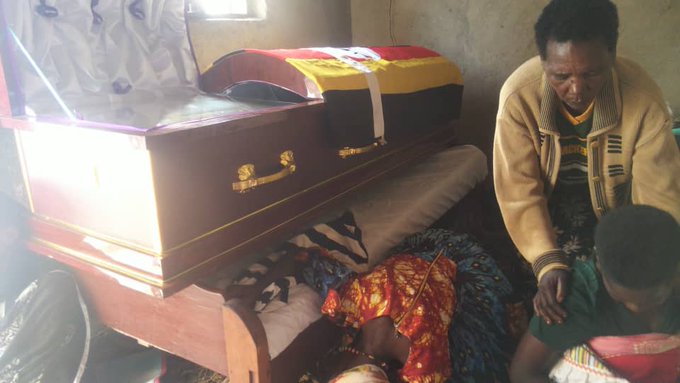
Private Wilson Sabiiti's Body Lying In His House

After three weeks of waiting and complaining, the family of private Wilson Sabiiti have received the body of the soldier for a befitting burial at his ancestral home in Mubali village, Kijula town council, Kabalore district.

Private Wilson Sabiiti who was an army guard ended his life on 2nd May after gunning down Junior minister for Labor Col Charles Okello Engola at his home in Kyanja, a Kampala suburb on 2nd this month.

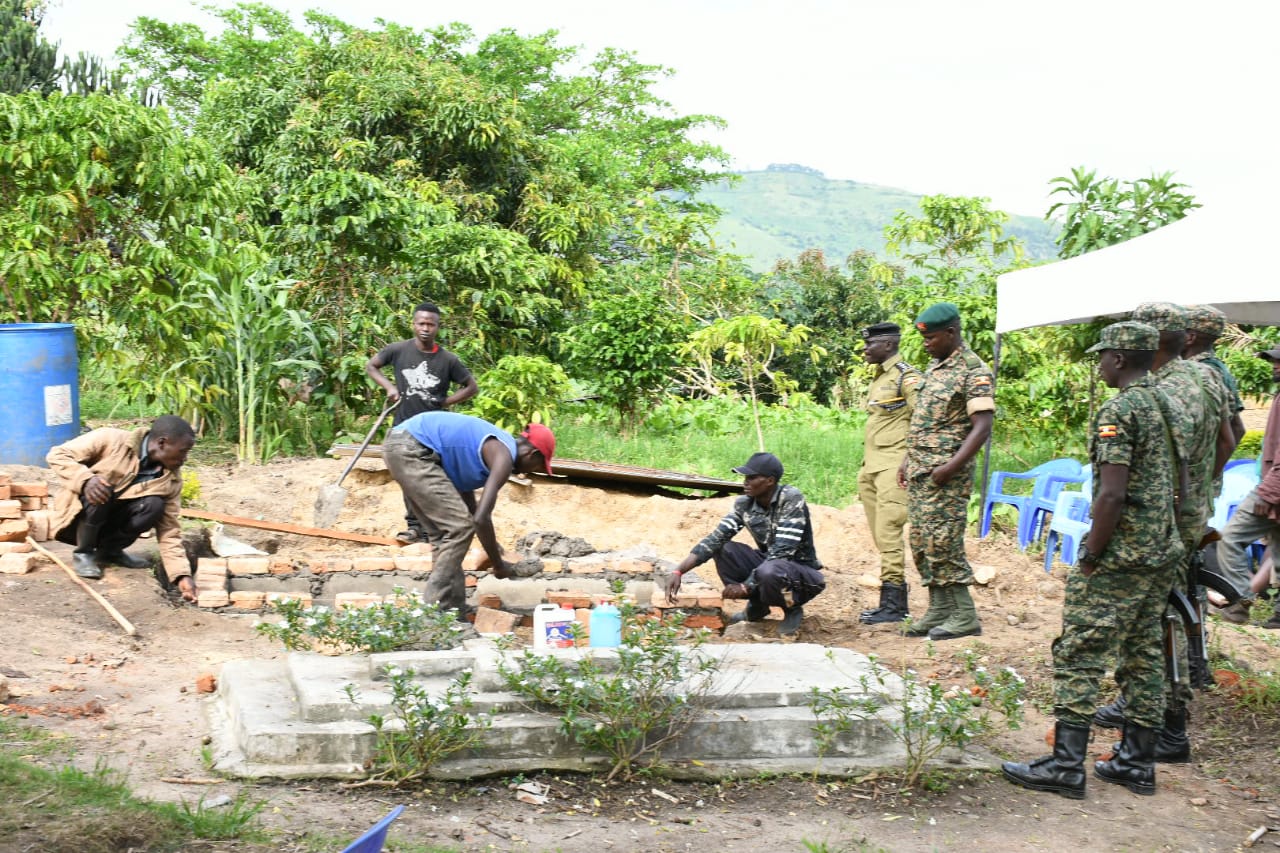
Relatives And Friends Working On Pte Wilson Sabiiti’s Grave- PHOTO CREDIT: Daily Monitor

Engola was buried on 13th May at Awangi village, Iceme Sub county in Oyam district and arrangements to find his successor in parliament (Oyam North) have already been rolled out by electoral commission where his son has since been fronted.

FOR THE BEST WEB HOSTING, WEB DESIGNS AND DOMAIN NAMES, CALL OR WHATSAPP +256758201313

Since the incident, UPDF had held Sabiiti’s body until today when they handed it over to the family. When contacted on several occasions why they’re still holding onto Sabiiti’s body, UPDF spokesperson Brig Felix Kulayigye has been saying the force was still investigating.

Private Wilson Sabiiti’s Body Lying In His House

However, unlike other officers where burial is conducted by UPDF, Sabiiti’s family will meet the costs because the deceased officer killed his principal Engola and also killed himself. His grave was dug three weeks ago by his family.

If you have a story in your community or an opinion article, let’s publish it. Send it via ultimatenews19@gmail.com or WhatsApp +255 769138299

House To Champion Mental Health Awareness – Speaker

0

Parliament is taking lead on mental health awareness with the Speaker, Anita Among, encouraging all MPs to test for mental wellness.

“We need to start with ourselves to make sure that when we are legislating for the people, we are mentally stable – that is a priority. Before we talk about checking others, we shall first check ourselves,” she said.

The Speaker was opening a two-day mental health camp organized by the Parliamentary Forum on Mental Health at the Parliament Gardens, on Monday, 22 May 2023.

FOR THE BEST WEB HOSTING, WEB DESIGNS OR DOMAIN NAMES, CALL OR WHATSAPP +256758201313

With reference to the recent spike in gun crime by security personnel in both the regular forces and private companies which has resulted in several deaths by shooting, the Speaker said it was an awakening call for the country to straightaway address mental disorders whose rate is reported to be on rise.

Among said preliminary reports indicate that the perpetrators in the shooting cases were dealing with issues relating to mental health.

“Within one month, we have lost lives arising from aspects of depression, poverty, unemployment, stress, drug addiction and alcohol. Because we have all these problems in Uganda, we are going to make sure that people are screened for mental health,” Among said.

She said since Parliament has appropriated money for mental health in the next budget, there should be a programme encouraging people to be screened for mental health.

Mental health disorders present differently and could be characterized by a combination of abnormal thoughts, behavior, perceptions, emotions and relationships with others, according to available information.

The latest report from the Uganda Counselling Association and the Ministry of Health, 14 million Ugandans are mentally sick.

This is attributed to the rising cost of living, pressures of modern life and substance abuse, many Ugandans are suffering silently with various mental illnesses.

Whereas these were recorded in 2019, the forum is concerned that the figures could have since doubled given the restrictions that were brought about by the COVID-19 pandemic.

The Chairperson, Parliamentary Forum on Mental Health, Hon. Geofrey Macho, (Indep., Busia Municipality) said the three-year-old forum was established in response to the effect of COVID-19 on people’s mental health, noting that the statistical evidence of 14 million people with mental illness calls for urgent mitigation measures.

Macho revealed that there were a number of lacunas in the law regarding mental health and notified the Speaker of his intention to table before Parliament the gaps within the law requiring Parliament’s attention.

“We have gaps within the laws regarding mental health, and I believe if they are addressed, we will avoid the recently witnessed gun violence. It seems the security officials are over fatigued,” he said.

The forum chairperson proposed a mandatory periodic assessment of all people in possession of guns for mental health, saying it is one way of preventing a likely rise in killings by security officers

SOURCE: PARLIAMENT

If you have a story in your community or an opinion article, let’s publish it. Send it via ultimatenews19@gmail.com or WhatsApp +255 769 138 299

National Council of Sports, Netball Federation In Fresh Shs139 Million Probe

0

The Public Accounts Committee (Central Government) has kicked off another probe into the affairs of the Uganda Netball Federation (UNF) regarding an unaccounted expenditure of Shs139.3 million during a 2021 trip in Namibia.

This query arises from the Auditor General’s report for Financial Year 2020/2021. It is noted by the Auditor General that in October 2021, the National Council of Sports (NCS) disbursed Shs186 million to UNF for preparation and participation of the She-Cranes, Uganda national netball team in the 2021 Pent Series and Africa Netball Championship respectively in Namibia held between 29 October and 17 November 2021.

Out of the Shs186 million disbursed, Shs139.3 million was meant for accommodation of the 27-member contingency, while Shs9.6 million was meant for Visa fees, Shs6.7 million for COVID-19 tests, Shs1.7 million for medical tests, Shs5.3 million for participation fees, Shs13.5 million for players’ allowances and Shs10 million for team kits.

However, according to the Auditor General’s report, a review of the invitation letter from Netball Namibia, the country’s netball association revealed that accommodation costs while in Namibia were to be fully covered by the hosts [Namibia].

FOR THE BEST WEB HOSING, WEB DESIGNS AND DOMAIN NAMES, CALL OR WHATSAPP +256758201313

During the committee probe on Monday, 22 May 2023, the MPs noted that it was fraudulent for the netball federation to present receipts worth Shs139.3 million in respect to accommodation from Safari Hotels Namibia yet the item was reportedly paid for by the host country.

“According to what is on record, accommodation was supposed to be provided by the host. UNF and NCS have presented accountability indicating that they had receipts for accommodation. So we need to know was accommodation provided by the host or not? If so, where are the documents?” committee deputy chairperson, Hon. Asuman Basalirwa, asked.

The NCS General Secretary, Dr Bernard Patrick Ogwel, said that the disbursement of the funds for the Namibia trip was based on a requisition formally communicated to them by the UNF President, Sarah Kityo.

“The requisition had the relevant documents which included an invoice from Safari Hotels Namibia of US$39,033 equivalent to Shs139 million… Accountability documents including vouchers were submitted by UNF and we received it and forwarded to relevant committees,” Dr Ogwel said, adding that Council did not know that the Namibian government had taken care of part of the costs until they received a petition from some UNF officials who were suspended by the federation president.

“People who were suspended by the president [Kityo] provided additional information and we noted that the original letter sent from Namibia was actually not forwarded to us and what was forwarded to us did not provide the sponsorship by the Namibian government,” Dr Ogwel added.

To support his argument, Ogwel tabled to the committee all the accountability documents from the federation particularly the invoices, vouchers and receipts on the Shs139 million expenditure.

In response, Kityo refuted reports that the Namibian government fully or partially covered costs and challenged NCS to provide evidence.

“I want NCS to present any proof that African champion paid even for a single bottle of water. This is a 2021 audit query and by now someone from NCS or Ministry of Education should have travelled to Namibia on a fact-finding mission,” she said.

Kityo also denied most of the documents submitted by Dr Ogwel saying “there is a lot of witch hunt when it comes to accountability of Uganda Netball Federation.”

Hon. Basalirwa said the contested documents will be subjected to the Criminal Investigation Department (CID) and handwriting experts to rule out any cases of forgery.

On 11 May 2023, the committee whilst probing the NCS discovered loopholes in the accountability of Shs100 million allocated to UNF in the Financial Year 2021/2022 for the International Male Netball Championship in South Africa to facilitate the preparation of Uganda’s men netball team, the Rock, to participate in the championship in South Africa in September 2021.

Following the discovery, the committee handed the Kityo, Richard Muhumuza (Vice President) and Aidah Nambusi (Treasurer) to the Parliament Police Criminal Investigation Department for further management.

Both Muhumuza and Nambusi pointed fingers at their president for allegedly diverting a huge chunk of the money for her personal use at the expense of the planned activities.

SOURCE: PARLIAMENT

If you have a story in your community or an opinion article, let’s publish it. Send us an email via ultimatenews19@gmail.com or WhatsApp +255769138299

OWEYEGHA-AFUNADUULA: Why Some Ugandans Are Celebrating The Deaths Of Some People

0

By Oweyegha-Afunaduula
Peoples that occupied the landmass that the British first named The British Protectorate early in their occupation, then the Commonwealth Realm of Uganda at independence in 1962 and then Uganda at the first anniversary of independence in 1963, were once known as very hospitable people.

Restraint, sympathy, empathy, respect and the principle of sharing were more or less cultural matters. lnterconnectivity and interdependence were integral to their extended family system.

Although poverty was always a threat, the extended family system protected members socially and economically, with the few that were socially and economically well-off taking care of the others. I “don’t care” attitude was alien to the system. If the elderly were left by their children to go and start their families – not far from the community – a few took care of them. it was rare for the elderly to suffer loneliness. Life was communal.

The people tended to trade and interact amicably, through barter trade, except for some misgivings between Buganda and Bunyoro, which were exacerbated by the British colonialists by application of their infamous tool of domination called “divide and rule”.
The tool of divide and rule was developed as the most effective way of “denationalising” the nations and reducing their stature in the evolving British sphere of influence in Eastern Africa.

The nations in question were: Acholi, Ankole, Buganda, Bugisu, Bukedi, Bunyoro, Busoga, Karamoja, Kigezi, Lango, Moyo, Sebei, Teso, Toro, West Nile. Their emblems are at the entrance of thé Parliament of Uganda building.

There were many clans in each nation distributed between many indigenous groups and among only four ethnicities: the dominant Bantu, the Luo, the semi-Haemites and the Haemites. There was nothing like an indigenous group of Banyarwanda.

This was a constitutionally created group much later in the sociopolitical change of Uganda, when people with their biological and ecological roots in Rwanda and Mulenge of DRC captured the instruments of powerin Kampala in 1986 and made a new Uganda Constitution 1995 favouring them.

The sociopolitical domination by the “new” indigenous group that followed the constitutional design, was helped by the enaction of certain laws that favoured the group: Movement Law, Secterianism Law, Anti-Terrorism Law, Political and Other Organizations Law , et cetera.

Apart from the well developed social systems that were people-oriented, the British colonialists found well-established administrative structures and functions especially in Buganda, Busoga, Toro, Bunyoro and Ankole.

They quickly reached agreements with the then rulers in these nations to pave way for colonial cultural, social, economic, political and ecological penetration of the vast area they soon named the British Protectorate of Uganda. Hence there was the Busoga Agreement, the Buganda Agreement, the Toro Agreement, the Ankole Agreement and lastly the Bunyoro Agreement underpinning what was to be indirect rule.

The colonialists discovered early that they could use Buganda to proliferate their hegemony and effect their colonial penetration of Eastern, Western and Northern regions of their new colonial entity in the then diminishing British Empire. It was a good discovery. Bunyoro almost frustrated the colonial scheme but Buganda helped to bring the Kingdom under colonial conquest, occupation and control. This opened the colonial penetration of the North.

By the end of the colonial penetration of the area that came to be called Uganda, it was clear the traditional nations would never be the same again. Indeed, the colonialists set about reducing them to tribal entities towards constructing its Uganda Project. Through education and religion they built the belief in the natives that their cultures and spiritualities were inferior to the culture of colonialists.

The long-term impact of this was disconnection between individuals and their communities, laying them bare for any future imperialisms (white. black or yellow) to conquer, disorganize and dominate them well in future, with schemes intended to reverse whatever gains had been made in independence, sovereignty, development, transformation and progress.

The immediate post-colonial rulers promised the amalgamated nations, now tribes, that they would make their independence and sovereignty meaningful. they promised social development, justice, equity, human rights, quality education and quality health.

Their clarion call was to conquer ignorance, poverty and disease. Ignorance was dealt with by ensuring as many as possible all accessed quality education and that schools and university going people interacted well with ball from all parts of Uganda.

Children of poor people had equal opportunity to enter school and University because it was a goal of the government not to deny Ugandan youths education simply because they came from poor families.

Many schools were built, well-staffed and we’ll equipped. Even rural schools had a good chance of sending pupils or students to the best schools in the country, or even to University. Many Northern children and Western children got their education in Buddo and Busoga Busoga College, Mwiri, for example.
Poverty was best fought through encouraging every able-bodied person to engage in agriculture and cooperatives, and then ensuring them of good prices for their products. The prices would be reviewed from time to time.

Workers in the private and public sector were assured of minimum wage, and there were no outrageous disparities in earnings between people of same qualifications, skills and experience on the same scale. Even differences between different scales were not outrageous.

The Public Service Commission was effective in ensuring that people earned accordingly. There was no interference in its work by politicians. It was rare those days to hear that Ugandan workers were fleeing the country for new pastures abroad. Brain drain was thus controlled through government’s caring attitude for workers by ensuring favourable conditions of service.

Healthwise, many hospitals and dispensaries were built, well-equipped and well-staffed. Our doctors were some of the best trained and best paid in Africa South of the Sahara. They never struggled for improvement of salaries or working conditions as these were reviewed every year and announced every Labour Day Celebration.

With the ascension of President Tibuhaburwa Museveni to power, everything has changed in light of his statement on the day he was sworn in as President of Uganda in 1986 that “This is not a mere change of guards but a fundamental change”.

In his Ten Point Programme, which was well-received by most Ugandans, he promised, among other things, democracy, respect for human rights, end to extrajudicial killing, end to corruption, and an integrated, self-sustaining economy. Almost forty years in power, the President has presided over retrogression in democracy and human rights and an increase in corruption and extrajudicial killings – some carried out by men in uniform.

The economy is not anywhere near being integrated and self-sustaining. It is now in the hands óf a small closely knit ethnic group with exogenous roots outside Uganda. Chinese and Indians control over the economy, often in league with a few people in power or connected to power This tendency has risen supersonically over the decades, accompanied by creation of categories of citizens, some superior to the others in apartheid-like fashion.

Many Ugandans now perceive that they have lost their country and its economy to foreigners. They see people who were once refugees, or Indians and Chinese, prospering and accessing every opportunity in the country.

They see members of National Resistance Movement or those connected to power accessing everything, including the land formerly owned by indigenous communities being grabbed right, left and centre by the people with foreign roots across the sociopolitical spectrum.

They see biting poverty consuming their communities despite government efforts to enrich some of their people through money bonanzas such as Parish Development Model, Myooga and Operation Wealth Creation, whose primary focus is to exclude whole communities and concentrate on individuals in the false belief that when individuals prosper their wealth will be shared by whole Communities. This is like transiting from individual merit politics in the early years of NRM/A rule to individual merit economics.

They see their children, however educated, being sucked into the global modern slavery, stream and being excluded from the national economy, yet increasingly supporting the survival of the regime through taxation and remittances. They see the children of regime functionaries being supported by the State at local and foreign universities.
They see elections not depicting their choices but what the rulers want: power retention at all costs.

They see human rights violations, extrajudicial killings, corruption and displacement of indigenous people by foreigners or people who were refugees, and well- protected by the NRM regime, from their land.

They see Uganda far more conquered and occupied than was the case under British colonialism. While British colonialism was not free from exclusion, it allowed for inclusion. Not today under President Tibuhaburwa Museveni’s rule. Those who seem to be included are no more than slaves.

They see State agents hounding them out of swamps but allowing so called investors and some elements connected to power to establish factories or mansions in swampy area.
They see the State pointing guns onto the population rather than at the borders, in an attempt to ensure that there are no demonstrations against the regime system, or even for improvement of conditions of farmers, workers, pupils and students.

People everywhere are both hungry and angry. Under these conditions, it is difficult to see how people would sustain the celebrations and ululations that received the ascent to power of President Tibuhaburwa Museveni in 1986. Widespread frustration is the order rather than the exception.

This explains why Ugandans, once receptive and hospitable to foreigners now feel this is their undoing number one. Rather than show sympathy and empathy like they used to, they now celebrate the deaths of some people in the NRM ruling system.

They see even some of their notable people as having let them down and now celebrate when they die. This is a stance that has developed in the 21st Century. It is nonetheless anti-Ugandan cultures combined. In all cultures in Uganda, the dead were respected and once lowered in the grave, criticism of them ended. It was not part of the ethico-moral fibre of óur people to speak ill of the dead.

The question is: Can we rewind to recover the Ugandanness that was hospitable, receptive to foreigners, sympathetic, empathetic and characterized by restraint?
Yes we can. However, it is an uphill task that requires the citizens to reject the seed of inferiority complex being sown in and amongst them.

Apartheid-like leadership and governance is pervading our sociocultural, sociopolitical, sociopolitical and socioecological landscapes, pushing many – educated and uneducated into despondency, docility and hatred of people in power or connected to power. The valley between the people and power has never been any wider.

In frustration, hopelessness and haplessness, many people are waiting for another notable to die so that they can laugh or celebrate. It is sad but true. That is the only moment they are happy! It is not true Ugandans are the happiest people on Earth. Rethink Ugandans.

For God and My Country.

The Writer Is a Ugandan Scientist And Environmentalist

DISCLAIMER: The views expressed in this article are solely for and belong to the author/ writer. They don’t reflect, portray or represent those of Accord Communications Limited, it’s affiliates, owners or employees. If you have a story in your community or an opinion article, let’s publish it. Send us an email via ultimatenews19@gmail.com or WhatsApp +255769138299