
Saturday, April 25, 2026
Home Blog Page 9

Peaceful Relocation of Balaalo Herders Advances in Madi-Okollo District

0

By Mike Rwothomio

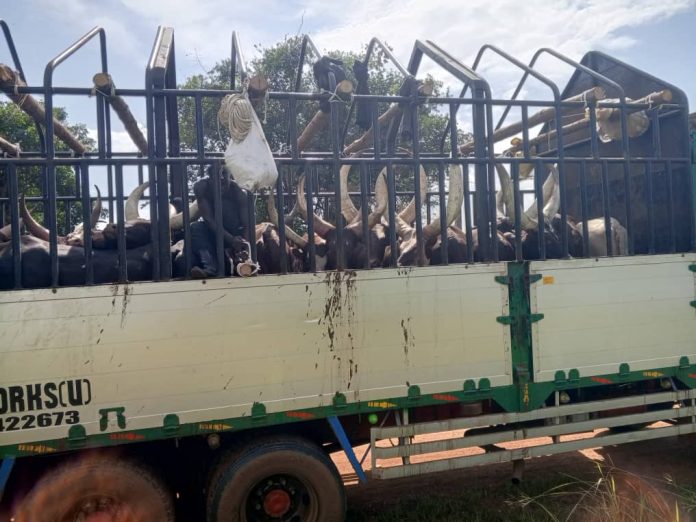
In a significant step toward resolving longstanding land and resource disputes in Northern Uganda, authorities have successfully facilitated the relocation of 154 herds of cattle from holding grounds in Madi-Okollo District, West Nile, as part of the ongoing Operation Harmony.

The operation, guided by President Yoweri Museveni’s Executive Order, aims to address conflicts arising from unregulated cattle grazing by Balaalo herdsmen in Northern, North-Western, and Eastern Uganda.

Currently, only 39 cattle remain pending transit, with arrangements in place to escort them safely to Karuma.

Operation Harmony, a 65-day initiative launched on June 25, 2025, reflects a collaborative approach to conflict resolution, emphasizing peaceful compliance with the presidential directive.

The operation seeks to mitigate tensions caused by the Balaalo herdsmen’s practices, including crop destruction and unauthorized land use, which have fueled disputes with local farming communities.

President Museveni’s executive order bans free-range grazing in these regions, citing its detrimental impact on food security, communal land rights, and social harmony. The directive mandates that all Balaalo cattle be removed from the affected areas, with a verification committee to audit land ownership claims only after the relocation is complete.

SP Collins Asea, the North and West Nile Regional Police Spokesperson, confirmed that Operation Harmony is proceeding smoothly under the strict supervision of multi-stakeholder groups, including District Security Committees, local community leaders, district veterinary officers, and representatives from the National Forestry Authority, Uganda Wildlife Authority, and the Ministry of Internal Affairs.

This inclusive approach ensures transparency, accountability, and adherence to the rule of law, fostering trust among all parties involved.

The operation extends beyond Madi-Okollo to other districts in the West Nile and North-West Nile regions, with ongoing efforts to safeguard the rights and security of both residents and herders.

In his latest statement on July 6, 2025, President Museveni addressed criticisms of the executive order, emphasizing that the directive is not rooted in ethnic bias but in the need to restore order and protect livelihoods.

He highlighted specific issues, including the lack of fenced grazing areas, the absence of permanent water sources, and the blocking of community access to resources like the River Nile, which have exacerbated conflicts.

Museveni stressed that these practices, particularly crop destruction, undermine national unity and are “criminal and unfair to local farmers.” He also directed the Attorney General to draft legislation criminalizing unregulated free-range grazing to prevent future disputes.

The President underscored the importance of a structured resolution process, noting that a committee will verify claims of lawful land ownership only after all cattle are relocated, thereby reducing tensions that could hinder fair assessments.

The Uganda Police Force and the Uganda People’s Defence Forces (UPDF) are working in tandem to ensure the operation remains peaceful, with exit permits provided along designated routes, such as Karuma Bridge.

Thousands of cattle have already been voluntarily relocated from the Acholi and West Nile sub-regions, demonstrating significant compliance.

Authorities express gratitude for the cooperation of all stakeholders, including local communities, herders, and cultural institutions, in supporting this mediated process.

Police say Updates on Operation Harmony will continue to be provided as the initiative progresses, with a commitment to maintaining peace, resolving disputes equitably, and fostering sustainable coexistence in the region.

One Dead, Two injured In Arua- Nebbi Road Accident

0

By Mike Rwothomio

A tragic road traffic accident claimed one life and left two others injured on July 4, 2025, at approximately 6:00 PM near the Beach Trading Center bridge along the Arua-Nebbi Road in Uganda’s West Nile sub-region.

The Police Force reported that the collision involved a Toyota Hiace (UBK 233Y), a Toyota Landcruiser (066.CD 111), and two motorcycles (UEQ 007P and UPZ 771R).

SP Collins Asea, the North and West Nile sub region Police spokesperson confirmed the incident in a statement, saying ” the Toyota Hiace, driven by Nderegimana Richard, 44, was traveling from Arua city toward Nebbi when it collided with the Toyota Landcruiser, which was speeding from Nebbi toward Arua”

Asea added ” Eyewitnesses reported that the Landcruiser swerved to avoid a pothole, leading to a chain reaction that caused the Hiace to strike two motorcycles. Asoru Jane, 42, a passenger on the Yamaha motorcycle (UEQ 007P), died instantly. The motorcycle’s rider, Acidri Benson, 61, and the unidentified rider of the Bajaj Boxer (UPZ 771R) sustained injuries and were rushed to Arua Referral Hospital”

The Landcruiser’s driver fled the scene, and investigations are ongoing to determine the precise cause of the crash.

The vehicles and motorcycles involved were towed to Arua District Police Station for inspection, and the deceased’s body was transported to Arua City Mortuary. This incident underscores the persistent road safety challenges in the West Nile sub-region, particularly along the Arua-Nebbi Road.

Local residents have repeatedly criticized authorities for failing to address the road’s poor condition, citing numerous potholes as a major contributor to accidents and roadside theft.

A November 2024 report highlighted a fatal crash on the nearby Pakwach–Wadelai–Inde road, where a pregnant woman died after a motorcycle hit a pothole. In February 2025, another woman was injured on the Midigo–Bugo–Kerwa road due to similar road defects.

According to the Uganda Police Force’s 2024 Annual Crime Report, road traffic crashes in Uganda rose by 6.4%, from 23,608 in 2023 to 25,107 in 2024, resulting in 25,808 casualties, including 5,144 fatalities (approximately 14 deaths daily).

Motorcyclists and pedestrians are the most vulnerable, with collisions involving pedestrians accounting for 19.5% of crashes. The report also noted that poor road conditions, including potholes, inadequate signage, and lack of maintenance, significantly contribute to accidents nationwide.

In the West Nile region, roads like Arua-Nebbi and Koboko–Yumbe–Moyo remain in poor condition, exacerbating the risk of crashes.

Call for Action

Residents and leaders in West Nile have urged the Authorities to prioritize repairs on critical routes like the Arua-Nebbi Highway, which connects Uganda to South Sudan and the Democratic Republic of Congo.

The Police Force extends condolences to the family of Asoru Jane and wishes a swift recovery to the injured as they continue with their investigation and have promised updates as new information emerges.

Ex-VPs Sekandi And Bukenya Join Kasolo To Write Moses Karangwa’s Political Obituary

0

Minister Haruna Kasolo on Thursday proved that he is still leading the race for the NRM regional Vice Chairman for Buganda when he turned up at the Party’s EC head offices in Nakasero accompanied by a large crowd of supporters who included two former Vice Presidents of Uganda.

These were Edward Kiwanuka Sekandi (who only takes well thought out decisions) and Gilbert Bukenya, who distinguished himself as an effective mobilizer for the Movement during his hey days. Kasolo had come to be nominated and a clearly animated Gilbert Bukenya told reporters why the incoming Kyotera County MP was the best for the CEC position.

As Kasolo flanked him, the man from Lwantama in Kakiri said that Buganda needed an outspoken and fearless people-centered leader like Kasolo to represent it at the CEC level which is the topmost decision-making organ of the ruling party.

“Buganda is central to NRM just like Kasolo is central to NRM in Buganda. That’s why I’m here. We can’t continue to be away from the serving table as Buganda yet we participated in the preparation of the meal which the rest of the country is enjoying. Buganda should be seen to be actively eating on the serving table of the NRM and the man to make sure that happens is none other than Haruna Kasolo,” Bukenya said as thousands of ululating supporters waited for the Kasolo entourage to emerge from the heavily-fortified NRM EC compound.

Prof Bukenya added that there was need to deepen unity among NRM cadres in Buganda and to also increase the visibility/existence of industries in the region, adding that the man to make sure that all that happens is none other than Haruna Kasolo. He expressed optimism that the incoming Kyotera County MP will deliver because he has Buganda region’s interests at heart without ever exhibiting any shame about it.

On his part, Kasolo thanked NRM supporters from across the country for embracing him wherever he has been and also for joining his Thursday vibe-filled procession to Kyadondo. He called on those still doubtful of his suitability to occupy the office of NRM Chairman for Buganda region to reflect on the symbolism embedded in having two former Vice Presidents, including very cautious Sekandi, coming to stand in solidarity with him.

He said this simply implies that irrefutable consensus has emerged within NRM ranks in Buganda that he indeed is the best man for the task at hand. He enumerated Buganda’s biggest problem as that relating to land-related injustices, which he vowed to use the CEC platform to oblitterate once and for all. He said the two ex-VPs epitomize party interests and what generally the contemporary NRM is all about in Buganda.

Without being clear as to who he was referring to, Kasolo also stated that Buganda region inhabitants have had enough of land injustices and anyone involved in orchestration of land grabbing in the region should have no business becoming party Chairman in the politically very important region which in 2021 revolted against the NRM and there is now need for a cautious approach to get Museveni back into the hearts of Kabaka’s people.

Kasolo also said there was intrigue among NRM cadres and it was his intention to use the CEC platform to lead such disgruntled party cadres into the mending of fences so that the National Resistance Movement once again blossoms in Buganda.

He also promised to bring new vibes and breathe new energy into the party’s mobilisation machinery within Buganda region where majority cadres are currently demoralized, disenchanted and disillusioned.

“The person who knows what needs to be done and will do exactly that to ensure that NRM reclaims MP and other elective positions in Buganda is none other than myself,” explained Kasolo who also promised clean and exemplary leadership that would stand firm against ills like land grabbing in all Buganda region’s districts.

You have a story to share with us, send us an email via ultimatenews199@gmail.com

The Sense And Nonsense Of Segregating The Other Sciences Like Arts, Humanities And Social Science From Natural Science

0

By Oweyegha-Afunaduula

Conservation Biologist

Center for Critical Thinking and Alternative Analysis

It is in Uganda where a president – President Tibuhaburwa Museveni – has committed his time and energy and money to push the myths of pure science and the superiority of Natural science (and associated professions) over the arts, the humanities and the social sciences. His thinking is that the arts, humanities and social sciences are ot necessary for creativity and innovation.

The President has adopted the stance of compelling every student of Uganda to do natural science subjects at the expense of the other broad fields of knowledge. In the universities he has created a huge gap between the incomes of the knowledge workers in natural science and the other fields of knowledge, paying those in the natural sciences far more than in the other fields.

Even the administrators in the Universities are now giving preferences to knowledge workers in the natural sciences and related disciplines of knowledge and practice. They have been politically and presidentially made to believe that the arts, humanities and social sciences have nothing to do with creativity and innovation. Yet this is not true.

Many people have wondered why President Museveni is emphasising natural sciences and related disciplines and fields and advocating against arts, humanities and social sciences when his background is in those fields, and when almost 99.9% of the members of his government also have backgrounds in those broad fields of knowledge.

One reason is that traditionally it has been knowledge workers in those fields who have challenged government laws, policies and choices in development, and many who practice politics, particularly Opposition politics, come from those fields.

The so-called scientists (those in the natural sciences and related disciplines and fields of knowledge and practice) do not traditionally challenge governments but pay more attention to their work in the laboratories and the field, presumably discovering, creating and innovating.  Apart from paying them far more money in terms of salaries compared to those in the arts, humanities and social sciences, a lot of money has been allocated to them recently to do research, discover, create and innovate.

It is, however, true that there is no pure science that is not polluted by arts, humanities and socials sciences. Neither is natural science superior to these fields.  The truth is that to meaningfully and effectively create and innovate all these fields must interact and cooperate. That is why recently I wrote a treatise “Interconnecting Humanities, Arts and Social Science for Environmental Conservation.

The truth is that:

  1. Separating natural sciences from arts, social sciences, and humanities might limit the potential for interdisciplinary, crossdisciplinary, transdisciplinary and extradisciplinary approaches, which are increasingly recognised as crucial for tackling complex problems in fields like environmental conservation, public health, and economic development.
  2. Arts, social sciences, and humanities provide valuable insights into human behavior, culture, and society, which can complement the natural sciences and lead to a more comprehensive understanding of the world.
  3. The intersection of arts, humanities and social science with natural sciences can foster innovation, creativity, and critical thinking, driving progress in various fields, including technology, healthcare, and sustainability.
  4. Many global challenges, such as climate change, poverty, conflicts, education and conservation require an integrated approach that combines natural sciences with social sciences, arts, and humanities to develop effective solutions.
  5. Separating disciplines might limit opportunities for collaborative research, knowledge sharing, and student learning, potentially hindering Uganda’s academic, intellectual, economic growth, transformation and progress well in the future.
  6. Separating the arts, humanities and social sciences from the natural sciences in a school, university or workplace can cause inferiority and superiority complexes among knowledge workers, teachers and students and make the leaning environment unsuitable. Or else labour conflicts may arise on an incremental basis even in government itself.

Now below, I want to list some people from the arts, humanities and social sciences who actually created and innovated (Table 1) There are however, very many who did and are know known in the history of creating and innovating.

Table 1. Non-Natural Scientists who Created and Innovated.

  1. Steve Jobs: Studied calligraphy and typography at Reed College, which influenced the design of Apple’s products.
  2. Reid Hoffman: Co-founder of LinkedIn, studied symbolic systems at Stanford University, combining philosophy, psychology, and computer science.
  3. Jony Ive: Former Chief Design Officer at Apple, studied design at Newcastle Polytechnic.
  4. Jimmy Wales: Co-founder of Wikipedia, studied finance and philosophy at Auburn University and the University of Alabama.
  5. Joshua Davis: A pioneer in generative art, studied fine arts and illustration.
  6. Aaron Betsky: An architect and design critic, has written extensively on architecture, design, and art.
  7. Maywa Denki: A Japanese artist and engineer, known for creating musical instruments and machines. He studied sculpture at university.
  8. Margaret Boden: A British professor of cognitive science and philosopher, known for her work on artificial intelligence and creativity.
  9. John Maeda: An American designer, computer scientist, and author, known for his work in design and technology.
  10. John Maeda: An American designer, computer scientist, and author, known for his work in design and technology. He studied fine arts and computer science.
  11. Neri Oxman: An American-Israeli designer and architect, known for her work in biomaterials and sustainable design. She studied architecture and fine arts.
  12. Lisa Randall: An American physicist and designer, known for her work in particle physics and cosmology. She studied theoretical physics and philosophy.
  13. Yinka Shonibare: A British-Nigerian artist known for his installations that explore themes of identity, colonialism, and cultural hybridity using Dutch wax fabrics.
  14. Matt Jones: A British designer and technologist, known for his work on mobile and ubiquitous computing. He studied fine arts and computer science.
  15. El Anatsui: A Ghanaian sculptor who transforms discarded materials into monumental art installations that explore themes of consumption, waste, and transformation.
  16. Faith Ringgold: An American artist known for her quilt-based narrative art that explores themes of identity, culture, and social justice.
  17. Babatunde Olatunji: A Nigerian drummer who helped popularize African music in the West and was a pioneer of world music.
  18. Miriam Makeba: A South African singer and civil rights activist who popularized African music globally and was a vocal opponent of apartheid.
  19. Wole Soyinka: A Nigerian playwright and poet who was the first African to win the Nobel Prize in Literature in 1986.
  20. Chimamanda Ngozi Adichie: A Nigerian novelist and feminist writer known for her works that explore themes of identity, culture, and social justice.
  21. Nadine Gordimer: A South African writer who won the Nobel Prize in Literature in 1991 for her works that explored themes of racial and economic inequality
  22. Kaye Song: A designer and winner of the Arts Foundation Futures Award in 2025.
  23. TK Hay: A theatre artist and winner of the Arts Foundation Futures Award in 2025.
  24. Arinze Ifeakandu: A literary innovator and writer known for his debut collection of short stories that explore themes of faith, family, and queer relationships in Nigeria.
  25. Yalie Saweda Kamara: A Sierra Leonean-American poet who celebrates cultural heritage and identity through her work.
  26. Richard Turere: A Maasai inventor who created a system to protect livestock from predators using flashing LED lights.

Several African innovators and inventors, while not primarily natural scientists, have made significant contributions through practical applications and problem-solving:

  1. Garrett Morgan, invented the gas mask and traffic signal. He did not have elementary school education.
  2. Sarah Goode was the first African American woman to receive a patent, for a folding cabinet bed.
  3. Marie Van Brittan Brown, devised an early security unit for her own home.
  4. In 1966, Brown invented a system that used a camera that could slide into and look through four peepholes in her front door.
  5. Alexander Miles in 1887 invented electric elevator.
  6. James E. West in 1964 co-invented Electret Microphone
  7. Mark Dean co-invented Color IBM PC Monitor and Gigahertz Chip, 1980-199

These individuals showcase how Arts and Humanities backgrounds can lead to innovative contributions in various fields, from technology and design to science and art. Therefore it does not make sense to segregate the arts, humanities and social sciences from natural science when we genuinely want to promote creativity and innovation in Uganda.

For God and My Country.

The Writer Is a Conservation Biologist

DISCLAIMER: The views expressed in this article are for the writer. They don’t reflect Ultimate News, it’s affiliates, owners or employees.


God Finally Remembers Geraldine Ssali, Makes June Her Best Month So Far

0

Ex-Trade ministry PS Geraldine Ssali has demonstrably been through a lot including being forced out of her job and being controversially prosecuted.

What began as investigations into the circumstances under which she rejected the very expensive rental deal at Kingdom Hotel Kampala as opposed to renovating Farmers House, which was considered best option because the same premises had been home of the cooperators since the 1960s, was subsequently escalated to billions that leaders ate and shared out and thereby disrupting the GoU’s original objective which was to compensate cooperatives for the property and assets lost and looted during the wars Uganda had in the 1970s and 1980s.

Geraldine Ssali, who prioritized many compensations including Masaka Catholic Church-affiliated Bwavu Mpologooma’s Ugx2.7bn, ended up being scapegoated and made the sacrificial lamb. This point has since been made by the leadership of Uganda Cooperative Alliance.

Last Wednesday, the UCA’s public statement signed off by their board chairman Johnas Tweyambe was published in the two leading national daily newspapers. The statement makes it clear that Ssali did nothing wrong effecting Bwavu’s Ugx2.7bn which was a small fraction out of the defunct entity’s verified claim of Ugx9.8bn.

The cooperators in their media statement described the payment as justified because Bwavu wasn’t a ghost cooperative as it had previously been portrayed in the media as Msgr Dominic Ssengooba, Fr. Deusdedit Luyimbazi and Ally Ssali are it’s disclosed and well verified signatories. The cooperative’s assets were stripped and taken over by the Obote I government as it operationalized it’s move to the left policy of the late 1960s.

The statement shows that, having suffered all this injustice, Bwavu surviving cooperators for 53 years pushed for their compensation to no avail until much later on when President Museveni considered them on humanitarian grounds. That it only happened that compensation moment fell at the time Geraldine Ssali was the PS at the Ministry.

Tweyambe’s media statement, motivated by desire to set the record straight while absolving Geraldine Ssali who they believe did nothing wrong, also referred to the 17th January letter which Bwavu survivors and the Masaka Catholic church leadership wrote officially thanking the President for considering them on humanitarian grounds and the PS for promptly acting as instructed.

In the same letter, the Bwavu stakeholders reminded the President about their compensation balance which they controversially put at Ugx110bn.

The statement also thanks Bwavu survivors for utilizing the compensation money, which they topped up to become Ugx4.5bn, to purchase value addition equipment from Vietnam with a purpose of going into larger scale coffee processing and exportation. That the equipment was imported but for 8 months remained uncleared by URA at a warehouse in Namanve from where it accumulated demurrage. That the equipment now lies idle at Bukoloto in Kayunga under the control of East Mengo Cooperative Union after narrowly being saved from being auctioned.

“With such readily available evidence, we are concerned that the PS is facing charges of stealing funds whereas not,” the statement reads in part. The authors demand that the entire evidence being advanced against Geraldine Ssali gets reviewed with a view to establish her innocence because, as far as they are concerned, no culpability can ever be sustained or established against Geraldine Ssali relating to the disbursement of cooperatives compensation funds.

Instead, they want her to be acknowledged for the tremendous role she played towards the revitalization of the cooperatives in Uganda. They demand objective cleaning up of the cooperatives sub sector so that all corporate governance challenges identifiable can be resolved and fixed once and for all.

Formed in 1961, the UCA is the apex body for all registered cooperatives in Uganda and it’s charged with advising the GoU on all matters relating to policy formulation relating to the cooperatives sub sector. The statement shows that the ill-conceived criminal prosecution of Geraldine Ssali negatively impacts on the revitalization process of the cooperatives movement.

They thanked the president for initially reversing Ssali’s interdiction because her decision to renovate Farmers House as opposed to spending billions renting at Kingdom Hotel Kampala saved the taxpayers’ billions and qualified her for a medal as opposed to being sanctioned.

They say that Farmers House has a lot of sentimental attachment for millions of cooperators having been their home for the last 61 years, besides being the proposed home for the yet-to-be revamped Cooperatives Bank.

They raise a red flag on the fact that when charges relating to Farmers House renovation proved unsustainable, Geraldine Ssali’s pursuers jumped on cooperatives compensation through which political leaders, including MPs, fraudulently shared out the hundreds of billions of shillings.

The statement also shows that the cooperatives compensation program commenced in 2006 under the Justice Ministry and was only transferred to Trade in 2014 long before Geraldine Ssali became PS there. That some of the challenges that impended the compensation process related to governance problems, disagreements between lawyers and compensation recipients or beneficiaries and can as such not appropriately be blamed on Geraldine Ssali. That the verification committees which looked into compensation claims were put in place long before Ssali became PS and therefore problems relating to their failure to properly verify claims can’t be blamed on her.

The UCA statement also describes Geraldine Ssali as a victim of persecution and witch-hunt by the mighty because, whereas she was formally charged in relation to the Buyaka Cooperative Union, in the media she was demonized to have eaten and stolen money in relation to Bwavu Mpologoma.

To the UCA chairman, all this is evidence of targeted witch-hunt and persecution. That her pursuers avoided charging her over Bwavu Mpologoma because the facts on paper were such that nothing could be sustained against her in a court of law and a holding charge of some sort had to be found under the guise of Buyaka.

Away from the much-publicized exoneration by UCA, Geradine Ssali was also recently unintentionally vindicated on another least expected front. On 24th, the attorney general’s chambers authored a legal opinion making it clear that once the accounting officer or PS at Trade has paid out the money as guided through the verification committee, what the beneficiaries do with the money is none of his or her business.

The AG letter was a response to the new Trade PS who was seeking to be advised on how to resolve disagreements among members of Rwampara ranching cooperative society Ltd who quarrelled and failed to agree on how to share out their compensation money.

The PS has been advised by the AG to just ignore and concentrate on his other core work because resolving such disputes is none of his business. Ironically, during Geraldine Ssali’s time such guidance was sought in writing but the AG chambers remained silent and never guided the former PS on how to proceed when confronted with such circumstances or cases.

Ex-UIA Boss Jolly Kaguhangire Gets the Last Laugh as Court Awards Her 600m in Damages For 2018 Wrongful Dismissal

0

Chaired by Dr. Emily Kugonza, who subsequently became an MP, the governing Board of Uganda Investment Authority (UIA) on 26th August 2018 arbitrarily terminated the services of Executive Director Jolly Kaguhangire.

The lady, who previously had excelled holding top management positions at URA for more than 20 years and had even given favorable appraisal by the UIA board of up to 80.3%, was all of a sudden humiliatingly forced out of the UIA office barely after doing one and half years into her 5-year employment contract as ED, which had commenced on 1st April 2017.

Upon being interdicted, she was subjected to investigations by a committee the Board put in place in a manner that the Industrial Court has since established to have been improper, malicious, biased and unlawful. Based on the Committee investigations report, she was terminated and asked to permanently vacate UIA offices.

Farsighted as always, the President tried to intervene calling for sanity but he was disregarded by Board members and Finance Ministry officials who were determined to get rid of Kaguhangire because they found her complicated and hard to compromise.

On taking office, Kaguhangire sought to make UIA a more efficient agency of government and commenced a restructuring exercise to ensure staff were appropriately deployed. As can be expected, many staffers didn’t like this. They revolted by petitioning the IGG falsely accusing their ED of all sorts of things. The IGG subsequently cleared her of all the allegations which the disgruntled staff had levelled against her.

The fight against her didn’t stop largely because there are bosses at the Finance Ministry and inside the UIA Board who were determined to get rid of Kaguhangire no matter how clean and corruption-free she was.

They went on a fishing expedition of some sort and used the investigations Board committee to come up with fictitious and ambiguous impropriety claims against her. These were used to mount a very damaging media campaign all aimed at soiling her before the President.

Unsubstantiated claims were made against her and put in the investigations committee report, which became the basis for her termination as ED.

Briefly these were the allegations on which her summary and subsequently unlawful dismissal was based: abuse of office, insubordination, defying the Minister’s guidance on UIA’s 5-year strategic plan, concealing some UIA-related information from the Board and closing the UIA Namanve office without Board authorization.

Kaguhangire, who endured plenty of negative media publicity that was being spearheaded by her superiors in order to demonize her before the public and make it hard for the President to publicly defend or associate with her, was aged 51 years as of that time.

She protested her maltreatment and improper dismissal by filing a case at the Industrial Court whose Linda Lillian Tusiime Mugisha, John Abraham Bwire, Julian Nyachwo and Juma Mwamula on Wednesday 11th June proclaimed a 41-page judgment declaring her dismissal unlawful, procedurally and substantively unlawful.

Having rejected everything UIA’s lawyer Franklin Uwizera (from the AG chambers) submitted, the Industrial Court Justices only fell short of ordering Kaguhangire’s re-instatement at UIA.

The Justices found that the Board relied on the Public Service Standing Orders to come up with kangaroo investigations in order to fix Ms Kaguhangire yet the UIA’s Investment Code Act and the HR Manual is what should primarily have applied because it’s the one on which her 5-year employment contract was rooted. Investigations by the Court established that the relevant provisions of the Employment Act were disregarded and violated as the UIA Board members fidgeted to fix Kamugira.

Court also established that her Constitutional rights under Article 28, which makes it mandatory for her or any other similarly-placed employee to have been given a fair hearing, were fatally violated.

That after receiving the investigations Committee report, the Board ought to have commenced a disciplinary process to accord Kaguhangire a proper opportunity to defend herself against the allegations that had been put up against her. This wasn’t done. The Board merely relied on the investigations report to declare her guilty and proceeded to terminate her.

The legal provisions, which make it mandatory for her to be heard and be given a three months’ notice, were all disregarded and this is something over which Court agreed with her lawyer Paul Kutesa and generously awarded Kaguhangire generous damages.

The awarded damages, totaling to approximately Shs600m, took note of the fact that Kaguhangire’s reputation was so much damaged by her pursuers, using both the print and social online media, to the extent that her future employability was deliberately and significantly diminished yet no wrongdoing was ever satisfactorily established or proved against her.

The awarded damages, attracting interest of 15% per annum for as long as they remain unpaid, were particularized by the Industrial Court as follows: Shs52.9m as payment in lieu of notice, Shs280m as general damages, Shs35m as aggravated damages and Shs17.9m as severance pay.

Equity Bank Uganda Workers Sleepless As Staff Audit Gets Underway

0

Banking is one cautious practice that is shrouded in extreme secrecy and conventionalism. Yet the Equity Group has always distinguished itself to be different when it comes to sticking to certain norms and conventional wisdom.
Indeed, the Equity Bank top executives have over the years distinguished themselves to be always willing to overlook conventional wisdom by deliberately setting out to do things differently.

The need for caution, which is globally the accepted way to go about banking, is based on the wisdom that banking is very sensitive to the extent that a small departure from the accepted way of doing things can impact not just at one bank but for the whole industry.

For the executives at the Equity Group, all these industry-wide concerns have to be balanced with being customer-centered while at the same time strictly adhering to their institutional philosophy, principles and values which in the case of Equity Group rotate around integrity, professionalism, transparency and accountability.

Overlooking potential industry-wide concerns and reservations, the Equity Group recently opted to undertake staff auditing process aimed at identifying and getting rid of inadequately-behaved employees who had resorted to extortionist and unethical practices, including solicitation of tips from the Bank’s valued customers as inducement in return to be offered a would-be free service.

In some cases, the feedback from the Bank’s esteemed customers related to employees acting negligently and in the process costing both the customer and their employer.

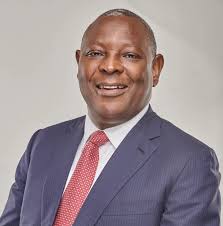
According to Equity Group CEO Dr. James Mwangi, the different staff against whom complaints had been raised have had to be subjected to an audit and due process for their culpability to be transparently established in a manner that complies with the rules of natural justice. And roughly 200 employees were found culpable (in the case of Equity Bank Kenya) and these have since been relieved of their duties.

Mwangi a few days ago told the Kenyan media that the auditing process was important to clean up the Bank’s operations. He added that in the end, the Equity Group will become even stronger and be in a position to deliver even better and more predictable outcomes for the investors, shareholders and most importantly the millions of East Africans banking with them.

Dr. Mwangi also says that time came and the Equity Group leadership couldn’t continue to merely look on as complaints of employees extorting valued customers, while soliciting for tips and other material favors from them, persisted.

Something had to be done and the auditing intervention had to be effected in a manner that increases regulatory compliance while at the same time delivering win-win outcomes and service delivery improvements that are simultaneously beneficial to the investors and the Bank’s customers too.

This news website has established that now that Kenya is done, Uganda has had to be the next destination for the clean-up exercise. In the case of Uganda, several of Equity Bank employees have already been notified of the extortionist, rudeness and neglect claims that have been made against them. Much of this is feedback from customers who have been victims of either the negligent or extortionist acts by employees.

On Monday, all those affected (in their hundreds) were formally communicated to about the ongoing investigations and asked to show cause as to why their services at Equity Bank shouldn’t be terminated. A lot of the affected staffers have privately owned up and don’t intend to waste time writing to the staff conduct auditing committee explaining themselves against the misconduct allegations that have been levelled against them.

In Uganda, the rapidly-growing Equity Bank has a total of 50 branches and hundreds of employees or staff. Some of these have to answer to inappropriate conduct-related allegations relating to things like negligence and solicitation of tips from customers in order to render to them a would-be free service or even conniving with customers to deprive their employer.

At the conclusion of the auditing process, which knowledgeable industry insiders say is deliberately meant to be as transparently, fair and compliant with natural justice requirements as possible, those whose innocence is established will be spared and permitted to carry on with their jobs. This exactly is how it happened in Kenya, and employees in the Ugandan subsidiary are anticipating equally decent treatment.

Some staffers of Equity Bank Uganda have privately welcomed and accepted this ongoing audit investigations as consistent with their employer’s values of being transparent, accountable to the public and responsive to customer concerns. At the same time, it’s an opportunity for the employer to clean up so that ill-behaved employees can be gotten rid of.

This sort of thing happens very often, for instance in Kampala, but the public rarely gets to know about it because of the agreed secrecy under which the Banking business is practiced and conducted.

Even Uganda Bankers Association’s view is that if any their member bank is to effect any clean-up, targeting ill-mannered employees, the same should be effected in maximum secrecy ostensibly to guard against potential industry-wide anxiety and disruptions.

It seems that the Equity Group is determining to lead the way in departing from that conventional wisdom around this same issue. And the transparency, fairness and courtesy with which the staff audit investigation process has been effected explains why the situation, at for instance Equity Bank Uganda, has so far remained calm and chaos-free even when the same was proclaimed to the affected staff on Monday.

Knowledgeable industry sources say that the ongoing staff audit is inquiring into the conduct of affected staff stretching back to two years. Some staffers could have acted negligently while assessing a potential borrower’s suitability to take out a loan. Some could have acted rudely to a customer and management has CCTV footage to properly corroborate the alleged rudeness and unprofessionalism.

The Equity Bank management also believes that staff actions that could erode customer trust in the bank can be mitigated through the ongoing staff audit exercise. Reports in the Kenyan media further indicate that such staff auditing processes are going to become the culture and the way things are done under the Equity Group, as opposed to being a mere one off exercise.

Yet all said and done, the top management at Equity Bank Uganda risks being misunderstood by their contemporaries in the industry since the agreed UBA position is that whoever opts to terminate staff must do so cautiously and in total concealment yet the Equity Group CEO Dr. James Mwangi has departed from this accepted wisdom by being overtly outspoken and granting media interviews confirming and rationalizing the staff terminations that have been done at Equity Bank Kenya.

Stanbic Bank Launches End to End Digital Account Opening for Private, Business Customers

0

KAMPALA: Stanbic Bank has announced the launch of ‘Kya Double with Supa Dupa’, a new banking innovation set to redefine how customers access and engage with financial services.

Combining digital convenience, instant rewards, and seamless solutions, this new campaign underscores Stanbic’s commitment to making banking faster, easier, and more rewarding for all.

Speaking at the launch, Israel Arinaitwe, the Head of Personal Banking, highlighted that Kya Double with Supa Dupa is a direct result of analyzing extensive customer feedback.

He said, “Listening carefully through social media, feedback sessions, and personal engagements, the bank has developed features that align with modern banking needs. This includes speed, simplicity, and tangible rewards to those that will be depositing on their accounts regularly.”

Gone are the days of long queues and heaps of paperwork. Customers can now open a fully operational Stanbic Bank account digitally in under five minutes in a completely paperless process which is also free of charge.

Sonia Karamagi, Stanbic’s Head of Customer Experience making remarks

“The process is accessible via the Stanbic app, mobile banking, or online banking. Once registered, customers can immediately send, receive, or deposit money, making banking truly instant and frictionless,” Arinaitwe said.

Recognizing the demand for rapid credit access, Stanbic has enhanced its loan offerings. Customers can now secure instant advances of up to UGX 5 million at any time without obstacles. For more substantial financial needs, digital loans of up to UGX 250 million can also be approved in under two minutes subject to applicable conditions being met.

Solutioning Single Member companies

During the same event, Stanbic has unveiled the Pomoja Account portfolio, a fully digital solution enabling an owner or sole proprietor of a business to open and access exclusive banking services at no cost.

Aaron Akampa, the Head of Enterprise Banking said this decision was informed by customer feedback and the numerous government reports which indicate the majority of local businesses fall in this category. Not only do the owners struggle with formalization, but also lack a good credit profile to enable them to qualify for loans.

L-R Stanbic’s Israel Arinaitwe Head Personal Banking, Sonia Karamagi head Customer Experience and Aaron Akampa, during the launch in Kampala

Akampa said the Pamoja account aims to serve small businesses mainly found in Kampala’s downtown area and other regions, eliminating the need to find a business partner simply to meet banking requirements.

“Our Pamoja account offers unique benefits tailored for this segment. It’s free to open, with an average balance requirement of just UGX 2 million; meaning no charges whatsoever. You can borrow up to UGX 200 million, thus opening new horizons for growth. It’s entirely digital, providing a seamless experience for small businesses to operate more professionally and efficiently,” he said.

Sonia Karamagi, the Head of Customer Experience, said in a bid to show appreciation for customer loyalty, the Kya double with Supa Dupa campaign will also see active customers benefit from a range of rewards at the end every month.

“Every transaction, be it savings, deposits, or bill payments earns customers entries into weekly draws. Participants, whether new or existing, are eligible to-win-double their deposit amounts directly into their accounts. This is banking that pays you back instantly,” Karamagi said.

She encouraged Ugandans to take advantage of this campaign to join the Stanbic family adding that with a heritage spanning over 100 years, Stanbic Bank remains a market leader with a nationwide footprint of 83 branches and over 7,000 agent bankers, which is a clear assurance on customer experience.

You have a story we should publish, send us an email at ultimatenews19@gmail.com

Enabel and UHTTI partner To Champion Sustainable Tourism And Youth Skilling In Uganda

0

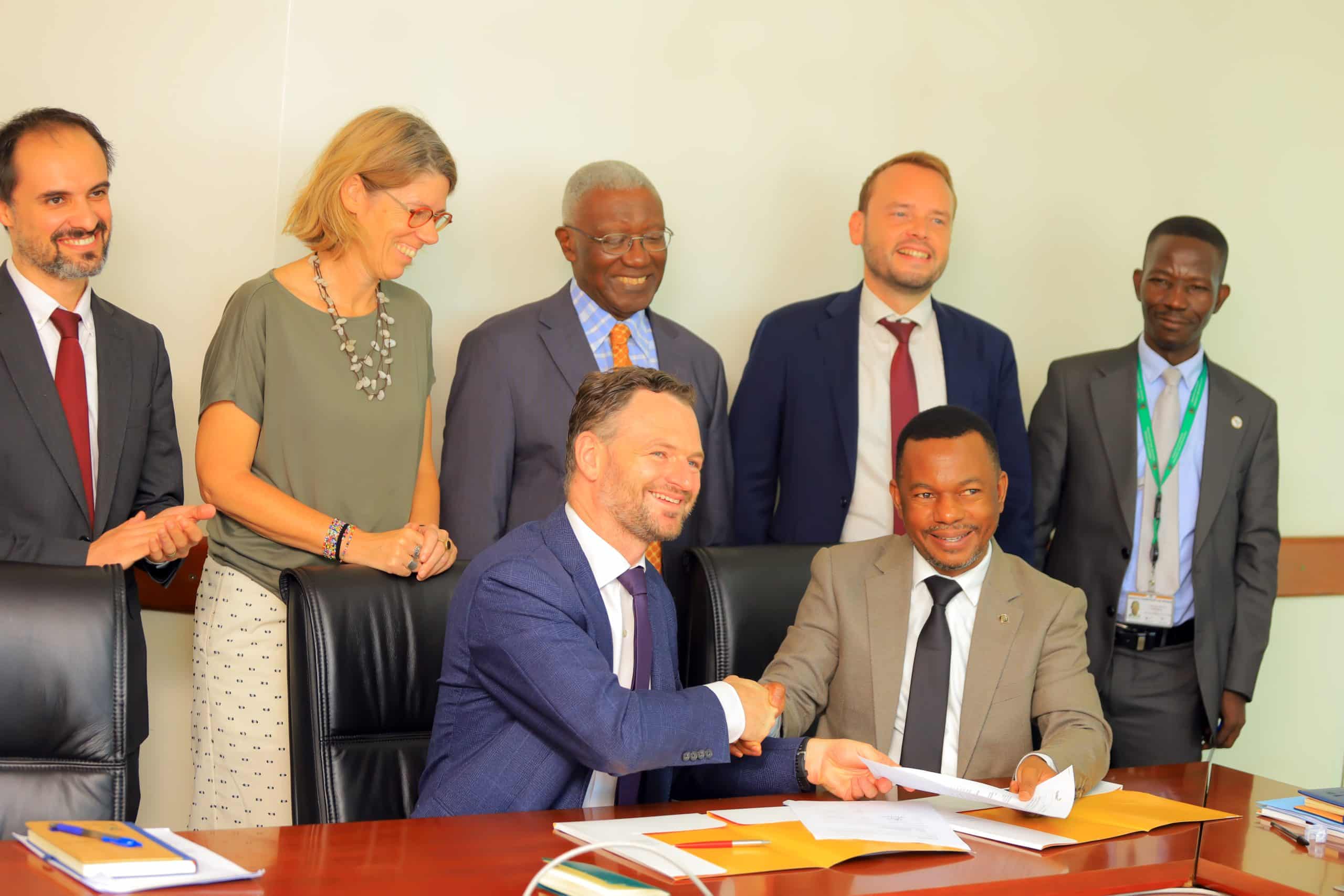
In a strategic move to foster green and decent employment opportunities for Ugandan youth, Enabel, the Belgian agency for international cooperation, and the Uganda Hotel and Tourism Training Institute (UHTTI) have signed a €260,000 grant agreement to support skills development in the Tourism and Hospitality sector.

The grant is provided under Enabel’s WeWork Project, co-funded by the European Union, which promotes Technical and Vocational Education and Training (TVET) in sectors with high job-creation potential.

Seated left is UHTTI principal Richard Kawere and Enabel country director signing the agreement. Behind them is the Tourism ministry and representatives from the EU

Coming at the heels of the successful Pearl of Africa Tourism Expo (POATE 2025) and the 2nd Annual Sustainable Tourism Awards, this grant signals a renewed commitment to tourism as a key driver of inclusive, sustainable economic growth, aligned with Uganda’s national development priorities.

Through this partnership, Enabel joins the government of Uganda to support the ongoing efforts to elevate UHTTI into a Centre of Excellence in tourism and hospitality training in the region. The support will focus on curriculum development, staff capacity building, digitalisation, entrepreneurship, gender mainstreaming, and improved collaboration with the private sector to improve employment outcomes for Ugandan youth. As part of the partnership, UHTTI will work with the leading Belgian Hotel School Ter Duinen to exchange expertise across pedagogy, management and governance.

Tom Vanneste, Country Director of Enabel Uganda, said:
“We feel privileged as Enabel to support the Ugandan government multi-million investment in UHTTI to help it become a hospitality centre of excellence for the country and the region and to support the ambition to make Uganda the leading sustainable tourism destination in Africa and the tourism industry a driver of job creation for Ugandans.”

Mr Sanne Willems, Team Leader, EU Deegation Uganda, said:

“Team Europe is pleased to partner with Uganda on the development of the local tourism sector. Alongside Belgium, the EUR 50 million (UGX 207 billion) WeWork supports the creation of green and decent jobs for the Ugandan youth as well as youth-led enterprise development in the tourism sector. We, therefore, see UHTTI as natural partners for us.”

Mr. Richard Kawere, Principal of UHTTI, noted:
The grant is a testament to Enabel’s commitment to supporting Uganda’s development and strengthening our tourism sector. It is more than just a financial injection; it represents a vote of confidence in our institute’s potential to shape the future of Uganda’s tourism industry.

This partnership not only strengthens UHTTI’s role as a premier tourism training institution but also serves as a national example of how collaboration between government and development partners can deliver long-term impact.

By equipping young Ugandans with future-focused, relevant skills and embedding sustainability in tourism training, this initiative lays the groundwork for a more resilient, inclusive, and competitive tourism sector in Uganda.

You have a story in your community, let’s publish it. Send us an email at ultimatenews19@gmail.com

NUSDA to Lead Anti-Drug Abuse Campaign in Greater Nebbi Schools

0

By Mike Rwothomio

Nebbi, Uganda – The Greater Nebbi University Students Development Association (NUSDA) has announced a comprehensive school outreach program scheduled for June 9-18, 2025, aimed at empowering secondary school students in Pakwach, Nebbi, and Zombo districts with career guidance, mentorship, and strategies to combat drug abuse.

The initiative, themed “Unlocking Potential, Shaping Purpose,” targets over 15 schools to enhance educational outcomes and foster transformative leadership.

NUSDA, an umbrella organization uniting student associations from universities and tertiary institutions across Uganda and abroad, was established in 2005. Operating under the guidance of the District Education Officers (DEOs), the association seeks to address critical educational challenges in rural areas, including limited access to resources, financial constraints, and inadequate career guidance.

According to NUSDA President Billy Kwoyelo, the program reflects the association’s commitment to giving back to the community that shaped its members.

“As natives of Greater Nebbi, we recognize the academic and life struggles students face. Our experiences guide us to mentor and inspire the next generation to pursue their education with purpose and make informed career choices,” Kwoyelo told this Publication.

The mentorship program, conducted annually in collaboration with the DEO’s office, will feature motivational talks by professionals and university students, interactive activities to build leadership and communication skills, and group mentorship sessions tailored to students’ interests.

Key focus areas include career guidance, scholarship opportunities, sex education, HIV/AIDS awareness, transformative leadership, life skills, financial literacy, and tackling drug use and abuse.

The initiative aims to inspire students in Senior 1 to Senior 6 (ages 13-23) to pursue education with determination, explore diverse career pathways, nurture their talents, and develop values of resilience and self-belief.

The program will cover schools such as Panyango S.S., Ogenda Girls S.S., Excel College Pakwach, Nam High School, Martyrs College Pakwach, Pakwach S.S., Paroketo S.S., Panyimur S.S., and Alwi Seed in Pakwach; and other institutions in Nebbi and Zombo districts.

The initiative is expected to increase student motivation, enhance awareness of education’s value, foster positive attitudes, and strengthen community-school partnerships. By addressing issues like drug abuse and providing career clarity, NUSDA aims to empower students to achieve long-term academic and personal success.

The program is supported by the DEOs of Pakwach, Nebbi, and Zombo, local government, head teachers, NUSDA’s daughter associations, alumni, and well-wishers.

Notable daughter associations include the Nebbi Makerere Students’ Association (NEMSA), Alur Kyambogo Students’ Association (AKUSA), and Alur Gulu University Students’ Association (ALGUSA), among others.

Quoting Rev. Fr. Raphael Okumu, “It all starts with the mindset,” Kwoyelo emphasized the program’s goal to influence students’ perspectives and inspire intellectual change. “We aim to bridge the gap for talented and ambitious students who lack exposure to information and mentorship, offering them direction and hope for a brighter future,” he added.

The school visits, scheduled between 9 a.m. and 4 p.m. daily, will allocate at least one hour per school. NUSDA plans to sustain this mentorship program annually, continuing its legacy of community-driven educational transformation in Greater Nebbi.