Friday, April 24, 2026
Home Blog Page 8

Fisherman Survives Mob Attack After Failing to Report Brother’s Drowning in Adjumani

0

By Mike Rwothomio

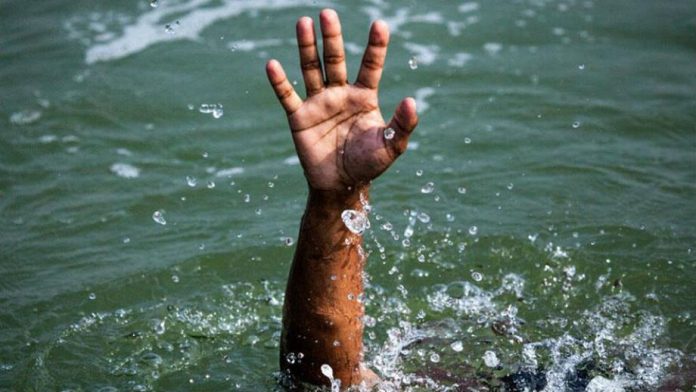
A tragic water transport accident at Mukono Landing Site, Chiforo Subcounty, Adjumani District, has led to a drowning incident and subsequent community unrest, according to a police report (VIDE CRB 488/2025) from Adjumani Police Station.

According to a statement released by North and West Nile Regional Police Spokesperson SP Collins Asea, On July 24, 2025, at approximately 1:00 AM, Taban William, a 40-year-old fisherman, and his brother, Eruaga Dominic, were involved in a boating mishap on the Nile River.

Asea further revealed that, ” Both individuals, reportedly intoxicated after attending campaign rallies, were navigating a vessel when Eruaga lost control and fell overboard. Taban, who remained on the boat, was rescued by community members the following morning but failed to report the incident, believing his brother would return”

The body of Eruaga Dominic was discovered by fishmongers around 4:00 PM on July 25, 2025, along the riverbank at Mukono Landing Site. Infuriated by Taban’s silence, community members attempted to lynch him. He was rescued by the Local Council 1 (LC 1) and taken to Oliji Police Post for protection.

Asea said Taban is now in custody at Adjumani Central Police Station (CPS) as investigations into the drowning continue.

A postmortem has been conducted, and Eruaga’s body has been released to the family. The case, registered as CRB 488/2025, remains under active investigation, with authorities promising updates as new details emerge.

This incident underscores Uganda’s growing drowning crisis, with a 2024 Makerere University School of Public Health report highlighting an average of nine drowning deaths daily, totaling over 3,000 annually.

The majority of victims are aged 5 to 25, with rural and peri-urban areas bearing the brunt of these tragedies. Globally, drowning remains a leading cause of unintentional injury-related deaths, particularly in low- and middle-income countries.

PAUL MUGOYE: Politics Of Manipulation, Violence, And Patronage

0

It is unfortunate, there is now a new culture of politics that no longer offers service but offers employment for self-seekers and is highly monetized. The voters are also to blame. We should remember that NRM is fused to the State. It freely draws money from the State and easily accesses State resources and services.

NRM covertly diverts budgetary allocations meant for classified security purposes to its use. The cost of the NRM elections to the taxpayers is enormous. There is abuse and misuse of the security forces, especially the UPDF. In the NRM primaries soldiers openly inflicted violence on the citizens under command from their commanders.

The army’s involvement in partisan politics is a sign to worry. A soldier remains a soldier even after retiring. A soldier should not be allowed to join politics until they have gotten used to civilian life after 5 years. Politics is divisive.

Uganda is progressively rewinding the clock to the times of a military government. Retired soldiers are rebranding themselves as politicians because they have run short of money and as such we are steadily heading for a military takeover and I’m convinced this is in the pipeline.

We are likely to experience this hiccup any time unless Ugandans wake up. A military government will not recognise political parties because some people who are likely to cheer such a government should take note of this.

NRM leadership has been good at manipulating the legal system to enable them to tamper with the Constitution to allow the continued stay in power of President Museveni. With many changes to the Constitution, this has only enabled a flawed transition, a transition that will never come.

Uganda’s leadership tricked the international community into believing that they had agreed to undertake democratic reforms when they intended to access donor assistance from the Western powers.

It was about harboring a hidden agenda to manipulate the donors which they succeeded. Initially, the donors had emphasized economic reforms but instead added political reforms as a condition to release aid or access donor money. This forced the NRM leadership to call for a referendum and mobilized the citizens to vote against its own NRM’s all-inclusive system to a multiparty exclusive system to access donor money.

Unfortunately, since then, Uganda has flouted implementing democratic reforms by amending the Constitution many times and creating proxy political parties, harassing the opposition, and making it a routine to hold sham elections to appease the donor community.

In this pseudo democratic dispensation, many undemocratic practices have evolved. One of them that strikes is Uganda’s Parliament has lost its independence and the legislators especially those in the NRM, have lost their independent free-thinking minds because the doctrine of separation of powers has been eroded and diminished.

The NRM Caucus has taken over the role of Parliament making Parliament become an ‘arm’ of the NRM Caucus. This has made NRM legislators become inept and compromised thus losing their ability to be independent-minded and free-thinking.

This has made the legislators abandon the duty of serving their voters and instead have shifted to serving the interests of the Executive. This has caused a disconnect between the electorate and the legislators and this has become the biggest NRM weakness. As a result, many MPs will lose in the coming general elections, making the elections a mockery of democracy.

A political Party is an institution or organisation that teaches us more about how to manage society because political situations keep on changing year after year. It is like a school where we can learn a lot. Unfortunately, the leaders and managers in NRM have failed to learn from past mistakes thus making them bad managers and performers.

So it is upon leaders to learn to analyze and make critical analysis in the interest of charting a way forward. Leaders must understand that it can’t be usual to rely on manipulation, violence, and patronage. Things have changed, and people are now more enlightened.

As a cautionary measure, NRM has to tighten its net of sieving leaders. One can’t cross from one Party and immediately take up a leadership position. Recommend that the tested people and newcomers should wait for at least 10 years. Avoid rushing with the unknown newcomers to avoid prejudicing old members.

Self-seekers have infiltrated NRM and have spoiled the broth. NRM will never be the same again after these primaries because the spirit of trust is no more. The element of corruption has eaten the Party.

Mugoya Paul Polly, concerned citizen.

DISCLAIMER: The views in this story are for the writer. They don’t represent Ultimate News or it’s affiliates.

TINDYEBWA: How Tanga Odoi’s Primaries Show Clear Contrast Between NRM & NUP By Brian K Tindyebwa

0

In a country where the so-called leading opposition party can’t even organize a credible delegates conference, NRM deserves commendation for organizing countrywide elections. Today (Thursday 17th July), the whole country is talking and our vibrant media having a field day as close to 3,000 leaders compete to become NRM flag bearers for the 353 direct constituency MP Seats and another 146 slots for Women MPs.

There are imperfections here and there but that can’t mask the clear good intentions the party top leadership has demonstrated towards being transparent, democratic and inclusive. It’s a huge logistical operation but the NRM is determined to go into such a complex and potentially very divisive exercise. Thank you National Chairman YK Museveni for being aware that even when democracy is expensive, there are no options to it.

Thank you NRM for allowing ordinary party members to have a voice and direct participation in who takes up which leadership position. That is how it’s supposed to be-there is no other way. Thank you Dr. Tanga Odoi for standing up to the mighty and for fearlessly calling out wrongdoers trying to orchestrate mischief in NRM party primaries.

I have heard and seen you on public media calling out such people and making it clear that no one will be tolerated messing up party elections. We thank the National Chairman and our CEC leaders for having identified and appropriately deployed you in that EC role.

Indeed, our national chairman is God-given and well possessed with that wisdom which comes with age and experience. He, clearly, isn’t a gambler but a seasoned leader who knows what ought to be done and going on to have guts to have it done.

The competition that the NRM internal electoral process has enabled is the best thing that can ever happen to any political organization that desires growth and organic evolution of best ideas. For all these months as the more than 2,000 leaders competed, ideas contended.

That’s how the best ideas emerge and thereby enabling the party to evolve and become better. Gagging internal competition, the way it happens in other parties, under the guise of promoting consensus-building before anything is even tried out, creates more problems than it solves.

As the more than 2,000 leaders compete, the top leadership is able to see and identify leaders who are gifted in mobilization, public speaking and community organization etc. Thank you our national chairman Gen YK Museveni for allowing this free competition to prevail without forcing out anyone.

No position has been ring-fenced in NRM for anyone which is why many of the big people have also had to sweat for the vote to carry the party flag. Nobody can claim to have been forced out by State House in favor of anyone.

And by allowing this free competition and contestation of ideas, the national chairman is able to identify the different cadres or leaders and their respective capabilities-and in the process getting to identify people to deploy in different capacities during and after the 2026 general elections campaigns. I have always been proud of my party the NRM, yet this ongoing primary elections process has given me reason to become even more proud.

We are going into the weekend when NRM is the talking point on all public media and in other fora-all this is courtesy of the mass elections taking place this Thursday. As the debate rages, a lot of publicity is created for the mighty party. Some of it might be negative but publicity is publicity.

There will be challenges and many ugly scenes relating to today’s polling but elections or even politics by its very nature is nothing but contradictions. It’s all you deal with in politics every day. In fact, managing contradictions is the core role for which Dr. Tanga Odoi was hired in his capacity as the NRM Electoral Commission Chairman. We thank God that the former Makerere Professor is managing it well so far.

Willingness to plunge into an exercise that we know will be this complicated and will create so much chaos is what makes the National Resistance Movement. No one does things this massively and remains formidable like we do. It’s only us who can. No one else can dare imitate us on this.

All that the best leaders of the so-called second largest political party in Uganda can do is to go bragging ‘we can’t open our leadership positions to competition because we shall be infiltrated.’ And their supporters, the so-called foot soldiers, let them get away with it. How deceptive? What will stop such a party, once in government, from banning national elections under the guise of shielding the country against (imaginary) meddling for by foreign governments?

Their own ally un the broader opposition Gen Mugisha Muntu always says you can’t give what you don’t have. And to go by this Muntu reasoning and logic, it becomes clear that there is no way the National Unity Platform can promise or ever be relied upon to give democracy to Uganda when they actually don’t have nor practice internal democracy (of allowing clear competitive elections) inside their party.

Their flag bearers are not selected through a competitively transparent processes like NRM does. And as we saw with their so-called delegates conference, to which no observer nor journalist was invited or permitted, even their national leaders for the so-called NEC are not elected through any democratic, transparent or competitive processes.

Then as of February next year 2026, you will see and hear them crying foul of how NRM has rigged the national elections and how their victory has been rigged. Without those NUP leaders realizing, the mighty NRM is already using Dr. Tanga’s elections as a rehearsals’ phase to prepare for general elections of Justice Simon Byabakama.

Instead of doing the same and learning how to manage contradictions on good time, they choose to front appointed as opposed to properly grass root-elected flag bearers. This is why they are always prepared for only one thing which is scapegoating the mighty NRM and its legendary leader Gen YK Museveni whose only crime is that he has consistently kept setting standards for his opponents since 1986.

In fact, the NRM national chairman has always been a standard bearer for his peers since his days as a student liberation struggle leader in the 1960s-1970s. The best NUP and their ilk can do is to imitate him and what he does but they he is simply unequalled. The author Brian Kusingura Tindyebwa is a High Court Advocate based in Kampala and also a grassroots leader inside the mighty NRM party.

OWEYEGHA-AFUNADUULA: The Place of Political Militarism in The Governance of Uganda

0

By Oweyegha-Afunaduula

Center for Critical Thinking and Alternative Analysis

“In Africa, the conservative realism of the military mind met the liberatory spirit of the decolonizing mind’—Read an excerpt from Soldier’s Paradise by Samuel Fury Childs Daly”

I have written on hereditary politics, hereditary militarism and environmental militarism. IN this article, I want to write about the place of political militarism in the governance of Uganda.

Militarism has penetrated every sphere of human endeavor and human life in Uganda, magnified by the fact that the militarists who captured the instruments of power through the barrel of the gun after waging a 5-year bush war in the Luwero Triangle of Buganda, have made it central to governance over the last 39 years.

Militarism, or rule by soldiers, is a form of government where military objectives blur into politics, and the values of the armed forces become the values of the state at large. Militaries ruled by force, not consensus, but plenty of people liked their disciplinary verve. Whipping the public into shape, sometimes literally, had a real appeal to people who felt that the world had become too unruly.

Independence did not always mean freedom, and soldiers’ rigid ideas shaped decolonisation in ways that we’re only starting to understand. (Daly, 2024).  Militarism is a freestanding ideology of the ruling Party, the National Resistance Movement (NRM), in which the civilians are subordinate to the militarists.

Militarism in Uganda in particular and on the African continent in general cannot be deracinated from colonialism. The British Empire, for example, relied on military power and produced a class of trained military men to maintain its hold on colonised territory (e.g. Ahire 1990 cited by Akande, 2025).

Even post-colonial governments, particularly that of NRM tends to rely farm more heavily on the military. What they practice is not civic politics but political militarism, and their government is characterised as a politico-military government, with the civic population being at the periphery but sustaining it financially. Political militarism is the basis of politico-military governance.

We can thus define political militarism refers to the strong influence and emphasis of military values, ideas, and actions on a nation’s political system and its policies. It’s characterized by a prioritization of military interests over other aspects of governance, sometimes leading to an aggressive or expansionist foreign policy, and a government structure where the military holds significant power.

This is the case of Uganda, where the vast financial resources available to the NRM government is not for social development (i.e education, health or agriculture), but for securing it against the people, controlling their actions and movements, especially with regard to political activities, and als extending the politicomilitary influence of the of the power in Kampala over East Africa and the Great Lakes region.

Using observational and archival research, Samuel Fury Childs Daly (2024) explored what happens when soldiers take over the government – and why so many found security in the option.

In his paperback book “Soldier’s Paradise: Militarism in Africa After Empire”, Samuel Fury Childs Daly tells the story of how Africa’s military dictators tried and failed to transform their societies into martial utopias. Across the continent, independence was followed by a wave of military coups and revolutions.

The soldiers who led them had a vision. In Nigeria and other former British colonies, officers governed like they fought battles—to them, politics was war by other means. Civilians were subjected to military-style discipline, which was indistinguishable from tyranny. Soldiers promised law and order, and they saw judges as allies in their mission to make society more like an army.

But law was not the disciplinary tool soldiers thought it was. Using legal records, archival documents, and memoirs, Daly shows how law both enabled militarism and worked against it. For Daly, the law is a place to see decolonization’s tensions and ironies—independence did not always mean liberty, and freedom had a militaristic streak. In a moment when militarism is again on the rise in Africa, Daly describes not just where it came from but why it lasted so long.

Today’s military regimes do not seem to have the same long-term visions of their predecessors, but the longer they stay in power, the more likely they are to start making plans. Despite all their promises to return to the barracks, they are not going anytime soon. If we are trying to anticipate what the continent’s military regimes might do next, it makes sense to look to the past.

In the late twentieth century, military regimes promised to create a ‘soldier’s paradise’ in Africa. They failed, but their vision was consequential even in failure. This vision has already reshaped regional politics, and it might have a knock-on effect for the larger global order. Not everyone dreams of freedom, and for those with a disciplinary frame of mind, militarism has an appeal that no other ideology does. Africa’s twentieth century history shows us what happens when they take the reins (Daly, 2024).

Daly talked of liberating ideology, which the soldiers use to capture the civilian space and discusses how the soldiers in power legitimate legalities to further their capture of the civilian space. Akande (2025) in his article “Militarism and Law in Africa: A governing Paradox” cites Daly’s (2024) observation that military dictators conceptualise their project as pursuing the liberation of society from corrupt colonial ideas, ideals, and institutions preserved by postcolonial elites.  He also cites Daly (2024) that while many military governments paid lip service to customary laws and performed some degree of deference to traditional (legal) institutions, Indigenous values and systems are only recognized in so far as they were consistent – and did not interfere -with the goals of military administration.

In this sense, military governments handled traditional legal institutions much like colonial authorities did: they co-opted them for administrative purposes and subjected them to “repugnancy” tests.

Grewal (2023) in the book “Soldiers of Democracy? shows how the type of military each transition inherits shapes whether, and how, democracy breaks down.

In Uganda of the 21st Century, President Tibuhaburwa tried hard to make militarism a religion and tool of governance. He made Uganda a soldier’s paradise no longer subject to civilian authority.

All he wanted civilians to do is to vote in 5-year elections, to impart legitimacy to his otherwise military regime for 40 years. Instead of the soldiers being subject to civilian authority, he has structured his government in such a way that it is the other way round: civilians being subject to soldiers.

The civilian politics, which used to be apart from the military, is now almost integral to the military. This could have moved the Chief of Defense Forces, Muhoozi Kainerugaba to publicly assert that civilians will never rule Uganda again.

DISCLAIMER: The views expressed in this article re solely for and belong to the author/ writer. They don’t portray, reflect or represent those of Citizen Posts, it’s affiliates, owners or employees. If you have a story in your community or an opinion article, let’s publish it. Send us an email via news@accord.co.ug

Zombo Proposes Safeguard Committee to Combat Rampant Forest Reserve Depletion

0

By Mike Rwothomio

Local leaders in Zombo District, led by councilors, have proposed the establishment of a Forest Safeguard Committee to protect critically endangered forest reserves, such as Kango, Nyagak, Atyak, and Omyer, which face severe depletion due to environmentally harmful human activities.

This initiative aligns with broader environmental and climate justice efforts to address Uganda’s alarming deforestation crisis and enforce President Museveni’s recent executive order aimed at conserving forest reserves.

Escalating Deforestation Crisis: In Zombo District, forest reserves are under siege from activities like bush burning for agricultural expansion, human settlement, and bricklaying, which degrade ecosystems and undermine biodiversity.

These practices exacerbate climate change by reducing carbon sinks, disrupting rainfall patterns, and intensifying extreme weather events, such as the violent winds recently devastating crops, homes, and schools in Zombo.

In response to escalating environmental degradation, President Yoweri Museveni issued Executive Order No. 3 of 2023, banning charcoal burning and trade in five northern sub-regions, including areas near Zombo, to curb deforestation.

The order also criticized security personnel for enabling illegal logging and charcoal trade, highlighting systemic corruption. However, local leaders in Zombo argue that enforcement remains weak, with influential actors often evading accountability.

Jane Evelyne Othora, Chairperson of Production and Natural Resources, emphasized the urgent need for a Forest Safeguard Committee comprising local councilors (LCIs), elders, cultural leaders, and the Natural Resources Committee.

This collaborative body aims to protect reserves like Kango, which recently suffered deliberate burning by unidentified individuals, possibly from neighboring communities. Othora stressed that the committee would ensure community-led stewardship to safeguard ecosystems critical for climate resilience.

Denis Dongwa, Secretary of the Production and Natural Resources Committee, expressed alarm over ongoing encroachment on Nyagak and Ora River buffer zones, calling for collective action to halt unsustainable practices.

He urged the National Forestry Authority (NFA) to intensify community sensitization on environmental conservation, noting that recently planted trees in Kango were destroyed by fire.

“The community must protect forest reserves for future generations,” Dongwa stated, advocating for partnerships to foster local ownership of conservation efforts.

Douglas Rupiny, Councilor for Padea Town Council, endorsed the proposal, calling for empowerment of the existing Natural Resources Committee to support the new safeguard initiative.

Meanwhile, Francis Bolingo, Councilor for Athuma Sub-County, condemned the role of “highly connected” individuals in depleting forests for timber and charcoal, referencing the 2004 destruction of Nyagak Forest Reserve as an example of unpunished environmental crimes. Bolingo highlighted the need for accountability to achieve climate justice.

Climate Justice and Community Action

Dan Pikisa, Executive Director of Colein Aid, a Zombo-based NGO, emphasized that combating climate injustice is a collective responsibility.

Through initiatives like planting indigenous tree species along the Ora River, Colein Aid promotes ecological restoration to mitigate climate impacts. Pikisa underscored that “no one should be left behind” in the fight for environmental equity, particularly as marginalized communities bear the brunt of climate-related disasters.

Ripple Effects of Deforestation: The depletion of Zombo’s forests has triggered cascading impacts, including intensified storms and flooding, which disproportionately affect vulnerable populations reliant on agriculture.

These climate injustices exacerbate food insecurity and economic hardship, underscoring the need for robust conservation policies and enforcement of Museveni’s executive order.

Call to Action

Festus Ayikobua, Zombo’s Resident District Commissioner, condemned commercial charcoal burning and urged a cultural shift toward sustainable practices.

Stakeholders argue that achieving environmental and climate justice requires “all hands on deck” to enforce regulations, hold perpetrators accountable, and empower communities to protect Uganda’s dwindling forest reserves.

According to world bank, Uganda has lost 41.6% of its forest cover in the last 100 years (1921-2021). In 1900, Uganda’s forest cover stood at 54% and by 2017, it stood at a miserable 12.4%.

As 94% of Ugandans rely on unsustainably sourced fuel wood, with gas being prohibitively expensive, the vast majority of Ugandans rely on charcoal or firewood that has been harvested from national forests or the private lands of impoverished farmers. There has been a 180% charcoal price increase in the past six years, world bank figures shows.

The reports depict a consistent pressure on land for cultivation and settlement and increasing demand for wood fuel. While efforts have been made to restore the forest cover, the population has not been adequately involved in this restoration process.

The proposed Safeguard Committee represents a critical step toward restoring ecological balance and ensuring a just transition to a climate-resilient future in Zombo District.

Two West Nile Schools Shut Down Amid Violent Student Strikes and Vandalism

0

By Mike Rwothomio

The Territorial Police in Obongi District and Ayivu East Divisions in Arua city have shut down two secondary schools; Itula Secondary School( Obongi ) and St. Peter’s Secondary School in Aliba ( Arua City ) following violent student strikes that resulted in significant property damage, injuries, and arrests.

Authorities are investigating the incidents as acts of vandalism, assault, and malicious damage to property, while urging students to address grievances peacefully.

Incident at Itula Secondary School: SP Collins Asea, the regional police spokesperson confirmed the incidents in a statement, sharing that On the night of July 8-9, 2025, at approximately 12:01 AM, students at Itula Secondary School in Obongi District engaged in a destructive rampage.

Asea added that, ” the group smashed classroom, office, and laboratory windows, destroyed lighting fixtures, solar panels, speakers, monitors, and laboratory equipment, and set textbooks ablaze”

The vandalism followed a reported complaint about the smell of posho soup served at lunch on July 7. Inspectors confirmed the supplies were fresh, ruling out food quality as a trigger. School staff, led by Tiondi William, alerted authorities after discovering the damage.

Obongi Police Station registered the case under CRB 172/2025, securing evidence including broken glass, charred textbooks, and damaged equipment. Asea said Several suspects are in custody, as some students injured during the chaos are receiving treatment at Obongi Health Centre IV.

The school is closed as management assesses losses: Ayivu East incident In a related incident on July 9, 2025, at 8:30 AM, a student protest at St. Peter’s Secondary School in Aliba, Ayivu East Division, escalated into a riot.

Police say Students demanding a meeting with administrators smashed windows and damaged school and local property. Police intervention resulted in a gunshot that wounded a 16-year-old student in the leg and is under treatment at Arua Regional referral Hospital.

Police restored order, and the school administration suspended all involved students indefinitely. St. Peter’s is now closed pending further investigation and damage assessment.

Student strikes in West Nile schools have been a recurring issue, often linked to grievances over food quality, inadequate facilities, strict disciplinary measures, or poor communication with administrators.

These protests frequently turn violent, disrupting education and straining community resources. Underlying factors include overcrowded dormitories, limited funding for school maintenance, and a lack of effective dialogue between students and management.

To prevent future unrest, stakeholders urged authorities and school administrations to adopt proactive measures through creation of student councils or regular forums where concerns can be raised and addressed transparently, engage students promptly on issues like food quality or disciplinary policies to build trust.

SP Asea Collins, Police Regional PRO, condemned the violence, urging students to use lawful channels for grievances. “We appeal to parents to guide their children toward constructive behavior and to the public to cooperate with law enforcement as we restore normalcy,” he said.

Investigations continue in both cases, with police promising to hold perpetrators accountable. The closure of Itula and St. Peter’s Secondary Schools underscores the urgent need for systemic reforms to address student unrest in West Nile.

PAUL MUGOYA: On Whether Uganda Can hold Together After Museveni

0
President Yoweri Kaguta Museveni Tibuhaburwa

For about 40 years, President Museveni has exerted dominantly alone, personally his power and influence over a nation that never saw a President rule for 10 years before he took over. He has eaten 40 years and dominated the 63 years of Independence.

Stability: President Museveni has successfully prevailed over the country and is credited with putting the country on a stable path but has experienced some hiccups of insurgency wars for almost half of his reign.

The NRM government has been characterized by authoritarianism, political discrimination, high cost of living, nepotism, unemployment of the youth, corruption, patronage, clientelism, political polarization, political compromise, abuse of human rights, distortion of economic gains, reduction of democratic space, etc.

Social unrest: The above-mentioned lingering tendencies are likely to cause social unrest and this now leaves the NRM government lagging because of his dominance in running the State making him a one-man show and his long-time dominance in power, this will happen when Museveni leaves, chaos. The big question is, can Uganda hold up with the exit of Gen. Museveni?

Economy: The NRM has distorted the political economy of Uganda. Spin Doctors economic sugar economic figures to impress the population but the is not nation spread. 60% of Uganda is centered around Kampala the capital and pheri pheri of Kampala, Mukono, Entebbe, Wakiso and rest of the country remains struggling. This economy is designed to cater for a tiny percentage population. There is glaringly inequality and disparities in economy.

On the issue of the Balaalo, government made a big mistake to give them government cattle ranches. They are gone instead now we are facing a diabolical Balaalo issue. This explains the economic mess we are in. If you chase away the Balaalo the making of the NRM government.

You, then what about the vector of diseases? Nomadism should be done carefully. It has caused war in Nigeria between the 2 ethnicities. Who armed the Balaalo? Are they a reserve force? The are a lot of distortions, interferences, and discrepancies in our economic policies. At most, the President has a hand.

Dynasty in succession: This brings in the question of ethnic trust. By the President bringing in his son to succeed him, he makes it clear he has no trust in any other member of the NRM. Because NRM is a massive Movement full of members who have brains and highly educated. After a time in the President has to mind leaving a good legacy. Please don’t leave this country to bleed, your good legacy will be erased.

Pan Africanism: Who is going to pay for the en masse eviction of Balaalo? Most of these Balaalo are of Rwandan origin who came in 1959. But now they are citizens by naturalization. Why should the President deny the Banyarwanada dual citizenship together with Uganda’s if he claims to be a Pan Africanist? Half of the Rwandan population came from Uganda where the RPF took over power in Rwanda between 14 and 18 July 1994.

Most of these Balaalo are armed and were once members of the NRA and the RPF. These Balaalo citizens are part of the Luwero war, that’s how Mr. President Museveni managed to recruit them because in the triangle he had Banyankole, Banyarwanda, and other ethnic tribes related to him. We even have these Ugandans in greater Masaka. These people should not be marginalized and sacrificed for political gains. They did a big job to liberate the country.

Institutions: The government institutions have been weakened, eroded, and intimidated, and their independence compromised. Democratic institutions are no longer independently functioning.

Transition And Transfer of Power: The chance for Uganda to witness a peaceful transfer of power under Mr. Museveni is like a mirage. There has to be a transition that will allow a peaceful transfer of power. And to enable this, the ball is in President Museveni’s court. For over 40-plus years as a one-strongman and the only bull in the kraal, it appears President Museveni will be again on the political stage come 2026.

Because other players have been denied to enjoy the democratic space. Ugandans are now in suspense due to lack of a clear succession plan and too much concentration of power in the President, compounded with human rights abuses, violations, and power struggles they can exacerbate the political situation that can cause anarchy. There has been no peaceful handover. The only great gift Mr.Museveni can give Uganda is a peaceful handover to a transitional leader for 2 years.

Conclusion: The stability that has been ushered in by Mr. Museveni and the NRM revolution has brought in some semblance of peace in many parts of the country but there have been many deaths and assassinations of prominent Ugandans that have gone unanswered.

There have been inquiries both on assassinations and corruption but have yielded no results. What does the President say about this before Ugandans decide? This has badly dented the image of the government.

Secondly, can Ugandans trust the ability of the democratic institutions that have been weakened by the State? The stability and strength of the Nation will depend on how capable government will be able to respond to the challenges emerging in the economy, in the army such as arrested Senior officers planting bombs on roadside to create fake situations of implicating undesired people and on the political front, unresolved political issues such as Constitutional and Electoral reforms.

Mugoya Paul Polly, concerned citizen.

DISCLAIMER: The views expressed in this article are for the writer. They don’t reflect those of Ultimate News, it’s affiliates, owners or employees. Send us an opinion today via ultimatenews19@gmail.com

Kampala Youth To Showcase Talent Through Football Tourney

0

Kampala, Uganda: To promote talent and community development among the youth living in semi-urban areas, the WEHAT Foundation launched its inaugural football tournament over the weekend, aimed at uplifting the standards of living for its beneficiaries.

Founded three years ago, the WEHAT Foundation is a Ugandan non-profit organisation dedicated to creating a poverty-free, child-empowered society, guided by the principles of equity, inclusion, and accountability. WEHAT stands for Welfare, Education, Healthcare, Advocacy, and Talent Development. The organisation operates in the regions of Mbale, Mbarara, Buikwe, Jinja, and Kampala.

The tournament features a total of 17 teams and is designed to promote football talent among youths in Ggangu, Busaabala, Salaama, and Makindye. It is part of the WEHAT Foundation’s commitment to community development. Prior to the tournament, the foundation held a cleaning initiative to improve sanitation in Busaabala village.

According to WEHAT’s Team Leader, Musa Rugumayo, the tournament will take place twice a year, with the primary objective of fundraising for the WEHAT Education Fund, Health Outreaches, and Youth Development Programs.

“We believe that sports can be a powerful tool for social change. By promoting football talent and healthy lifestyles, we aim to empower the youth and contribute to the development of our communities. We plan to hold this tournament in the first and last quarters of the year, specifically in March and November,” Rugumayo said.

Rugumayo emphasized that football is the most popular sport among the youth in Makindye division, with every suburb featuring at least five pitches accommodating various competitive teams, creating opportunities to engage with the youth and encourage them to participate in transformative activities.

“The tournament promises to be an exciting platform for young footballers to showcase their skills, while also fostering teamwork, discipline, and sportsmanship,” Rugumayo added.

After the tournament, the winners will receive UGX3million to help develop their team, along with a trophy and medals. The second-best team will be awarded UGX1.5million along with medals, while the third place will receive UGX500,000. All other teams will receive certificates of participation to help build their performance portfolios.

According to Rugumayo, WEHAT aims to attract more teams in the second season, with a keen eye on female participants.

Stray Bullet Hits Bystander In Chaotic Pakwach Mob Clash

0

By Mike Rwothomio

A routine police rescue operation in Pokwero Market Village, Pukweru Parish, Pukweru Sub County, Pakwach District turned perilous yesterday when a stray bullet struck an innocent bystander amid a violent mob confrontation.

The incident, registered under reference SD: 45/05/07/2025 and tied to theft case Pakwach PKH/CRB/270/2025, has raised fresh concerns about public safety and mob vigilantism in Pakwach District.

At approximately 10:00 AM on July 5, 2025, Pakwach Police Station officers responded to a distress call reporting that two theft suspects, Omirambe David, 25, and Oloya Simon, 32, both peasant farmers from Ayabu Village, Ragem Upper Parish, Ragem Sub County, were being held by an enraged mob.

The situation escalated when the crowd set fire to one suspect’s motorcycle, intensifying tensions.

As officers moved to secure the suspects and transfer them to Panyango Police Station, the mob turned hostile, smashing a police vehicle’s side mirror and threatening further violence.

In a bid to restore order, police discharged firearms into the air. Tragically, a stray bullet struck Oketwengu Charles, 32, a peasant farmer from Acuma Village, who was not involved in the altercation.

According to Police, Charles, known locally as Oyuda, was immediately rushed to Pakwach Health Centre IV, where he remains under medical observation. His condition has sparked outrage among residents.

SP Collins Asea, North and West Nile Regional Police Spokesperson, described the chaotic scene, noting that officers were also tasked with rescuing the GISO of Pokwero Sub-county, who faced threats of lynching.

“This was a highly volatile situation,” Asea said. “We condemn attacks on officers and urge the public to avoid mob justice, which endangers innocent lives.”

The incident underscores ongoing challenges outlined in the Uganda Police Force’s 2024 Annual Crime Report, released February 19, 2025. While overall crime dropped 4.1% from 228,074 cases in 2023 to 218,715 in 2024, theft remains the top reported offense, comprising 28% of cases (61,529 incidents).

Mob actions, particularly in rural areas like Pakwach, continue to complicate law enforcement efforts, often escalating minor disputes into life-threatening confrontations.

Authorities are investigating the circumstances surrounding the stray bullet and the broader incident. The Uganda Police Force reiterated its commitment to community policing and urged residents to report crimes through official channels to prevent such tragedies.

Updates on Charles’ condition and the investigation are expected as new details emerge.This incident serves as a stark reminder of the dangers posed by mob violence and the ripple effects on innocent bystanders like Oketwengu Charles, whose life was altered in a moment of chaos.

NRM Suspends Joint Campaigns in Zombo District, Reasons Revealed

0

By Mike Rwothomio

The National Resistance Movement (NRM) leadership in Zombo District has suspended joint campaign activities for the party’s primaries, citing “threats, chaotic scenes, and insufficient logistical support” to sustain coordinated electoral efforts across the district.

This decision, announced on July 6, 2025, at the Zombo District headquarters, followed an extensive consultative meeting involving NRM party leaders, duly nominated candidates, their representatives, the District Security Committee, and select campaign agents.

Decision to Halt Joint Campaigns

Prisca Unegiu, the NRM District Registrar for Zombo, declared that the suspension was necessitated by escalating tensions, misunderstandings among candidates, and a lack of financial resources to facilitate joint campaign activities.

Unegiu directed candidates to “engage in peaceful individual campaigns” ahead of the NRM primaries scheduled for July 17, 2025, and the subsequent general elections in 2026.

The suspension aligns with challenges observed elsewhere in Uganda, as reported in other districts like Kabale, Sembabule, Bundibugyo, and Rwampara, where logistical constraints and internal rivalries have disrupted joint campaign efforts.

The NRM Party Constitution, as a guiding framework for the party’s electoral processes, emphasizes discipline, unity, and fairness in internal elections. While it does not explicitly mandate joint campaigns, Article 44(4) of the NRM Constitution underscores the importance of coordinated campaign activities to foster party cohesion and minimize electoral malpractices.

The constitution empowers the NRM Electoral Commission (EC), chaired by Dr. Tanga Odoi, to issue guidelines ensuring campaigns are conducted in a manner that promotes “transparency, accountability, and consensus-building.”

Despite these benefits, the suspension in Zombo highlights logistical and coordination challenges that undermine the implementation of joint campaigns, as seen in other districts.

Candidate Proposals and Reactions

During the consultative meeting, Ora County MP Songa Biyika Lawrence proposed an alternative to physical joint campaigns, suggesting a “joint radio talk show” to reach a wider audience efficiently.

However, Registrar Unegiu rejected the proposal, citing a lack of resources unless candidates were willing to fund it themselves.

Grace Freedom Kwiocwiny, a candidate for Ora County, challenged the decision to suspend joint campaigns, urging the registrar to adhere to procedural fairness in decision-making, as stipulated by the NRM Constitution’s emphasis on transparency and due process.

Candidates’ reactions to the suspension were mixed.

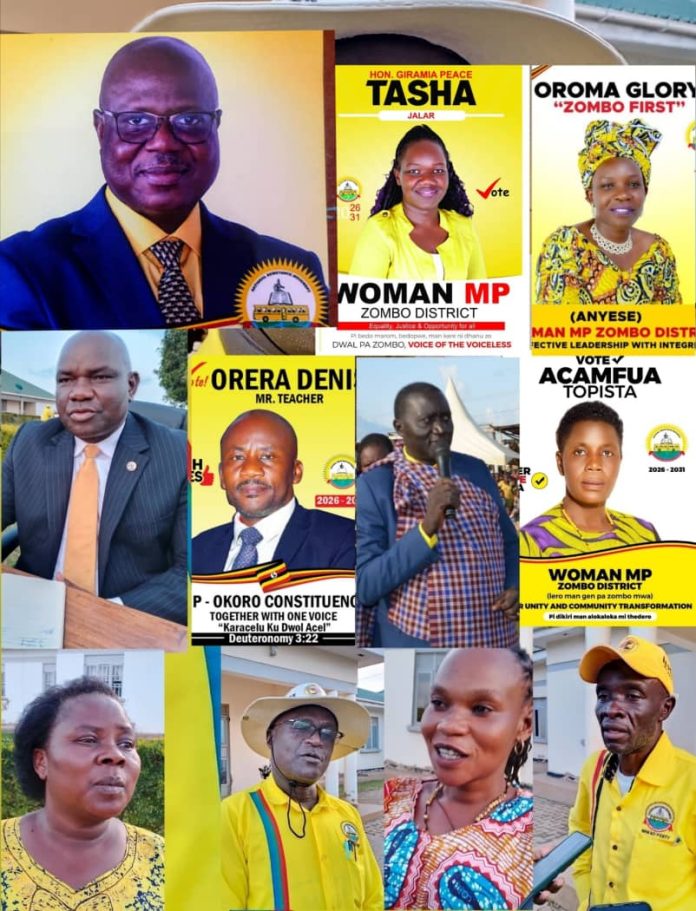
Gloria Oroma, a contender for the Zombo Woman MP seat, supported the resolution, noting that “time is limited, and whether we have joint campaigns or not, little will change.”

Candidates Alex Jagenu (Ora County) and Jane Evelyne Othora (Zombo Woman MP) welcomed the decision, arguing that individual campaigns would allow them to engage grassroots voters in remote areas inaccessible through sub-county-based joint rallies.

Nobert Okello, a candidate for Okoro County, endorsed the suspension but emphasized the need for security to ensure fairness and compliance with electoral laws.

Fiona Giramia, another Zombo Woman MP candidate, downplayed the importance of joint campaigns but raised concerns about electoral misconduct, alleging that opponents had openly abused and insulted her during campaigns in Aka Sub-County. She called for security intervention to address such violations.

Apenjunga Angala Pascal, a candidate for the LCV chairperson position, expressed a preference for continuing joint campaigns for his race, humorously stating his intent to “strip my opponents naked” through competitive engagement.

Political Context in Zombo

Zombo District, a staunch NRM stronghold, has witnessed significant candidate turnout for the primaries, with nine aspirants vying for the Woman MP seat, five for Ora County, five for Okoro County, and three for the LCV chairperson position.

With a population exceeding 300,000, the district’s political landscape is highly charged as candidates employ diverse strategies to secure votes.However, the commercialization of politics remains a pressing concern, with voters citing instances of vote-buying, which contradicts President Yoweri Kaguta Museveni’s directives against electoral bribery.

Public grievances also center on inadequate social services, including the deplorable 119 km Nebbi-Goli-Paidha-Zombo-Zeu-Warr-Vura road and the urgent need for a general hospital in Zombo.

Security Measures

Zombo’s Resident District Commissioner (RDC), Festus Ayikobua, issued a stern warning against “chaos and violence,” affirming security agencies’ readiness to maintain peace during the campaign period.

He urged candidates to coordinate with security forces to ensure orderly and lawful campaign activities, aligning with the NRM’s commitment to protecting life and property, as outlined in its 2021-2026 Manifesto.

The suspension of joint campaigns in Zombo underscores the logistical and financial challenges facing the NRM’s electoral strategy, despite the party’s constitutional emphasis on coordinated and disciplined campaigns.

Zombo’s NRM Party members argued that as candidates pivot to individual campaigns, the NRM leadership must address these challenges to ensure a credible and peaceful primary process ahead of the 2026 general .