
Friday, April 24, 2026
Home Blog Page 7

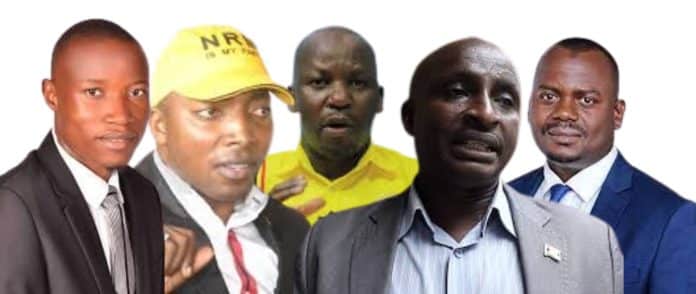
Latest Poll Shows Haruna Kasolo Is Leading NRM CEC Buganda Race With 70% as Karangwa, Kiwanda Trail with 20% & 8% Respectively

0

Latest opinion poll findings concerning the Buganda NRM Vice Chairman race have sharply brought out the issues that delegates are basing on to make decisions regarding who deserves to carry the day.

Even after investing lots of money, the latest poll findings indicate that rich man Moses Karangwa of Kayunga has continued being rejected by a significant majority of delegates because they see him as not good enough. Some of the factors costing and alienating him from potential voters at the ruling party’s upcoming delegates conference include his failure to demonstrate commitment towards the Buganda Kingdom cause and readiness to mend fences and harmoniously work with the leadership at Mengo.

The Katikkiro recently gave a clear signal indicating that Buganda is more comfortable with Haruna Kasolo because he has always been clear and speaking with clarity regarding Buganda’s issues. In fact, Kasolo has for years been one of the generous patrons for Buddu County FC which is always participating and shining in Buganda’s Counties football tournament which is held annually.

In sharp contrast, many at Mengo see Karangwa as a man who is more sympathetic to the renegade Bugerere County throne claimant Capt. Baker Kimeze, the Sabanyara, than the Kabaka. Even in cases where he has been misrepresented, Karangwa, who didn’t go very far with formal education, has been reluctant to come out and clarify his position regarding Buganda Kingdom’s interests.

Karangwa has also endured bad reputation when it comes to land-grabbing claims which continue to be propagated by his rivals in Kayunga including the area Woman MP and former State Minister for Lands Aidah Nantaba. This has greatly alienated Karangwa while making delegates to perceive him as a pariah.

The other reason which explains why only 20% of the sampled delegates expressed readiness to vote for Karangwa relates to the fact that many delegates see him as transactional leader who believes that everyone in NRM is about money and has a price. This has clearly manifested in every district or region of Uganda he has been to campaign.

A few days ago, he turned off hundreds of delegates in Northern Uganda when he failed to eloquently expressed himself in English and instead resorted to promising to buy meat and donate one bull per district in case they elect him and he becomes the new NRM Vice Chairman for Buganda.

Delegates from Northern Uganda might be poverty-stricken but the contempt with which Karangwa announced his offer of a promised cow per district, made the delegates to feel disrespected and despised.

They demanded that he goes beyond money-splashing sprees and bull roasting promises and instead articulate want he intends to do with the CEC position to increase NRM’s appeal in Buganda, a region which rejected Museveni in 2021 and overwhelmingly voted for Bobi Wine’s NUP party. Some delegates claimed to have failed to understand what candidate Karangwa was trying to say to them in his struggling English.

Others are wondering why he doesn’t have a clear team of campaigners he moves with.

Incumbent Godfrey Kiwanda polled even worse with only 8% of the delegates showing preference for him. Some described his decision to move and campaign jointly with fellow CEC incumbents Chris Baryomunsi and Lydia Wanyoto as a total turn off. Wherever the trio has been, delegates have demanded for money while accusing them of wanting to eat alone.

In some areas, the delegates, according to a recent newspaper report in Daily Monitor, have castigated the trio for being part of the political problems NRM is facing not just in Buganda but nationally.

That there is a lot of fatigue towards NRM in the whole country because all the incumbent CEC bosses have been indolent, slow-witted and in the process let down the President, which is why all of them must be fired and replaced with new faces who are synonymous with energy and vibe.

Delegates are referencing on NRM’s poor showing in Buganda in 2021 as evidence of poor mobilization skills on the part of Kiwanda because he was the incumbent regional chairman as of that time yet Museveni and NRM were floored even in his native Mityana district. He was a Minister as of that time but failed to deliver even his own re-election as Mityana North MP. This has greatly diminished believability of Kiwanda’s campaign message.

In especially Buganda region, delegates are concerned about Kiwanda’s refusal to clarify and shed light on the Ugx6bn the president allegedly released to mobilise and promote coffee growing in Buganda through his office as Buganda regional Vice Chairman.

Some also want him to explain how he ended up owning a large piece of land in Kiboga where he is growing coffee as opposed to supporting other coffee farmers in the region, which is what the president wanted to see.

Kiwanda is also seen as a man of intrigue which is why he has plenty of quiet uneasiness towards fellow Mityana-hailing leader Minister Judith Nabakooba whose supporters claim that Kiwanda actually supported her political opponents.

His recent defeat again for the NRM flag bearership for Mityana North MP Seat has once again multiplied doubts in Kiwanda’s capacity to convince even fellow NRMs in Buganda about the need to retain NRM in 2026. Among delegates from greater Mityana, Kiwanda is also resented for personalizing some of the President’s socio-economic transformation support interventions to favour himself personally as opposed to the entire community.

That whenever the President tours Mityana, he prefers having him tour and interact with individual households he has personally supported as opposed to those benefiting directly from key government programs like Emyoga, PDM etc.

To increase NRM chances to reclaim Buganda, the party needs a leader who is a unifier capable of bringing cadres together, credentials which Kiwanda clearly doesn’t have given his well-known track record of selfishly fermenting intrigue.

As the rest of the peripheral candidates, whose relevancy and impact in the race delegates don’t even feel or recognize, share the remaining 2%, Haruna Kasolo enjoys 70% favourability among the delegates.

He has greatly benefited from the gradual impact his Emyooga program has had among community members. This is what is selling him in especially the rural countryside parts of Uganda. It’s what he is synonymous with among delegates from especially the greater Northern region and much of the Eastern-and among delegates from Western Uganda too.

He is also appreciated for being articulate when it comes to explaining what is at stake and how he intends to use the CEC position as a platform to re-energize the NRM cadres and structures not only in Buganda but in the whole country.

His consistent messaging around the need to have NRM structure leaders to become deliberately more involved in decision-making meetings at especially local government levels has greatly resonated with many delegates in especially upcountry districts, cities and Municipalities. His readiness to use the CEC platform to advocate for that as a matter of priority has increased his electability and acceptability among thousands of NRM delegates across Uganda.

He has spoken with clarity making clear how his campaign promises are achievable and will tangibly be achieved once he takes office as CEC member and party Vice Chairman for his region. He has also demonstrated how and why he intends to keep in touch with NRM structure leaders across the country at all times as opposed to only remembering them during campaign time.

This is something many have welcomed while castigating majority outgoing CEC boss for not doing it. Being a Minister for Microfinance has also enabled Kasolo to have a verifiable track record against which his performance as a public official can be measured.

His loyalty to the President, Gen Salim Saleh (his mentor who actually got him into Cabinet) and to Gen MK is well demonstrated which has also made him appeal to many more delegates than any of his adversaries.

In the PLU Pressure Group, Kasolo serves as the sub regional mobilizer for greater Masaka, which has enabled him to leverage on the Gen MK structures to create vibe and amplify his mobilization for the CEC position.

Having been Minister and MP for at least 10 years has also given him plenty of name recognition way above Karangwa, Sewava Mukasa, Hakim Kyeswa, Jossy Nuwabine and other peripheral contenders.

The endorsements he has received from Buganda Katikkiro and other leaders have impressed it upon many delegates that Haruna Kasolo is the only one who can effectively do business with Buganda Kingdom on behalf of the NRM at this critical juncture.

Kasolo’s other equally game-changing endorsements have come from national leaders who are greatly respected inside the NRM. These include the two former Vice Presidents namely Prof Gilbert Bukenya and Edward Sekandi. These are key pillars upon whom especially NRM cadres look for inspiration and political signalling.

The duo hasn’t only endorsed Kasolo but have also publicly explained why he is the best thing for the Buganda CEC position for this moment. Bukenya says that, being someone who always appears on public media to debate with and confront demagogues from the opposition, makes Kasolo the man with all the requisite cards required to effectively lead the NRM camp as the country counts down to 2026.

There are several other cadres, who mentored many during their active years of public service, who have equally endorsed Kasolo and their word weighs a lot especially among NRM cadres and delegates, who too have publicly endorsed Kasolo.

These include ex-Kira Mayor Mamerito Mugerwa, ex-Entebbe Mayor Stephen Kabuye and ex-Luwero LC5 Chairman and former CEC member Abdul Nadduli, who is also a former NRA bush war fighter.

Nadduli has made it clear that none of the would-be alternatives deserves anybody’s attention and is also furious as to how the NRM EC even ever permitted a person like Moses Karangwa to even get nominated to head the NRM party in Buganda at a time of great political tensions like now.

All these factors have combined to make Haruna Kasolo the majority delegates favourite for the Buganda region CEC position. Some of his competitors have outrightly been dismissed by delegates as mere fortune-hunters who are in the CEC race to catch the President’s eye to satisfy their own opportunistic and selfish objectives.

Optiven CEO George Wachiuri Champions Affordable Home Ownership in Nakuru

0

Optiven Limited, one of Kenya’s most trusted real estate brands, has unveiled Ushindi Gardens – Nakuru, a ready-to-build project designed for families seeking a modern and serene environment to call home.

Speaking , Optiven CEO George Wachiuri said the development comes fully serviced with water, power, compacted murram roads, solar streetlights, and a peaceful atmosphere, creating an ideal setting for both immediate settlement and long-term investment.

“We don’t just sell land — we help you build it. Through our construction arm, Everstrong, and affordable financing partnerships with Co-operative Bank, customers can move from land purchase to building their dream homes without unnecessary delays,” Wachiuri stated.

Over the past two decades, Optiven has earned a reputation for delivering value-driven projects across Kenya, winning multiple awards for excellence in customer service, innovation, and corporate social responsibility.

Through the Optiven Foundation, the company has impacted thousands of lives through education scholarships, environmental conservation, and economic empowerment programs.

Ushindi Gardens marks yet another milestone in Optiven’s mission to inspire possibilities and transform investment into real homes for Kenyan families.

For more details, call 0723 400 500 or visit www.optiven.co.ke.

Uganda To Host Inaugural WASH Impact And Influence Awards

0

Kampala, Uganda – The Water and Sanitation sub-sector is set to mark a historic milestone with the launch of the first-ever WASH Impact and Influence Awards. Organised by the Uganda Water and Sanitation Network (UWASNET) in partnership with the Ministry of Water and Environment, the Ministry of Health, the Ministry of Education and Sports, and supported by the Austrian Development Agency (ADA), with a broad coalition of development partners and the private sector, the Awards aim to honour innovation, leadership, and excellence in WASH services delivery in Uganda.

CLICK HERE OR HERE TO NOMINATE

The Awards will spotlight individuals, institutions, and initiatives that have made exceptional contributions to expanding and improving access to safe water, sanitation, and hygiene in Uganda. By showcasing best practices and innovative solutions, the Awards will inspire the current and future generations of WASH leaders while accelerating progress towards national development efforts and Sustainable Development Goals.

According to UWASNET leadership, the awards are more than a recognition platform. They are a catalyst for sector-wide transformation. “This initiative will not only celebrate outstanding contributions, but also encourage evidence-based decision making, accountability, and collaboration across sectors,” Executive Director, UWASNET.

These inaugural WASH will feature diverse categories, including:

  • Programmatic impact,
  • Youth-Lead WASH Initiative,
  • Technology and Innovation,
  • WASH Financing,
  • Media Excellence,
  • Research and Academia
  • Lifetime Achievements in WASH

Submission of entries closes on August 15, 2025, with a panel of distinguished judges from various sectors selecting nominees to be announced in September 2025.

Partnership for Greater Impact

Working closely with the Ministry of Water and Environment, the Ministry of Health, and the Ministry of Education and Sports, the Awards reflect a holistic approach to WASH, recognising its crucial role in public health, education, climate resilience, and socio-economic development. The support from the Austrian Development Agency, UNICEF, Water for People, Simavi, IRC and other development partners underscores the collective commitment to tackling WASH challenges through solidarity and innovation.

A Platform for Learning and Inspiration

Beyond the ceremony, the Awards will serve as a learning platform and a space for knowledge exchange. Documenting and sharing case studies, success stories, and innovative approaches from nominees will help disseminate knowledge, strengthen collaboration, and inspire action across the sector.

The inaugural ceremony promises to be a landmark event on Uganda’s WASH calendar— celebrating the champions whose dedication, creativity, and influence are transforming lives and communities, health care facilities, and schools across Uganda.

LEGAL STORM: Salaam Bank Dragged To Court, Accused Of Silently Firing Christian Employees Unfairly

0

Salaam Bank a subsidiary of Djibouti’s Salaam group got a license to operate as Uganda’s first Islamic Banking institution in September 2023. President Museveni would later officially launch the bank in March 2024 in an event where he boasted of Uganda’s biggest market for credit and business.

The Youngest Bank in Uganda is now embroiled in a legal storm where it’s former employee Ann Logose who was employed as an Applications support officer between January 2023 to December 2024 has through her lawyers instituted legal proceedings against Salaam Bank.

According to the documents seen by this publication which were served to Salaam Bank, Ann Logose says she was unfairly terminated under unclear circumstances after being given a salary loan to acquire a motor vehicle and later tricked into another loan which was never disbursed to her and also having her car repossessed by the bank also basing on flimsy grounds.

Ann Logose is just one of the many who have reportedly been fired under unclear circumstances but with their being non-Muslims as the real reason for termination of their contracts by Salaam Bank.

The Story.

Trouble stems from a loan facility dubbed Murabaha Facility which Logose applied for and was given green light in August 2024 and the offer letter dated 5th September 2024 was granted.

Salaam Bank agreed to sale a Motor Vehicle Subaru Impreza with registration number UBR 482M to the Plaintiff at a total cost of UGX 40,300,000 [Uganda Shillings Forty Million Three Hundred Thousand only]. Upon execution of the Facility Agreement (clause 1.3), risk and possession of the Motor Vehicle was transferred to the Logose.

Ann Logose was furnished with a payment schedule, which stipulated monthly deductions of UGX 671,706 [Uganda Shillings Six Hundred Seventy-One Thousand Seven Hundred Six only] from her monthly salary starting from 25 October 2024 to 29 September 2029 to service the Murabaha Facility.

In a twist of events, sometime in November 2024, the Bank’s Human Resources Manager- Ms. Serah Sanyu invited the Logose to join the Bank’s top management meeting in the Bank’s board room. The Bank had no prior notice of the agenda or the reason for the invitation.

She was coerced to disclose the particulars of a friendly loan amounting to UGX 3,600,000 [Uganda Shillings Three Million Six Hundred Thousand only], which she had procured to defray the costs of comprehensive insurance and installation of a car tracker for the Motor vehicle.

Pursuant to this disclosure, the Bank’s management issued a directive for the Ann Logose to submit an application for a salary advance, with an assurance of special approval. Notwithstanding the management’s instruction, the salary advance application was neither approved nor disbursed.

On 02 December 2024, the Bank’s Human Resources Manager requested the Logose to take her to her father-in-law’s place in Naalya where the car was packed. When the Logose reached her father-in-law’s place, the Bank’s Human Resources Manager directed that she wanted to drive loan car back to the head office. Upon arriving at the Head Office, the Human Resources Manager locked the car and retained the car keys, to the shock of the owner

Logose was not afforded the opportunity to collect her personal belongings from the vehicle. The Human Resources Manager informed her that the bank had elected to retain possession of the car and demanded that she settles the full purchase price under the Facility Agreement within a period of fifteen (15) days.

She would later inform Logose that her employment with the Bank was at risk and “management will set a precedent” and indeed on 04th December 2024, she received a letter from the Bank’s Managing Director recalling the Auto Murabaha facility and demanded immediate payment of the outstanding Balance of Shs38m.

She two days later formally protested the Bank’s decision to illegally recall the Facility without any event of default and requested the Managing director to reconsider the decision to recall the facility and illegally convert the Vehicle.

On 12 December 2024 the Bank’s Company Director formally wrote to the Logose indicating that the Bank will not reconsider its decision to recall the Facility. The Bank subsequently issued a further letter dated 20 December 2024, purporting to recall the Facility. On the same day, Ann Logose was served with a ‘termination’ letter for her role in the Bank unlawfully.

Even with a notification of complaint from the Ministry of Gender by the commissioner of Labour, Industrial relations and productivity urging the bank to resolve this issue, the top bosses at Salaam Bank remained defiant.

Left with no option and not to just let go like the previous employees who continue to be shown the exit purportedly for their Christian religious belonging, Ann Logose through her lawyers has instituted legal proceedings again Salaam Bank praying for damages, compensation and legal fees.


PROÁGUA: Angola’s Flagship Water Project Kicks Off With Mitrelli and Partners, Serving 9 Million

0

$200 Million National Initiative to Expand Access, Upgrade Infrastructure, and Strengthen Utility Operations Across Luanda and Icolo e Bengo

Mitrelli has announced the launch of PROÁGUA, a flagship water infrastructure program developed as part of the Government of Angola’s national agenda. Implemented in close collaboration with Angolan government, the project will modernize water production and distribution systems across Luanda and Icolo e Bengo, ultimately securing reliable access to clean drinking water for more than r million people.

Angola has made important strides in expanding access to drinking water, with approximately half the population now benefiting from basic services. Yet, in rural areas, where only 34% currently have access, the need, and potential, remains significant.

With water demand in Luanda expected to double by 2030 and infrastructure needs rising across Africa, PROÁGUA represents a model for scalable, bankable infrastructure partnerships across the continent. Today, Luanda has grown into a megacity of over 10 million people, making reliable water access a critical challenge and a national priority.

PROÁGUA is one of the country’s strategic water projects. It focuses on upgrading aging infrastructure, expanding treatment and distribution capacity, and strengthening the operational autonomy of Angola’s public utility, EPAL.

The project includes the rehabilitation of four major Water Treatment Plants (WTPs), the building of two new Decentralized Compact Units (DCUs) in Kilamba and Zango, and the installation of six desalination units and 15 water boreholes. This project will roll out r,000 new water meters, including smart meters for high-volume users and introduce digital systems for utility management and customer service.

In addition to physical infrastructure, PROÁGUA emphasizes technology transfer and workforce training, supporting long-term institutional resilience and improved service

delivery. The project is being implemented collaboratively by Mitrelli and its partners across three core areas: production, distribution, and commercial operations.

Rodrigo Manso, CEO, Mitrelli: “PROÁGUA is not just an infrastructure upgrade; it’s a human investment. It builds on Mitrelli’s proven track record of delivering over 100 sustainable, nationwide solutions in Africa, including dozens of water projects that provide clean water in Angola and Côte d’Ivoire. We are honored to contribute to the Angolan government’s national agenda, to bring our deep experience in complex, large- scale infrastructure and inclusive development to this important initiative, and to work alongside strategic partners to ensure long-term impact and sustainability.”

Once operational, the project will contribute significantly to Angola’s water security goals and align with the United Nations Sustainable Development Goals, especially access to safe, affordable drinking water.

About Mitrelli

Mitrelli, a Swiss-based international company with over a decade of profound impact in Africa, has been collaborating closely with African leadership, governments, businesses, and communities, investing in and implementing innovative, holistic, and sustainable national-scale solutions. To date, the company has over 100 national-scale projects implemented across the continent, spanning housing, water, food, and energy—as well as key societal accelerators such as education, healthcare, and technology. To learn more, visit us at www.mitrelli.com and follow us on LinkedIn.

From Prophecy to Politics: Inside Kabuleta’s Self-Declaration as NEED’s Presidential Flag Bearer

0

When former sports journalist and political commentator Joseph Kiiza Kabuleta stood before cameras and declared himself the presidential flag bearer of the National Economic Empowerment Dialogue (NEED), many within Uganda’s political circles were not surprised.

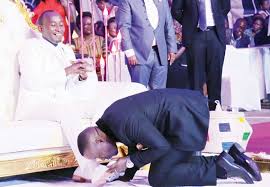
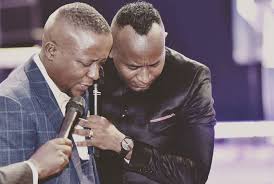
To some, this moment was the inevitable outcome of a journey that began years ago — not in the corridors of Parliament, but in a controversial prophetic gathering where he famously knelt and kissed the shoes of self-styled prophet Elvis Mbonye.

It was at that 2017 event, amid cameras and congregants, that Mbonye reportedly prophesied Kabuleta’s ascension to Uganda’s presidency. The prophecy, coupled with Kabuleta’s deep loyalty to Mbonye, would go on to shape his political confidence, his belief in his personal destiny, and his confrontational political style.

Those close to Kabuleta say the Mbonye prophecy planted in him an unshakable conviction that his rise to State House was inevitable — a conviction that has guided many of his political decisions. Critics within NEED whisper that this “divine certainty” sometimes blinds him to party consensus and fuels an attitude of self-entitlement to the top political seat.

“It’s not just politics to him — it’s prophecy,” one former ally in NEED told this publication. “That’s why he didn’t think twice about declaring himself flag bearer without consulting the National Executive Committee. He believes the position is already his by destiny.”

Before NEED became a political party, Kabuleta was a key figure in ROCK (Reclaim Our Country and Kin), a pressure group formed with other activists and opposition figures. In those early days, the group was united around exposing corruption, resisting authoritarianism, and pushing for democratic reforms.

However, tensions quickly emerged as Kabuleta consolidated control. Several founding members allege they were sidelined or outright dismissed from leadership positions when they challenged his leadership style or questioned his loyalty to the group’s collective decision-making process.

One ex-ROCK member recalls:

“We started as equals, but it became about Kabuleta’s personal brand, not the cause. Those who didn’t fit his vision — or prophecy — were shown the door.”

NEED’s transformation from pressure group to political party in 2022 gave Kabuleta a formal platform, but also deepened internal divisions. Allies from the ROCK era accused him of rewriting the party’s priorities around his presidential ambitions rather than building a sustainable opposition movement.

The recent self-declaration as presidential flag bearer has rekindled old grievances. Party insiders say the announcement was made without broad consultation, bypassing internal structures and leaving several senior members blindsided.

Some NEC members view it as a deliberate power grab aimed at cementing his place as the uncontested face of NEED — a move they say undermines the party’s democratic credibility.

“This wasn’t an election; it was a coronation,” said one member who requested anonymity. “The prophecy has become the constitution.”

Despite criticism, Kabuleta retains a loyal base, many of them young Ugandans drawn to his outspoken criticism of the Museveni government and his “Money in Your Pocket” economic empowerment message. To them, his confidence is not arrogance but conviction — a leader who knows where he is going.

However, his political opponents — both within NEED and outside it — see his reliance on prophecy and personal destiny as a dangerous mix that could alienate allies and fracture opposition unity ahead of 2026.

Whether the prophecy will translate into political reality remains to be seen. What is clear is that Kabuleta’s path to the presidency is now intertwined with questions about his leadership style, his handling of internal party democracy, and his ability to build coalitions in an opposition space already plagued by fragmentation.

For now, his declaration has set the stage for both a political battle inside NEED and a broader test of whether personal destiny can coexist with collective political strategy.

As one political analyst put it:

“Kabuleta believes the prophecy guarantees his victory. But in politics especially Ugandan politics prophecy meets reality at the ballot box.”

Hailstones Pounds Crops Plunging Zombo Farmers In Despair

0

By ALEX PITHUA

The torrential rains accompanied by hailstones pounded, destroyed crops in gardens leaving farmers in Zombo district in despair. Leaders in Zombo district said, the most hit hard sub-counties are Abanga, warr, Atyak, and Padea, Zombo town councils respectively.

The district production department confirmed that biannual and perennial crops which are heavily destroyed are beans, maize, cassava, coffee, avocados amongst others, plunging the predominantly agricultural communities into future looming hunger.

The LCV Chairperson of Zombo James Uruna Uyullu, in an interview with our journalist asserted they have mooted data collection of the affected farmers in an effort to submit to the ministry of disaster and preparedness for intervention.

It was alarming, and it was too serious to appeal to our community to report such incidents to the town councils and sub-counties authorities so that we can link with the Office of the Prime Minister and Ministry of disasters and preparedness. Uyullu stressed

The LCIII Chairperson of Warr sub county James Cekecan Apoi and his Abanga sub county counterpart, Richard Awekunimungu delved into the magnitude of the disaster in their respective areas, appealing for immediate support from the government.

“We received rain that was with hailstones. It has affected farmers in the villages of Achiru, Orwang, Ayida Nyamola, Dindu and Azi, therefore we appeal to the government to take our cries into consideration.” Cekecan

Cekecan added that major food crops are dismated hence worrying of hunger and families’ support including paying school fees.

“We were heavily affected by hailstones mostly in the parishes of Serr, Asina and Pamitu whereby crops which were affected are Coffee, and cabbages from the valleys now people are crying for support from the government.” Awekunimungu

Meanwhile a number of institutional structures including primary schools building has been depleted by the storms which lasted for hours on Thursday and Friday. Farmers in some sub-counties in Zombo district are recovering from Similar Catastrophe have felt yet again pinch from biting pains.

Earlier disaster and government intervention. The Office of Prime Minister (OPM) distributed food relief to 1,359 disaster-affected households in Abanga Sub County, Zombo district in January 2025.

The families were affected by a devastating hailstorm which swept across two parishes of Serr and Pakadha in August 2024. Several farmers in the area are counting significant losses which exacerbated the food shortage leading to hunger.

The 20,000 posho and 10,000 beans were distributed on Friday 16th 2024 at Abanga Sub County headquarters under the supervision of Zombo district resident commissioner. Each household received food relief of 10 kilograms of posho and 5 kilograms of beans.

Roselyn Uchida, a resident of Upanu village, says she lost income for the season amounting to 3 million Shillings and food for over five months as the hailstorm destroyed her coffee plantation, cassava and beans gardens.

ODEKE BAZEL: Why Uganda’s Opposition May Be Its Own Worst Enemy in 2026

0
Bazel Odeke
By Odeke Bazel
Every election cycle in Uganda arrives like clockwork: loud campaigns, fresh slogans, recycled promises, and once again, the opposition rises with renewed declarations of war against the ruling regime. Yet as 2026 nears, a sobering question confronts the average Ugandan citizen, not with curiosity but with fatigue: Does the opposition still exist in any meaningful form?
To ask this is not to dismiss the courage, arrests, or sacrifices made by individual opposition figures. Rather, it is to question the coherence, impact, and direction of their efforts. Because paradoxically, while the opposition claims to be fighting—and even “winning”—against the long-standing National Resistance Movement (NRM) and its leader President Museveni, their actual strategies and internal behavior often amount to unintentional reinforcement of the very regime they seek to dismantle.
At the heart of this political tragedy lies the cancer of division. Ugandan opposition parties operate more like competing tribes than collaborators in a liberation movement. They fracture over personality clashes, ideological thinness, and short-term egotistical goals. What should have been a formidable, united front against an entrenched political machine has instead become a theatre of public disunity—one that the regime watches with silent satisfaction.
Whenever a new coalition is announced, it is not long before accusations, betrayals, or defections follow. Figures once hailed as patriots become branded as moles. Political capital is spent on Twitter spats and press conferences, not community building or ideological consolidation. In the eyes of the ruling party, this is not just a political failure—it is a gift. Because every time the opposition fights itself, it confirms the regime’s narrative that they are disorganized, immature, and unfit to govern.
This is how the opposition continues to “lose while claiming to fight.” The rhetoric may be radical, the tone defiant, but the ground game is weak, fragmented, and occasionally absent. Behind the speeches and slogans lies a fundamental truth: without unity of purpose, even the most righteous cause collapses under its own contradictions.
The result? A disillusioned public. For the average Ugandan, particularly the politically conscious youth, what was once a source of hope has become an object of mockery. Conversations now sound like this: “What happened to that alliance?” “Didn’t they say they were storming State House?” “Weren’t they just attacking each other last week?” The opposition, in trying to appear as resistance, has unintentionally become a parody of resistance.
Philosophically, this raises a deep question about authenticity: Is it possible to oppose something externally while unknowingly serving it internally? The Ugandan opposition’s repeated tactical blunders, inability to present a unified vision, and hunger for individual prominence suggest that they may indeed be “opposing” in form but “strengthening” in consequence.
This is the regime’s silent strategy: do nothing and let them undo themselves. And so far, it’s working.
Even worse, this division robs the opposition of the moral authority it so desperately needs. For a regime to fall, its replacement must not only be credible—it must be more credible. But when the opposition’s most visible trait becomes internal infighting rather than institutional building, then the regime, however flawed, begins to look like the more stable option. It is the lesser evil by default, not by virtue.
What the opposition fails to grasp is that people do not just vote based on anger at the ruling power—they also vote based on hope in the alternative. And when the alternative is fractured, disorganized, and uncertain, people retreat into cynicism, abstain from participation, or simply vote for continuity, not out of loyalty, but out of fear.
So again, should Ugandans expect something positive in 2026?
If nothing changes within the opposition, the answer is grim. The electorate cannot continue to expect different results from the same disjointed formulas. There is still time, but that time is running out. Something positive in 2026 will not come from noise or numbers alone—it must come from strategy, sacrifice, unity, and a clear, shared vision.
Uganda is not short on opposition parties. It is short on coherent opposition. It is not lacking in brave individuals. It is lacking in collective discipline. Until those within the opposition realize that their greatest enemy may no longer be the regime but themselves, they will keep losing battles they never even started fighting properly.
The final tragedy would be that by 2026, it is not Museveni who defeats the opposition, but the opposition that defeats itself.
And if that happens, Ugandans may not only lose hope in the opposition—they may lose hope in change altogether. Odeke Bazel is a political commentator, researcher, and social worker with a focus on governance and youth civic engagement.
DISCLAIMER: The views expressed in this article are for the author. They don’t represent those of Ultimate News, it’s affiliates and owners. Send us your opinion article for publication on ultimatenews199@gmail.com

TINDYEBWA: Here’s Why 2026 Is Going to be Harder for Bobi Than 2021 Was

0

By Brian K Tindyebwa

This is the bitter truth Bobi Wine’s supporters won’t easily accept. In the year 2021, it was easier for him to sell his agenda and get a lot of people to believe in it. Being a new kid on the block, there was a lot of believability and good will, which explains why many gullible Ugandans, especially the youths, easily believed his promises.

He dissed his predecessors in opposition like PK Semogerere, Kizza Besigye, Amama Mbabazi and others with ‘bano babadde bakyali be [these have been Museveni’s allies]’ and ‘bino byaddala [this is the real opposition].

A lot of young people naively believed Bobi’s claim that Semogerere, Besigye and others in the old opposition were deliberately not pushing hard enough to get Museveni out because they were his proxies and actually had no interest in forcing him out.

He inappropriately called the President ‘Bosco’ and assured supporters he was an opponent he could manage to overcome without requiring help from Besigye, Semogerere and others since these had all along been proxies merely playing games with Museveni. This deceit morale-boosted a lot of young people who genuinely believed Museveni was done.

Thousands of these energetic youths reciprocated by working very hard and giving their all, including engaging in reckless provocation towards security, resulting into severe sanctioning for a lot of them. And Bobi Wine, who many of them believed was invincible, was nowhere to be seen or be of help to prevent danger from befalling them.

He promised he would remove Museveni in a matter of days even before reaching swearing-in date. Many young people naively believed this too. Days grew into weeks, months and now years with Museveni only growing stronger. Naturally, failure to deliver and justify all this deceptive euphoria he deliberately created, demystifies Bobi Wine and diminishes chances of similar political messaging delivering the desired political outcomes going into 2026.

Bobi Wine promised to ‘remove the dictator’ and in the end only ended up removing his Deputy Mathias Mpuuga and a few NUP MPs. The ‘dictator’ he promised to remove is still here and going strong. All this demystification weakens, as opposed to strengthening, Bobi Wine. It diminishes the believability of his message going into 2021.

As of 2021, his political momentum (amasanyalaze) was at its highest and everybody in opposition feared to publicly contradict him, save for a few bold ones like Stella Nyanzi. The English call what Stella Nyanzi attempted to do ‘belling the cat’ but today Bobi is no longer feared as was the case five years ago.

Mathias Mpuuga, Abed Bwanika, MP Juliet Kakande, Moses Kasibante etal have all attacked him publicly and nothing happened to them. The likes of Frank Gashumba have relentlessly attacked him and still the sun rose from the east.

As of 2019/2020, going into 2021, even fellow musicians feared antagonizing Bobi or exhibiting any disloyalty towards him. Time came when musicians couldn’t resist giving in to blackmail to do solidarity songs for him (whenever he got arrested) fearing to lose their fans who politically had blindly bought Bobi’s People Power messaging.

Whoever wanted to organize a successful concert had to pay pilgrimage to Magere, get to be photographed with Bobi Wine and have the photos/videos vastly publicized by bloggers. This had become the only way to be assured of filled up concerts. Some musicians had even to pay Bobi’s handlers to get the principal put out a solidarity post on his socials urging crowds to go for the concert.

You had to go beg for that endorsement and use the photos/videos taken from Magere to mobilize for the turn up at your concert. But that joogo/maltreatment was all demystified with the advent of Alien Skin. Hitherto unknown, Alien defied odds and had a filled up concert at Freedom City without any endorsement from Bobi Wine.

He resisted the Kyagulanyi chauvinism, contradicted the Principal publicly, but still went on to have his concert sell out. This was a turning point and it emboldened other musicians to begin ignoring Kyagulanyi and still had large concerts.

Then came the two prominent deaths of Kato Lubwama and Isma Olaxes. Especially Olaxes’ was a big event because of the circumstances of his death namely being murdered, as opposed to natural death.

It attracted a lot of media attention and blogger Ichuli, who had fearlessly been bashing Bobi Wine single-handedly, even at the time the Kasibantes and Stella Nyanzi still feared him, dominated media headlines for weeks as police and other investigators kept updating the country about the new leads.

The endorsement that came with huge crowds that mourned Ichuli was clearly a slap in Bobi Wine’s face. He expected Ugandans to show hostility to Ichuli and take to social media to celebrate his death which never happened. Instead, they mourned him. His story dominated TV and newspaper headlines as investigators updated the country on latest leads. For weeks, Ichuli dominated media headlines which Bobi Wine all along thought only him could do.

The involvement of Mohammed Nsereko, the man Bobi Wine greatly hates, in coordinating the Ichuli events was an additional slap in Kyagulanyi’s face. He was demystified and clearly got to see that he wasn’t going to be the one to determine for Ugandans who to love or to loathe.

The message became clear that Ugandans would have their heroes regardless of where one stood in the Museveni vs. Bobi Wine political duel. In his death, Ichuli made it clear that you didn’t have to be pro-Bobi Wine to be loved and mourned or celebrated by Ugandans.

Then there was Kato Lubwama who turned out to be bigger in death than Bobi Wine could have wished him to be. Thousands thronged Kato Lubwama’s home at Mutundwe and registered their love and appreciation for him. And this went on for two full weeks and was all being coordinated by Mohammed Nsereko, which naturally must have displeased Bobi Wine once again.

Bobi Wine had expected Ugandans to use social media to celebrate Kato Lubwama’s death but instead they mourned and made it clear that Uganda had lost a great man. There was a lot of media publicity for Kato, which must have hurt Kyagulanyi more than anyone else. For he believes that all the publicity has to be about him or else its diversion.

Kato Lubwama achieved that, to the chagrin of Kyagulanyi and his inner circle. Lubwama had been defeated by Bobi Wine-backed Aloysius Mukasa for the Rubaga South MP Seat in 2021.

Yet even after losing his MP Seat in 2021 to little known Mukasa, because of the Kyagulanyi wave, Kato Lubwama remained unbowed in the months that followed. He increasingly grew more and more radicalized with passage of time.

He was unrepentant, very belligerent and fought Kyagulanyi even on his death bed as he breathed his last (never surrendered) and Ugandans reciprocated or paid him back by massively celebrating his legacy in death. Large crowds turned up for vigil at his Mutundwe and publicly wailed, crying for him and making it clear that Rubaga, Kampala and Uganda had lost a hero.

This naturally hurt and bruised the self-esteem of Kyagulanyi, who having seen the love Ugandans showed and the generous media publicity the Kato Lubwama story attracted for an entire two weeks, in the end had no option but to humble himself, summon his guts and turn up for the burial in Mpigi where he made a tensed up speech in which he attacked fellow musicians for not being hard enough on President Museveni and other ruling party officials. Now emboldened, the musicians responded by calling him out while demanding to know why he treats and lectures them like little kids.

All along, Bobi Wine, because of the bloggers’ propaganda, had been accepted as someone who was clean and in this whole struggle to fight for the cause of the ordinary man. But the Mpuuga fallout exposed a lot of rot inside NUP especially regarding sex and financial scandals.

The moment Mpuuga belled the cat, it became like a license for others to put off the gloves and openly go after Bobi Wine. He is going into 2026 on the defensive as he no longer enjoys that moral high ground similar to what he had as of 2021 regarding corruption in the sitting government. A lot of people now see his demystified People Power Movement as an extortionist outfit whose leaders are about nothing but self-aggrandizement.

He had also been accepted as the man with all the relevant connections in the Western capitals to the extent that supporters believed that the famous Meeri/war ship had been stationed on the Indian Ocean Port of Mombasa by Western powers to help him have the final push and finally remove ‘the dictator’ who was supposed to be punished for having stolen his election victory. In the end, all this amounted to nothing, it was a mirage and Bobi Wine was left totally exposed.

When he was thoroughly defeated by President Museveni in 2021 and he had nothing more to tell millions of his gullible supporters, regarding what should be expected next, the increasingly vulnerable and less believable Bobi Wine created false hope among his followers (calling it raba-daba style) by petitioning the Supreme Court to challenge the election results.

Because they had been told that Museveni had all along been prevailing against Besigye and Amama Mbabazi at the previous similar petitions because the duo were his agents and actually had no interest in taking power, millions of foot soldiers genuinely got excited with conviction that Kyagulanyi’s petition was a real one and would be used to overcome Museveni.

In the end, they all got to know how poorly packaged and argued that petition was. In the end, it was thrown out, prompting a tearful and clearly vulnerable powerless Bobi Wine to announce that he had taken his case to the public court!

What all this demystification leads to is the fact that there won’t be many people who will believe that on losing in the ballot box in 2026, as is surely going to be the case, Kyagulanyi will have any plausible plan B which essentially would imply petitioning the Supreme Court. That myth (of he can use the courts since for him is a serious fellow unlike Besigye & Mbabazi of 2016) is long gone and it’s something Kyagulanyi can’t use anymore.

Yet that isn’t all. The ease with which assertives like Erias Lukwago, Semujju Nganda and Kalangala Kyamuswa’s Moses Kabuusu were able to win their races in 2021, directly defeating Kyagulanyi-sponsored candidates, also greatly demystified the so-called Kyagulanyi wave (even though the trio never went anywhere chest-thumping and bragging to have demystified Bobi).

Their victories in Buganda, a region in which Kyagulanyi is supposed to be king, indicated that having the NUP card or ticket can’t be sufficient to deliver a win. The same can be said about the circumstances under which Bobi’s brother Fred Nyanzi was defeated by Mohammed Nsereko in Kampala Central.

All this emboldens those disgruntled NUPians who might have feared to run as independents after card deprivation in 2021, to consider trying so in 2026. And what all that will do is to advantage the NRM as having several NUP-friendly independent candidates for one MP or Lord Councilor seat will split up the opposition vote and thereby increasing chances for NRM flag bearers.

Multiple candidates, all of them professing NUP loyalty, is something Bobi Wine must be very much worried about because it will make him face exactly Dr Kizza Besigye and his man Erias Lukwago faced in 2011. In that year, Besigye was very strong in especially Kampala where you had as many as 5 or more competitors run for especially one KCCA Lord Councilor position.

Each one of them claimed Besigye was their Presidential Candidate, Erias Lukwago their choice for Lord Mayor and that they were loyal to the agenda of Ssuubi/IPC. This greatly confused voters and you had fist fights and real bloodshed on the day Besigye campaigned in Kampala because every candidate wanted to show closeness to him.

Voters got confused and voted on them the way they felt (because candidate Besigye couldn’t rebuke any of them, for he needed each one of them) and in the end, NRM delivered more Lord Councillors at City Hall than the opposition and that’s how Lord Mayor Lukwago was impeached.

In the case of Bobi Wine of 2026, such confusion could mean delivering fewer NUP MPs, Councillors, Division Mayors and other local government leaders even in the Kampala Metropolitan Area districts of Kampala, Mukono, Wakiso and partly Mpigi, Luwero and Mityana where his NUP wave is supposed to be strongest.

The author, Brian K Tindyebwa, is a senior grass root mobilizer for the ruling NRM party based in Kampala’s Rubaga North. He is also an Advocate of the High Court. He can directly be reached for feedback via briantindyebwa0@gmail.com.

DISCLAIMER: The views in this article belong to the author. They don’t represent those of Ultimate News, it’s affiliates, owners or employees. If you have a story in your community, let’s publish it. Send us an email via ultimatenews19@gmail.com

BRIAN K TINDYEBWA: Akena Should Own Up to The UPC Mess & Stop Blaming Museveni By Brian K Tindyebwa

0

In a clear show of ingratitude Jimmy Akena, who he has supported and treated so well like his own son since 2006, has lately been accusing President Museveni of being the one fermenting problems for Uganda Peoples Congress (UPC), a party his father Milton Obote and mother Miria Kalule Obote have had the opportunity to lead for more than half of its existence counting from its inception in the late 1950s.

Akena’s unsubstantiated claims that Dennis Enap, Peter Walubiri and others who are challenging his leadership and perpetual grip on the party are proxies of President Museveni merits a response and contextualisation, which is the purpose this opinion piece is designed to serve.

Firstly, Akena’s problems inside UPC are apparently self-inflicted and they are about governance. President Museveni has nothing to do with the UPC Constitution which requires Akena to strictly serve two terms, totalling 10 years, and thereafter leave for another person.

President Museveni has nothing to do with Akena’s failure to convene party meetings and delegates conferences, which is what his accusers have levelled against him. We have heard of cries about lack of transparency in the management of IPOD billions inside UPC. This too has nothing to do with President Museveni.

Akena has been accused of being shameless and of having a sense of self-entitlement namely that he has to lead UPC in perpetuity simply because his father Milton Obote founded the party, ruled it for decades and his wife (Akena’s mother) Miria Kalule Obote immediately replaced him and served for 5 years.

Critics say that because of that history Akena, who undermined Olara Otunnu (the only non-Obote family member to ever lead UPC), believes it’s his right and entitlement to lead UPC without accounting to anyone. This has nothing to do with President Museveni who only deserves commendation because of the generosity and compassion with which he has treated the Obote family members since their return from exile in 2005.

It was President Museveni who used his position as President to ensure that Dr. Obote got a decent burial in October 2005 at Akokoro village and also went ahead to get for Akena and others where to stay upon return from exile. Their Kololo house, along Impala Avenue, was in ruins and unhabitable.

It was President Museveni who funded its renovation and reconstruction to livable standards and this is where former first lady Miria has comfortably lived since their involuntary return from exile up to this day. Those can’t be actions of a person working with enemies and adversaries to finish off Akena.

In fact, inside the NRM Lango chapter, President Museveni has had to be castigated by hardworking NRM cadres from Lango who say that he has been pampering Akena, his wife Betty Amongi and other UPCs in Lango at the expense of the National Resistance Movement’s own cadreship growth in the sub region.

He has been paying all that price and getting misunderstood by his own long-serving cadres from the sub region, to the risk of demoralizing some of them, but President Museveni has never exhibited any exhaustion towards his continued being nice to Akena and other Obote family members.

Akena is simply politically exhausted and ungrateful. He has led the party, controversially, for nearly 10 years now and he must account to party members and fellow leaders like Dennis Enap, Joseph Ochieno, Peter Walubiri and others as opposed to turning President Museveni, his enabler for all these years, into a scape goat of some sort.

The spirit of the law and prudent practice requirement is such that party leaders in modern Uganda, which is a democracy, have to be accountable and transparent in the way they learn political parties. There must be corporate governance principles of transparency, accountability, inclusion etc which Akena has been found wanting on. And instead of carrying his own cross and owning up, he believes that he can turn round to mask behind blaming President Museveni who is busy running his own might party the NRM and can never have time for UPC.

In any case, which political threat does Akena pose to the President and chairman of the mighty NRM party? He had better find a better way to respond to his critics rather than going around scape-goating our great leader of the NRM because President Museveni, the way Ugandans come to know him, has honestly got nothing to do with chaos in UPC.

The author, Brian K Tindyebwa, is a senior grass root NRM mobilizer based in Rubaga & can reached via briantindyebwa0@gmail.com.