Thursday, April 23, 2026
Home Blog Page 62

Kinzi Apartments Bar & Gardens: A Serene Oasis in Jinja, Uganda

0

Kinzi Apartments Bar & Gardens is a self-catering accommodation located in Jinja, Uganda. It is a popular choice for travelers seeking a relaxing and comfortable stay in this vibrant city. The property offers spacious and well-appointed apartments, as well as a variety of amenities, including a bar, restaurant, and gardens.

The Bar

The bar at Kinzi Apartments is a great place to unwind after a long day of exploring Jinja. It offers a wide selection of drinks, including beers, wines, cocktails, and non-alcoholic beverages. The bar also has a number of televisions, so you can catch up on your favorite sports or news while enjoying a drink.

The Restaurant

The restaurant at Kinzi Apartments serves a variety of delicious meals, both local and international. The menu changes seasonally to reflect the freshest ingredients available. The restaurant also has a wide selection of wines, beers, and cocktails to pair with your meal.

The Gardens

The gardens at Kinzi Apartments are a beautiful and serene place to relax and enjoy the outdoors. The gardens are well-maintained and feature a variety of plants and flowers. There are also a number of seating areas where you can enjoy a book, a drink, or simply the peace and quiet. You can even host your parties in our gardens which can accommodate both big and small events.

Here are some reviews from guests who have stayed at Kinzi Apartments Bar & Gardens:

  • “The staff were very welcoming and friendly. The bar and restaurant were great, and the gardens were beautiful. A great place to relax and unwind.” – Violet, Uganda
  • “Great location, very helpful and trustworthy staff, good ambience.” – Timothy, Kenya
  • “The location is great because it is in a quiet neighborhood. I also loved the gardens and the extremely cozy accommodation set up. Not crowded and a great place to rest.” – M. Martin, Uganda

If you are looking for a place to stay in Jinja that offers comfortable accommodations, a variety of amenities, and a relaxing atmosphere, then Kinzi Apartments Bar & Gardens is a great option. Place your booking today via call or WhatsApp +256 705 533833

OWEYEGHA-AFUNADUULA: How Uganda Can Liberate Herself From Aid Dependency

0

By Prof Oweyegha-Afunaduula

I did not know that a treatise “Real Aid: Ending Aid Dependency” by ACTION AID existed until a Facebook friend, Bithum Eric Opondo, asked me to compose an essay on how best Uganda can improve its economy without heavy reliance on foreign aid, imports and direct investment.

Having been a good student of Development Studies at the University of Dar-es-Salaam in the early 1970s when the term dependency was a greatly hated one by scholars who wanted newly independent countries in Africa to be liberated from overdependence on their former colonizers for their development, I responded to his request positively. I even quickly told him that the topic of my essay would be “How can Uganda reduce its dependency on foreign aid”? However, when I started researching for my essay, I came across the treatise by ACTION AID and read it enthusiastically, I decided to rephrase my topic as “How can Uganda liberate herself from aid dependency”?

Therefore, my thesis statement came to be “Uganda can liberate herself from Aid dependency”.
Aid dependency is linked to, or a result of foreign aid. The Corporate Finance Institute (CFI) defines foreign aid as “the international movement of money, services, or goods from governments or international institutions for the benefit of the receiving country or its citizens.

Foreign aid can be fiscal, military, or humanitarian and is considered one of the significant sources of foreign exchange”. The assumption here is that “foreign aid” is always beneficial to the country or entity that receives it.  Foreign aid may be offered as a contribution or a loan, which can either be a hard or soft loan. If the loan is in a foreign currency, it is termed as a hard loan.

According to CFI (i) foreign aid offering countries use foreign aid in order to improve their own security;

(ii) to discourage countries friendly to them from coming under the control of unfriendly governments or paying for the right to set up or use military bases on foreign soil;

(iii) to accomplish the political aims of a government, allowing it to obtain diplomatic recognition, to gain respect for its role in international institutions, or to improve the accessibility of its diplomats to foreign countries;

(iv) to promote the exports of a country and spread its literature, culture, or religion;

(v) to relieve the distress caused by man-made or natural disasters like drought, illness, and conflict; and

(vi) to promote sustainable prosperity, create or reinforce political institutions, and address a range of worldwide concerns, including cancer, terrorism, and other violations, and environmental degradation, among others..

Unfortunately, foreign aid is not charity, although when leaders talk to convince the people that foreign aid is good, they submit it as if it is charity. Foreign aid is not charity, and as the CFI has shown, it has many strings attached. It is ethnocentric. And as I have frequently stated no foreigner gives you aid to help you more than he or she helps himself. Since a lot of ethnocentrism or selfishness is involved, it cannot be real aid in the sense helping another out of adversity. In fact, there is a lot of examples to show that foreign has cased the aid receivers to sink more in adversity than prosperity.

At worst it has depressed internal productive capacities of the aid receiving countries when leaders have emphasized borrowing more that developing and relying on internal production to drive development and change. Consequently, it has led to a cancer known as Aid Dependency.

If a country is suffering from the Aid Dependency Syndrome (ADS), it will be a perennial recipient several types of aid: Tied Aid, Bilateral Aid, Multilateral Aid, Military Aid and Project Aid. I will not define these different types of aid. I will ask you to find out what they are and what the essence of each of them is.

In countries that are interwoven in the debt web as a result of borrowing from international money markets, it is military aid and projects aid that is contributing heavily to the debt burden and aid dependency. Uganda is one country which has accelerated its debt burden through incessant borrowing for the military and projects of one kind or another. If one wanted to study a country suffering the consequences of Aid Dependency Syndrome, one would not skip Uganda. There few strategies in place to liberate the country from the Aid Dependency Syndrome.

I have recently written about dependency. However, reading has become a problem in Uganda. For the purposes of this article, I will define dependency as “a situation in which one needs something or someone and one is unable to continue normally without them”. A good example is when a country like Uganda is cast as a one that cannot do without aid and is suffering from aid dependency.

When aid is given in such a way that it supports a poor countryy like Uganda to lead its own development, be more accountable to its own people, and mobilise more of its own resources, then aid itself contributes to reducing aid dependency, as ACTION AID stated recently. Unfortunately, aid has tended to free the powers that be to free itself from the citizens, and to become oppressive, repressive, and suppressive instead of serving the collective interest of the citizens: survival in an increasingly globalized and hostile world. Ultimately more aid dependency has led to spiraling dependency.

I define aid dependency as the reliance of a country, region on foreign aid as a primary or significant source of funding for development in its entirety, or in its different dimensions: health, education, energy, roads, environmental, economic, political, et cetera.

Action Aid defines aid dependency as “an economic problem described as the reliance of less developed countries (LDCs) on more developed countries (MDCs) for financial aid and other resources. More specifically, aid dependency refers to the proportion of government spending that is given by foreign donors”

This definition assumes that the more developed countries do not get aid from elsewhere. They do. For example, foreign aid to the People’s Republic of China since 1949 has taken the form of both bilateral and multilateral official development assistance and official aid to individual recipients. The country has big strides, since Chairman Mao Tse Tung’s The Great March Forward if 1968 towards being one of the most industrialized countries of the world. It has steadily liberated itself from the Aid Dependency Syndrome.

The question is: How can Uganda liberate herself from the Aid Dependency Syndrome?
As intimated elsewhere in this article a first line of defense against aid dependence is for the country to seek only aid that supports it to lead its own development, be more accountable to its own people, and mobilise more of its own resources. This way the aid itself will contribute  to reducing aid dependency.

The country should take Brookings advise that to reduce aid dependency in Africa, Africans must identify priorities, define, and implement them – not be reactionary to the politics of the West,

As S. Knack (2000) advised, if aid is highly variable over time within a country, dependence might be lessened in the sense that aid cannot be relied on as a stable source of funds.

Improving the quality of governance will necessarily lead to less spending on the military (or police) to combat discontent. Consequently, money wasted in militarization of society will be released for development, transformation and progress. With improved services, people will not be delinquent, idle, prone to violence or to becoming mentally sick. There will be peace in a tranquil environment.

There is need de-link institutions from an aid-dependent economic model that has made governors of African countries think of aid as a source of finance for development, transformation and progress to take place. For many years strategies such as Bona Bagaggawale, Myooga, Operation Wealth Creation and Parish Development Model, seeking to sink communities into the Money economy have ended up breeding greater aid dependency and corruption in government.

According to a BBC News article of 1 May 2013 “How can Africa move away from aid dependence” by Alexis Akwagyiram, it helps to avoid huge infrastructure development projects, which burden the economy instead being sources of meaningful development, improving trade and investment is a good choice. However, it will be useful for Uganda to proliferate less energy and capital-intensive development projects and programmes
Science and technology is, and should be, the basis for the transformation of the country.  We have to build expertise in these areas for the economy to take off.

However, the science should be sustainability or integrative sciences, instead of disciplinary sciences, whereby alternative expertise will be developed that is less expensive since they promote truly integrated teams. Those sciences are interdisciplinarity, crossdisciplinarity, transdisciplinarity and non-disciplinarity or extra-disciplinarity. The new expertise will be more critical in thinking and analysis of problems and make more appropriate and less expensive choices. Political decisions will be better informed and there will be no room for dictatorship and Presidentialism.

One thing is true. Aid, is not sustainable as a long-term development plan. Research has consistently suggested that Africans living outside the continent send more money home to their families than is sent by traditional Western aid donors. Uganda needs to disengage herself completely from aid from the so-called developed countries and meaningfully and effectively use the money from the Ugandans in the diaspora to finance its development and transformation. Such money has no strings attached.

As Alexis Akwagyiram has reasoned, “The potential that can be found in the African diaspora is huge. People in the diaspora have a sense of empathy and want to invest back home. If you take the power of remittance and apply it to investment, the diaspora could be a force to be reckoned with. It has been argued that diaspora investors could contribute to the construction of buildings and roads across Africa.

Besides, as one writer intimated, “We have the capabilities, intelligence and the competence as well as the desire to achieve change in Africa”. If this capabilities lity can be combined with fighting corruption effectively the sky is the limit. The sustainability sciences I have mentioned have the potential to improve our critical thinking, critical analysis, and produce a new crop of scholars and future-ready professionals who do not resist interaction and teamwork in development.

We must critically rethink foreign aid. But one thing is true, foreign aid is not charity. It has strings attached.
I think this is a good point to end the article and let the readers begin thinking anew about aid and aid dependency and the opportunities that exist to escape from it.
For God and My Country.

The Writer Is a Ugandan Scientist and Environmentalist

DISCALIMER:  The views expressed in this article are solely for and belong to the author/ writer. They don’t reflect, portray or represent Accord Communications Ltd, it’s affiliates, owners or employees. If you have an article in your community or an opinion article, let’s publish it. Send us an email via ultimatenews19@gmail.com or WhatsApp +255769138299


Teso, Karamoja Locals Want Projects Under Ministry Of Agriculture  Be Investigated

0
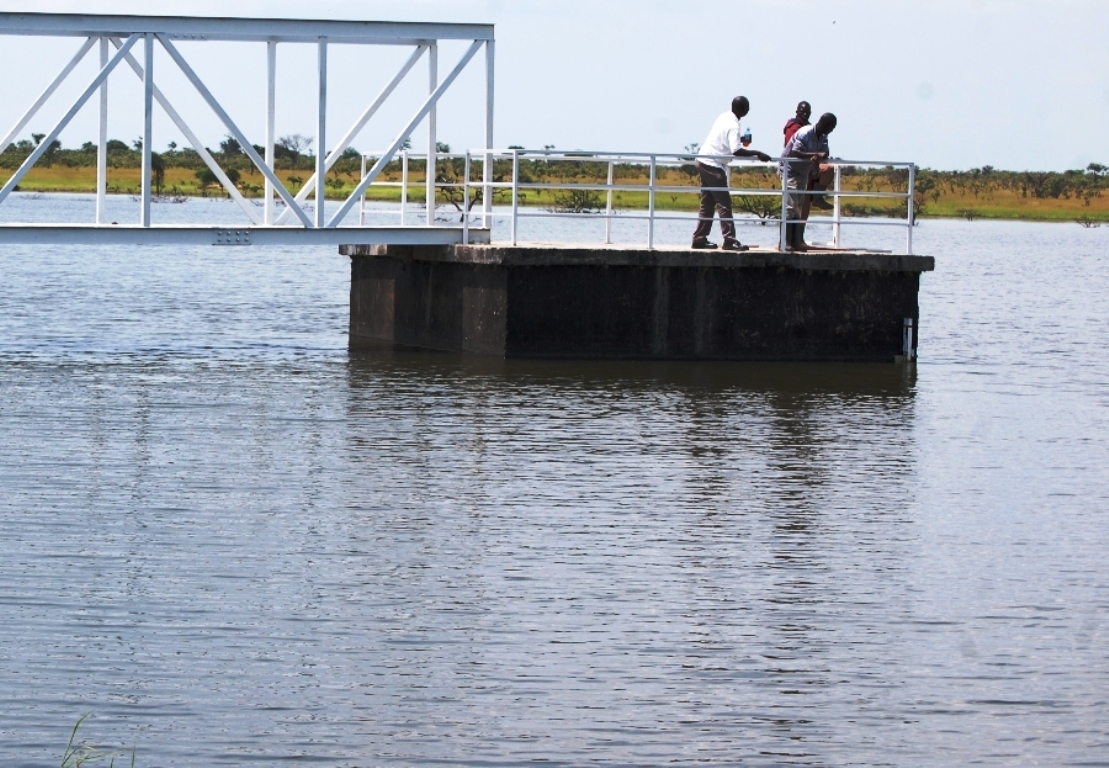
The enginneers from the ministry of water and environment standing on the contral chmaber of Arecek water dam in Napak district- PHOTO BY STEVEN ARIONG
TESO/ KARAMOJA: Concerned leaders of Teso and  Karamoja region have demanded for special investigations to be carried out on the projects directly being implemented by the ministry of Agriculture in the two regions. Speaking to this publications the locals say they have failed to realize any tangible results from the projects under ministry of Agriculture across the two regions.
Bosco Opolot from Ngora district says the office of the prime minister needs to streamline the activities of the ministry of Agriculture saying they are being confused seeing ministry of Agriculture also going and do unplanned activities in the project already done by ministry of water and environment.
Geraldo Nabeshe from Kibuku district says they were so shocked to seen workers from the ministry of Agriculture spending the whole night slash a bushy and abandoned irrigation project when they learnt that the president was going to tour Bukedi region.
“As locals we are seeing a lot of mess from the ministry of Agriculture and we need investigations team to take up the projects under ministry of Agriculture,”he requested

Gabriel Teko from Moroto wandered why government has continued trusting ministry of Agriculture to implement huge projects in Karamoja. Gabriel says most of the  projects such as dams and animal holding grounds and cattle markets which were  fully funded and expected to have been completed since 2019 when the project  was launched have remained uncompleted while other sites have been deserted by the contractors under ministry of Agriculture over unknown reasons.

This publications  visited some of the projects such as Morungole dam located in Kaabong which was under construction by Zhongaho company limited a Chinese firm at the cost of shs 7.8 bilion  the work has installed and deserted after it was launched in May 2019.

Another  dam  in Kanapidi, Kaoyaagor village in Kotido district which costed government Shs6.7billion has also stalled, before it’s completion since it was launched in April 2019 and expected to be done within  five months. Not only that, another dam which has stalled is in  Kosike in Amudat district which costed government Shs10bn no work is in progress since.
AD: FOR THE BEST WEB HOSTING, WEB DESIGNS AND DOMAIN NAMES, CALL OR WHATSAPP +256758201313
There’s also an animal holding ground in Namalu which has stalled and the cattle market in Lemusui sub county in Nakapiripirit district which has also been abandoned. Jino Meri the district chairperson of Kaabong says many projects implemented by MAAIF and funded by  world bank have failed to create any impact to the lives of the people of Kaabong and Karamoja at Large.
“Look at that project of Morungole,not even the district was involved because this is the ministry of Agriculture error where by they don’t want to involve the district in monitoring the projects,”he said.
While Mr.Paul  Lokol the district chairperson of Nabilatuk attributes the failures to duplication of work by two ministries of Agriculture And water which has affected the meaning full impact for the people of Karamoja.
“The MAAIF people just do their work without involving the district people not even the local community and this makes it hard for proper supervision and owning any project,”he said.
According to Mr.Lokol  as long as the technical team from the ministry of water and ministry of Agriculture continue to behave as if they are from heaven, there will be no successful projects under world bank in Karamoja.
For John Nangiro the district Chairperson of Nakapiripirit, he says the projects implemented by ministry of Agriculture should be investigated because they are good at duplicating work. According to Mr.Nangiro, where ministry of water and environment puts up a facility, ministry of Agriculture also runs there with their own projects which is not good.
He said the ministry of Agriculture has failed to complete a cattle market located in Moruita sub county in Nakapiripirit district which is at the coast of Shs500million  and another cattle holding ground in Namalu which costed government Shs1.8billion.
“All the sites have been abandoned by the contractors and no one in the ministry of Agriculture is bothered to follow up,”he said.He says that he has written several letters to the line ministry for the delayed completion of Resilience projects but all in vain.

“We are looking ways to meet with the team from the world bank to express our disappointment over their funded projects,”he said.

According to Mr.Nangiro projects of more than 140 billion under Resilience program in Karamoja has failed.

But MAAIF Engineer who over see the projects in the region Mr.Francis Wanaloba when contacted acknowledge some projects have delayed due to what he calls unavailable circumstance such as rains and Insecurity. He give an example of Morungole dam where the Chinese contractor abandoned the site after being attacked by the armed cattle rustlers.

He further says they were working with the contractors to ensure that all the projects uncompleted will be completed and handed over to the respective district within the shortest time.

If you have a story in your community or an opinion article, let’s publish it. Send us an email via ultimatenews19@gmail.com or WhatsApp +255769138299

Why You Should Consider Partying At Kinzi Apartments Jinja

0

Kinzi Apartments Bar & Gardens is a popular spot for partying in Jinja, Uganda. The apartments are located in a quiet area of town  in Bugembe along Buwekula road, but they are close enough to the action that you can easily get to and from other bars and clubs.

Here are some tips for partying at Kinzi Apartments Jinja:

  • Book a reservation ahead of time. The apartments are popular, especially on weekends, so it’s best to book your reservation ahead of time. You can do this online, by WhatsApp or calling the apartments directly +25670553833
  • Arrive early. The party usually gets started around 9pm, but it’s best to arrive early to get a good spot and to avoid the crowds.
  • Be prepared to dance. The music at Kinzi Apartments is usually a mix of Ugandan and international hits. There’s a large dance floor, so be prepared to let loose and have some fun.

Here are some of the things you can expect at a party at Kinzi Apartments Jinja:

  • A good mix of people. Kinzi Apartments attracts a diverse crowd of locals and tourists alike. You’ll meet people from all walks of life, which makes for a fun and interesting evening.
  • Good music. The DJs at Kinzi Apartments know how to get the crowd going. They play a mix of Ugandan and international hits, so there’s something for everyone.
  • Friendly atmosphere. The staff at Kinzi Apartments are friendly and welcoming. They’ll make sure you have a good time and that you have everything you need.

Overall, Kinzi Apartments Jinja is a great place to party. The apartments are comfortable and spacious, the music is good, and the atmosphere is friendly. If you’re looking for a place to let loose and have some fun in Jinja, Kinzi Apartments is the place to be.

Don’t Hesitate, place your booking today via WhatsApp or by calling

Kinzi Apartments Bar & Gardens is a popular spot for partying in Jinja, Uganda. The apartments are located in a quiet area of town, but they are close enough to the action that you can easily get to and from other bars and clubs.

Here are some tips for partying at Kinzi Apartments Jinja:

  • Book a reservation ahead of time. The apartments are popular, especially on weekends, so it’s best to book your reservation ahead of time. You can do this online or by calling the apartments directly.
  • Arrive early. The party usually gets started around 9pm, but it’s best to arrive early to get a good spot and to avoid the crowds.
  • Bring your own drinks and snacks. The apartments have a bar and restaurant, but it’s usually cheaper to bring your own drinks and snacks. You can also barbecue in the gardens.
  • Be prepared to dance. The music at Kinzi Apartments is usually a mix of Ugandan and international hits. There’s a large dance floor, so be prepared to let loose and have some fun.
  • Be respectful of other guests. Kinzi Apartments is a residential complex, so it’s important to be respectful of other guests. Keep the noise down after midnight and be mindful of your trash.

Here are some of the things you can expect at a party at Kinzi Apartments Jinja:

  • A good mix of people. Kinzi Apartments attracts a diverse crowd of locals and tourists alike. You’ll meet people from all walks of life, which makes for a fun and interesting evening.
  • Good music. The DJs at Kinzi Apartments know how to get the crowd going. They play a mix of Ugandan and international hits, so there’s something for everyone.
  • Friendly atmosphere. The staff at Kinzi Apartments are friendly and welcoming. They’ll make sure you have a good time and that you have everything you need.

Overall, Kinzi Apartments Jinja is a great place to party. The apartments are comfortable and spacious, the music is good, and the atmosphere is friendly. If you’re looking for a place to let loose and have some fun in Jinja, Kinzi Apartments is the place to be.

Don’t hesitate, place your booking today by calling or WhatsApp +256705533833

Multipurpose Water Dams End Water Conflicts Between Iteso And Karimojong

0
????????????????????????????????????

KARAMOJA: Mark Lote a resident of Kautakou village in Ngoleriet sub county in Napak district always runs to Teso  districts in search of Water for his animals due to shortage of water sources in the region. The movement of Lote together with his other fellow pastoralists to Teso region ends up in a serious fight between them and the Iteso.

Mr.Lote and other pastoralists in Karamoja could also not respect that they are in a different land not in Karamoja because they were convinced that the water that they are following were from Karamoja and end up in Teso.

“We could fight but because the Iteso are not good fighters they end up leaving us watering our animals,”he said.

Moses Dengel another pastoralist  recalled one day when the Iteso people had threatened to poison the water sources  that they used to water animals.

AD: FOR THE BEST WEB HOSTING, WEB DESIGNS AND DOMAIN NAMES, CALL OR WHATSAPP +256758201313

“When I heard about the Iteso planing to poison the water, I sat down thinking what next with my animals,”he said.

However, the  water conflicts between  the Karimojong and Iteso has since ended now eight  years back. This was after the Museveni government through ministry of water and environment  embarked on  construction of  multipurpose water dams along the border districts  with the move to address water shortage for animal production.

Each District along the border of  Teso and Karamoja has at least got a big dam and a valley tank for every Parish across the entire region. In Kapelebyong district already farmers there are carrying out irrigation schemes planing their crops same  as  in Katakwi district.

Grace Agoe from Kapelebyong district said credit goes to the ministry of water and environment for the great efforts they have put in place. She calls upon for more dams to be built in every sub county saying apart from providing water for animals, these dams also prevent floods  from destroying people’s families and crops.

This website has learnt that since the government embarked on the construction of the dams per district,  there has been no incident reported about Karimojong crossing  to their neighboring districts to fight over water and pasture since most of them are now grazing and watering their animals within  these  dams.

The pastoralists from Moroto district  whenever it’s a dry season move with their animals and  settle with thousands of their cattle around Kobebe dam, while Bokora pastoralists in Napak district  also settled around Areceke water
dam watering their animals instead of crossing to Teso districts. The  Dodoth also  in Kaabong move and  settled at Longoromit dam grazing their animals.

Mr. Jino Meri the district chairperson Kaabong testified that the  construction of these dams have  reduced conflicts and out migration of the Karimojong pastoralists to their neighboring districts searching for water but urged the ministry to keep on discealting the constructed dams to avoid them drying up.

Mark Lochio a pastoralists from Rupa Sub County says the presence of the dams has made their animals fatten because they are no longer stressed of over walking long distance in search of water and animals.

“Those days our cattle were not weighing 100 kilograms due to over walking several kilometers searching for water but now since these dams were constructed we have settle and our animals are now weighing from 300 to 600kilograms,”he said.

He said the only challenge disturbing  them is cattle rusttling. Bony Logit an agriculturalist said the projects of ministry of water and environment were very seen compare to the projects done by ministry of Agriculture.End

If you have a story in your community or an opinion article, let’s publish it. Send us an email via ultimatenews19@gmail.com or WhatsApp +255769138299

Ministry of Gender Revives the Apprenticeship Programme As 90 Graduate

0

Kampala, 31 October 2023The Ministry of Gender, Labour and Social Development on Tuesday held a graduation ceremony for the first cohort of apprentices the country has registered in many years, marking a significant milestone in the country’s efforts to tackle unemployment and underemployment.

The 90 graduates were crowned at a colourful ceremony held at Sheraton Hotel in Kampala after successfully accomplishing on-job studies in different fields in the Hotel Industry.

“Today’s ceremony holds significance not only for you as individuals but for our entire nation. We are here to witness the first graduation of apprentices in generations. This marks the inauguration of a new and promising chapter in our country’s development.” The National Apprenticeship Superintendent, Mr. Alex Asiimwe, who is also the Commissioner Labour, Industrial Relations and Productivity, noted.

He revealed that in the colonial and immediate post-colonial era, apprenticeships played a critical role in skills development, however the program fizzled out in the 1970s due to a host of factors, including the expulsion of Asians and the restructuring of industrial training institutions, which, unfortunately, did not adequately address the necessary legal and institutional mechanisms.

The Minister for Gender, Labour and Social Development, Hon. Amongi Betty Ongom, who presided over the graduation, revealed that in 2018 President Yoweri Museveni tasked the Ministry to revitalize the National Apprenticeship Scheme in key sectors of the economy and subsequently a national Framework was approved by Cabinet.

She added that working in collaboration with Uganda Hotel Owners’ Association (UHOA), Uganda Hotel and Tourism Training Institute (UHTTI) and Directorate of Industrial Training (DIT), and with financial and technical support from The Netherlands Embassy and the International Labour Organisation (ILO), the Ministry successfully launched an Apprenticeship Pilot Scheme in the Hotel sub-sector, leading up to the Tuesday graduation.

The Minister highlighted that apprenticeships are a powerful strategy to confront skills deficiencies in the labour market because it offers hands-on skill development, engages employers directly, and provides tailored learning that aligns with industry needs.

“This approach responds to President Museveni’s prioritization of skilling and re-skilling of school leavers and dropouts to enhance their employability, including self-employment.” She said, adding that it as well resonates with the Economic Growth Strategy, which focuses on developing a knowledgeable, skilled, and ethical workforce.

The Minister praised the collaborative efforts of stakeholders including the instructors and 35 hotels spread across the country that accepted and trained the apprentices.

She urge all employers to embrace apprenticeships as a key avenue for skills development, enhanced production and productivity.

Commissioner Asiimwe revealed that 67% of the apprentices had already been offered employment by the host and non-hosting hotels, while others had opened up individual businesses based on the skillsets they had acquired especially in pastry and baking.

The UN Resident Coordinator, Her Excellency, Susan Ngongi Namondo commended Uganda for its open door policy for refugees and the promotion of regional integration, which had enabled learners from refugee and host communities benefit from the pilot phase of the new apprenticeship program.

The Ambassador of the Netherlands to Uganda, Her Excellency Karin Boven noted that her country was happy to have provided financial support for the intervention and pledged to continue supporting the skills development agenda.

The apprentices were implored to perform their duties with excellence and rebuild the value of apprenticeship in Uganda.

The ceremony was also attended by the chairperson Uganda Hotel Owners’ Association, Mrs. Susan Muhwezi, the Director Directorate of Industrial Training Dr. Patrick Byakatonda, the International Labour Organisation Chief Technical Advisor, Mr. Opio Steven, and the Principal Uganda Hotel and Tourism Training Institute, Mr. Kawere Richard, among others.

If you have a story in your community or an opinion article, let’s publish it. Send us an email via ultimatenews19@gmail.com or WhatsApp +255769138299

HOW TO FREE UGANDA FROM INTELLECTUAL CONFUSION AND SOCIAL INSTABILITY.

0

By Prof Oweyegha-Afunaduula
Is Uganda now where France was in the early 19th Century when there was so much intellectual confusion and social instability? If so, we need a cadre of independent-minded critical thinkers, in and outside our Universities. However, severe specialisation of university scholars, entrenched by policies for glorified intradisciplinary knowledge production and management, will not allow them to be open-minded, independent-minded, critical thinkers, critical writers and critical analysts.
We need a total reformation and reconstruction of the intellectual orientation to free the scholars’ minds from imprisonment and domestication so that they can be free thinkers, not deeply sunk in scholasticism.
If we want to reorganise our society for the 21st century, we should not be happy with pure “scholastic” scholars, just thinking and writing for themselves and reproducing themselves, with little or no interest in the society outside their knowledge enclaves. They must venture out of their enclaves and play the critical role of thinking, clarifying and articulating issues for society.
But doing so requires rethinking and redesigning policies for knowledge production and management.
Globally speaking it is no longer fashionable to think and do in disciplinary enclaves. It was never fashionable. It limited, and still limits, its victims, or beneficiaries, thinking and seeing beyond the boundaries of their disciplines. Yet the problems, challenges and issues that needed or need solutions did not, and do not, recognise those boundaries. In other words, they are not disciplinary.
Of course, the assumption for sticking to disciplinary academic and intellectual orientation was that if knowledge workers in each discipline contributed his her bit towards solving a particular issue or problem, aggregating the various solutions proposed by the different scholars would add up and lead us closer to megasolutions.
Unfortunately, many of the works of scholars end up as bound theses that are put in shelves in libraries, that end up gathering dust for decades without anyone opening them. These days we have digital libraries, but even then these may be visited by those in the disciplines; not those who apply knowledge. Or else they publish their works in professional journals read by themselves or others of their kind.
The universities need to open up to new knowledge production and management (interdisciplinarity and transdisciplinarity) strategies in order to make scholars and their knowledge relevant in the 21st Century. Later will be too late. These knowledge production and management strategies liberate the minds of scholars to think and see further afield. They tend to be more oprn-minded, more independent-minded and to love critical thinking, critical writing and critical analysis, without fear or favour.
It is no longer a virtue to ensure academic and intellectual inbreeding. This is only ensuring that scholars communicate to each other in their disciplines and become increasingly irrelevant beyond the Ivory Tower. It explains why the Ivory Tower is frequently seized by a heavy cloud of silence when society is knocking at the doors of scholars for guidance. They are more preoccupied with intradisciplinary interests of careerism and promotion.
Because society is gaining little from the manifestations of scholars, it tends to be aloof when politics invades the academic and intellectual space of the University militarily. It may explain why when scholars struggle for their rights it is easy for some if their kinds to dismiss them as “regime change intellectuals”.
It is easy to divide academia submerged in scholasticism and intradisciplinary knowledge production and management than those more open to other knowledge production and management strategies. There will be far less fear, distemper of knowledge and idols of the mind in interactive academia. Education planners and university managers, take this advice seriously. Our country must be fully in the 21st Century and free from intellectual confusion.

TOP STORY: Kyambogo Big Boss Expelled For Raping Disabled Primary Kid

0

On Monday Kyambogo bosses held a stormy council meeting which was used to discuss and decide the fate of a prominent professor and administrator by the names of Aaron. It was chaired by Dr. Nakanugo Gorette.

The Professor is one of the very big bosses at Kyambogo University and he has both the teaching and administrative responsibilities. You can’t count the five most powerful people at Kyambogo and his name misses.
Last week, Prof Aaron was chosen by an international NGO based in Kampala to travel with a group of disabled pupils from Apollo Kaggwa school of Mukono along Katosi Road.

After dropping all the other kids, he stayed with one and defiled her throughout the night and he didn’t use a condom even. He left the primary six gal in a lot of pain. After using the gal he dropped the child to the school where teachers saw she was in too much pain. They asked her and that’s how she spilled beans about the sex act Professor Aaron did to her. This is how Vision Project the NGO which sponsored the Nairobi trip got involved and reported to KMP police headquarters and Professor Aaron was arrested only to be released on police bond after sleeping in the KMP police coolers for several days.

The Professor was about to become the Deputy vice chancellor of Kyambogo University. KMP police afandes who arrested Professor Aaron from his home on Namugongo Road found him with viagra and sex lubricants in his car. He cried and promised to sell his land in Kwania to pay them but the afandes refused saying he must rot in jail because its not good to rape minors especially those who are disabled.

ADVERT By Kyambogo University Calling

The KMP afandes were even more angry because this wasn’t the first time Professor Aaron was forcefully sexually harvesting minor girls with disabilities. The story was on social in the weekend and shamed Kyambogo council members led by Prof Ojambo had to discuss it during their Monday meeting.

In the meeting the vice chancellor Professor Erias Katunguka was grilled why he was protecting Professor Aaron which he denied. He made it clear he isn’t the one who helped him to get police bond and proposed that the sex Professor carries his cross. Council members tried to ring him to come to the meeting but the much shamed Professor Aaron’s phone was totally off and he was said to be hiding in his village back home in northern Uganda.

On Monday council members voted to put an advert in the newspaper of Tuesday making it clear that Professor Aaron must carry his cross. In the advert the university Council put a phone number of someone plus an email address where other victims of Professor Aaron’s sex harassment should report what he did to them. Kyambogo sources say that after confirming that the KMP police had a file on Professor Aaron, it was decided to interdict him which Professor Katunguka the VC will have to do because he has such powers.

Professor Aaaron will then face the music in the disciplinary committee of Kyambogo council which will be dismissing him with total disgrace. Insiders say that the Monday council meeting was very hot as members said that Professor Aaron must be dismissed to help protect the University’s name or else the public will think that management supports such sex harassment of the disabled minors.

Are you a victim of sexual violence or assault at Kyambogo University call 0772419807 or WhatsApp us +255769138299 or email ultimatenews19@gmail.com

BONIFACE KOLOBE: Why Kingship is Foreign To Ateker Confederation

0


Installation of kings within the Ateker-Uganda Chapter is raising a serious concern, especially in the context of the growing call for pan-Atekerism.

Historically, Ateker societies did not practice centralized kingship/chieftainship systems. The introduction of chieftainship by the colonial administration in tribes that lacked centralized governance was a means of exerting control and manipulation. Chiefs were adorned in various regalia to project power and authority, and their positions were made hereditary.

The Turkana and some Ateker groups resisted this form of governance, considering it foreign and oppressive. With the attainment of independence, African nations drafted their own constitutions, intended to provide a framework for governance, based on the principles of self-determination and cultural preservation.

Therefore, the purpose behind the reintroduction or imposition of an oppressive colonial chieftainship or kingship system within the Karimojong community remains unclear. It raises questions about the efficacy of the current political and administrative structures outlined in the Uganda constitution. Is there a significant need to revisit traditional leadership, particularly one rooted in colonial oppression, when the existing constitutional framework should suffice?

Furthermore, this development prompts a crucial inquiry: does the Ateker-Uganda Chapter align with the broader Ateker identity? Is the push for pan-Atekerism consistent with the reestablishment of kingship? Balancing these external influences with the need to uphold Ateker values and traditions should be at the forefront of the discussion surrounding this initiative.

DISCLAIER: The views expressed in this article are solely for and belong to the author/ writer. They don’t reflect, portray or represent Accord Communications Ltd, it’s affiliates, owners or employees. If you have a story in your community or an opinion article, let’s publish it. Send us an email via ultimatenews19@gmail.com or WhatsApp +255769138299

BIG OFFER: Gardens, Bar, Restaurant And Apartments All At Kinzi In Jinja

0

The month of October is ending on a high but take some time off to relive off those busy schedules that occupy you from Monday to Friday. You need to relax with a peace of mind with a professional and welcoming staff by your side to serve you.

Kinzi Gardens, Restaurant, Bar and Apartments in the place to be this festive period as they have it all to host your end of year corporate parties, birthday parties, introductions, the usual outings of meet and greet, meet and drink with your friends, loved ones, colleagues and workmates.

Located in the heart of Jinja city just a 10 minutes drive from the CBD, you’ll enjoy a quiet, serene but welcoming environment than never before.

Handling customers and clients with utmost privacy they deserve. You can rest in the gardens, pick a drink from the well stocked bar, enjoy a descent meal from the restaurant and rest in the apartments which are furnished with all amenities including a well stocked kitchen and enjoy with your loved one’s on the balcony.

Don’t Hesitate, place your booking at Kinzi for both short and long stays via call or WhatsApp +256 705 533833