Friday, April 24, 2026
Home Blog Page 2

VIDEO: Famous Female Witchdoctor Set To Die In Three Months, Reasons Revealed

0

Chief witchdoctor Jjumba Lubowa Aligaweesa has revealed that his wife traditional healer Ssenga Kulanama is remaining with only three months to die and that she is now living on the grace of God.

While speaking, Jjumba revealed that last year while they were in Germany to seek medical treatment, doctors told Kulanama that she needs a liver transplant as soon as possible if she is to live for more years which has now narrowed to three months only.

Jumba further explained how they have tried to seek audience with President Museveni so that he can assist on the medical bills amounting to over Shs800M but they have been frustrated by mafias in govt.

The situation has even forced Kulanama to show support to NUP’s Kyagulanyi so that he can win the presidency and maybe take her to hospital. She has even composed a song supporting Kyagulanyi for presidency. 

Senga Kulanama claims she was poisoned by fellow witchdoctors after she declared herself the leader of all traditional witchdoctors in Uganda and immediately gained fame in government which left fellow healers very angry hence the plans to end her life.

Since being poisoned, Kulanama has been in and out of medical facilities across the world however for now the only option is to have a liver transplant or die in April this year. She has been at loggerheads with fellow witchdoctor Mama Fina who is the head of all witchdoctors in Uganda. 


POLITICAL BANTERS: “NRM has Brought Rains In Buganda But NUP Had Left Drought Here”-Says Museveni

0

With just days to the highly anticipated 2026 General Elections, candidates for Members of parliament and president are working against the clock to make sure they meet every corner to talk to the voters.

For the first time since 2006, Ugandans will head to the polls with no female presidential candidate, it’s an all men battle to state house with 8 candidates. Four of these are first time presidential candidates while the other three are contesting for the 2nd time against Museveni.

AD: FOLLOW THIS LINK HERE TO VOTE FOR AYOMI BENEDICTO IN THE NILE EXCELLENCE AWARDS

It’s also the first time Ugandans are heading to the polls without an independent presidential candidate. All the 8 are running on party flags as majority of the rest who had picked nomination forms reportedly failed to get the required number of signatures from atleast 98 districts.

By the look of things however, the battle seems to be between the same people who competed in 2021. It’s a Museveni Vs Bobi Wine affair as the other 6 candidates also struggle to put up a spirited fight against the incumbent who is seeking the 7th term to extend his rule to 45 years.

As presidential candidates campaign around the country, president Museveni is currently in Buganda region in Greater Masaka after combing greater Mubende areas.

While campaigning in the greater Masaka area specifically in Bukomansimbi, president threw some banter at Bobi Wine’s National Unity Platform (NUP) which he now accuses of bringing drought to Buganda. Museveni now says that ever since his party started campaigning in Buganda, it’s been rains everywhere in Buganda

“Ever since we entered Buganda, it’s been raining raining and it seems NUP had brought drought here…”the president jokingly stated.

If you have a story in your community or an opinion article, let’s publish it. Send us an email via ultimatenews19@gmail.com. Follow our WhatsApp Channel HERE to see more of our stories.

VOTE NOW: Nile Excellence Annual Awards 2025, Ayomi Benedicto

0

The clock is ticking today as the count down draws nearer for the Nile Excellence Awards happening this month on 28th in Tororo at the Rock Classic Hotel.

Several Media personalities have been nominated in different categories for different awards at this years edition.

The list features several big name Radio personalities who have been in the industry for years and all are being voted by their audience.

In this article, we bring Ayomi Benedicto who is requesting to be voted since today is the deadline, you can vote him using your email and your X account.

Click HERE or HERE to vote for him

Ugandan Farmers Urged to Embrace Agro-Industrialization Through Value Chain Addition

0
The stakeholders for a panel discussion on value chain and value addition moderated by Prof Ogenga Latigo

Smallholder farmers in Uganda have been called upon to adopt value addition in their agricultural value chains, transforming raw commodities like onions and garlic into processed products to boost profitability, reduce post-harvest losses, and enhance market competitiveness.

Ms. Victoria Sekitoleko, founder and board chairperson of the Uganda Agribusiness Alliance (UAA), emphasized that embracing value chain addition shifts farmers from subsistence production to resilient agribusiness enterprises.

“Value addition elevates primary commodities through processing, grading, packaging, and improved post-harvest handling, enabling farmers to capture higher margins in domestic and export markets,” she stated.

Speaking on December 16 at Hotel Africana in Kampala during a national high-level event themed “Agro-Industrialization and Export: One Value Chain at a Time,” Sekitoleko highlighted key benefits like Increased Farmer Incomes, reduced Post-Harvest Losses, enhanced Resilience and Sustainability,Market Access and Competitiveness

The event, organized by UAA, brought together government officials, private sector players, farmer organizations, financial institutions, and researchers to showcase innovations in agro-industrialization and foster pathways for Uganda’s export growth.

Agriculture remains the backbone of Uganda’s economy, employing over 70% of the population and driving key exports like coffee, tea, and horticultural products. Participants from West Nile districts, including lead farmers and community facilitators from Zombo, Nebbi, and Arua, shared gains from the ongoing “Power of Voices” project.

Sabiti Lords Compassion, a community-based facilitator with the Agency for Community Empowerment (AFCE), noted: “Trainings have equipped us with knowledge on quality production, marketing, and value addition in onion chains, which we will disseminate to boost external market linkages.”

Oyikuru Muddy, an AFCE project officer, urged government support for linking farmers to markets for value-added commodities like groundnuts and coffee. Farmer Akello Evelyn from Nebbi pledged to train peers on value chain benefits to increase productivity.

The five-year Power of Voices (Fair for All) project, funded by the Dutch Ministry of Foreign Affairs and implemented by UAA in partnership with AFCE, Oxfam Uganda, and others, has built capacity for 1,388 farmers (665 women, 723 men) in onion and garlic value chains in West Nile Subregion.

Interventions include Global GAP trainings, seed support, market access enhancements, and best practices in agronomy, post-harvest handling, and business management.

As the project nears closure in December 2025, upcoming sessions will focus on garlic value chains, financial management, and sustainability to empower farmers for independent agro-enterprises.

Farmers from the region have called for an extension to further scale impacts on livelihoods.

HIV-Positive Applicant Stigmatized, Denied PDM Funds by Zombo SACCO

0

Local authorities in Zombo District have vehemently condemned an act of stigma and discrimination perpetrated by a Parish Development Model (PDM) Savings and Credit Cooperative Organization (SACCO) in Paidha Town Council.

The SACCO ( name withheld) allegedly excluded a client living with HIV from accessing the parish revolving fund, based on the prejudicial assumption that her HIV-positive status meant she would “die soon” and thus did not merit the financial support.

Bruno Obomba Mananu, the Assistant Resident District Commissioner (RDC) for Zombo, revealed this distressing incident during the district’s World AIDS Day commemoration at Ajei Primary School Playground in Nyapea Sub-County.

The event drew hundreds of people living with HIV/AIDS and key stakeholders focused on health equity and social inclusion.

“I want to reveal to you this true testimony that happened two weeks ago. A PDM group from Paidha Town Council denied funds to a woman living with HIV/AIDS, claiming that she has been on drugs for long and might die soon,” Mananu stated, eliciting concern among the PLWHA attendees.

He further explained that upon summoning the SACCO chairperson, the official admitted to the discriminatory action.

“We told him to reinstate the woman immediately, which they did,” Mananu added, emphasizing that the decision was promptly reversed to ensure the beneficiary received her entitled share of the revolving fund.

Mananu described the incident as a grave infringement on the human rights of PLWHA, underscoring the need for greater sensitization and protection against stigma in community-based financial programs.

This case paints the glaring picture of the ongoing challenges in promoting inclusive social services, where vulnerable populations, including those affected by HIV/AIDS, face barriers to empowerment and economic participation.

Collins Canudwoga, chairperson of the Zombo Forum for People Living with HIV/AIDS, a network comprising over 8,000 members, appealed for the establishment of dedicated funds for HIV-positive clients. Such measures, he argued, would help mitigate discrimination and ensure equitable access to resources, fostering resilience and self-reliance among marginalized groups.

Launched in 2022, the PDM is a flagship government initiative for poverty alleviation through community-driven development. It empowers parishes—home to populations ranging from 450 to 30,000 across Uganda’s more than 10,000 parishes, to address grassroots needs, targeting the 15.6 million Ugandans facing food insecurity.

In Zombo District, the program has achieved an impressive disbursement rate exceeding 80%, with over UGX 4 billion allocated to more than 4,000 beneficiaries across 61 parishes from a total allocation of UGX 6.1 billion.

Despite these advancements, persistent issues such as fund misuse, arbitrary removal of beneficiaries, mismanagement, and extortion have marred the program’s implementation. Earlier this year, reports emerged of beneficiaries diverting funds toward non-productive expenditures.

Zombo RDC Festus Ayikobua has repeatedly called on communities to report instances of corruption, fund misuse, stigma, or discrimination by SACCO officials, emphasizing vigilance to maximize the program’s impact on household livelihoods.

National Concerns

The PDM aligns with broader national efforts to uplift 39% of Ugandans from subsistence economies into the formal sector, promoting financial inclusion, infrastructure development, and value chain enhancements in agriculture.

President Yoweri Kaguta Museveni has voiced strong concerns over corruption and malpractices within the program, directing swift action against implicated leaders.

Recently, parish development committees in Paidha Sub-County, Zombo District faced scrutiny from the RDC’s office amid allegations of extortion and biased beneficiary selection.

“Do not let anyone exploit you. Report any cases of extortion immediately so we can take action,” urged Mananu, reinforcing accountability in social service delivery.

However, Leaders in Zombo have praised parishes that have effectively embraced the program, citing testimonials from farmers who have benefited from its focus on sustainable development.

Recently, Hon. Henry Musasizi, State Minister for Finance, Planning, and Economic Development, announced government plans to double PDM funding from UGX 100 million to UGX 200 million per parish.

This escalation aims to combat rising poverty, particularly in rural areas , by boosting productivity, income generation, and profitability through initiatives like PDM and Emyooga.

As Uganda grapples with sustaining these interventions, the PDM remains a pivotal strategy to integrate 17.5 million impoverished citizens into the money economy, reducing income disparities and advancing socioeconomic transformation.

Inside Women-Owned Businesses the GoU Has Sustained, Supported to Expand Using GROW Money Provided By the World Bank

0

With funding (Shs850bn) from World Bank, the GoU is continuing to use the PSFU-implemented GROW project to avail low-cost loans (at just 10% interest per annum) to hundreds of female entrepreneurs to enable them sustain, grow, expand and diversify their businesses while breaking into areas that hitherto were male-dominated.

Besides giving them loans, the GoU is using the GROW project to train and skill women while inspiring them to appreciate the need to engage in documentation and keeping of records. Beneficiaries are also being made to appreciate the need to authenticate their businesses too through formalisation, certification and licensing plus embracing formal banking services.

Through the GROW project implementation, the government has also been able to contribute towards the deepening of financial inclusion among women, while at the same combating gender inequality.

The GROW project loans are being disbursed through the six Participating Financial Institutions (PFIs) that were carefully selected through a rigorously competitive process. The banks or PFIs include Post Bank, Centenary, Equity, Finance Trust and Stanbic etc.

Because they too are in business and in the long-term stand to benefit when more women succeed in business, the banks too are helping to market and popularize the GROW project as a great GoU innovation that enables the eligible borrowers to access capital that is more affordable, because of the appropriate repayment period and interest charged. The truth is that the GROW loans are more affordable and therefore less stressful than the conventional commercial banks loans.

Since its inauguration and launching by the President, GROW project has impacted and benefited thousands of female entrepreneurs who have been able to use the loan to sustain, grow, expand and diversify their business enterprises. Many have also been supported to sustainably break into hitherto male-dominated business activities.

In the following reporting, we produce the brief profiles of the female entrepreneurs who have been impacted, while at the same time showing exactly how the resultant growth and transformation have been enabled:

THE FULL LIST:

In Kampala, piggery and poultry farmer Margaret accessed her GROW loan of Shs6m with which she was able to renovate her chicken sheds and enlarge her business operations by purchasing and adding on more birds.

She got the loan through her account in Post Bank where she was already a customer. She is currently viable as a business lady and employs four people at her piggery and poultry farm in the Greater Kampala Metropolitan Area. She used her land title as collateral to secure the Shs6m loan from GROW.

Soroti City’s Edith, a poultry farmer banking with Finance Trust Bank, was supported with a loan of Shs19m from GROW. This enabled her recapitalize her poultry and farm produce business while continuing to sustain her two employees.

Livestock farmer Catherine of Kamwenge, banking with Finance Trust bank from which she had previously taken a loan, was supported with Shs20m from GROW Financing Facility which she used to recapitalize her livestock farming business besides diversifying into coffee, maize, plantain and beans farming. With her husband’s permission, she used a land title as collateral to secure the loan.

Roseline, a poultry farmer in Buikwe where she employs two people and banks with Post Bank, was supported with Shs19.5m under GROW and used the money to build more chicken houses and purchase more stock. She is already earning much more from her poultry business while at the same time comfortably paying back the loan.

Masaka’s Goretti used the Shs5m loan from GROW to purchase higher quality stock feeds for her piggery unit besides reconstructing her pigsties and improving her farm’s gardening systems. She banks with Centenary Bank from which she took out her previous business loan. Gratefully, she had a land title as collateral to secure the loan of Shs5m she took from GROW.

Amina of Masaka, a poultry farmer banking with Centenary Bank from which her previous business loan had come, put in her land sale agreement as collateral to secure the Shs4m loan she was given under GROW. She says she used the money to recapitalize her poultry business.

Harriet of Mukono, who is into bakery, cake-making and events management business, previously had a business loan with Equity Bank, through which her GROW loan of Shs10m was processed and delivered. She used the money to purchase a food mixer and chairs which she says she badly needed to boost her events management business.

Milly of Kampala is into the bakery business too and has five employees. She had her previous business loan with Equity Bank through which her Shs25m loan from GROW project was processed and delivered.

She used the money to expand her bakery supplies. Gratefully, her husband was supportive and executed a power of attorney allowing her to use his land title as security.

Rose of Katwe in Kampala, borrowing for the first time, had for long been a customer of Finance Trust bank through which her GROW loan of Shs80m was processed and delivered. She used the money to purchase value-addition equipment and to also generally expand her bakery business. Her supportive husband appended his signature allowing her to use the title to their matrimonial land as collateral to secure the loan.

Banking with Centenary Bank from which she took her previous business loan, Oliver, a restaurant owner in Masaka with 6 employees, is grateful for the Shs10m she was given under GROW to facilitate the purchase of additional utensils and renovation of the interior decor to increase the competitiveness and attractiveness of her restaurant in Masaka City. A land title was given as collateral for the loan, which was also backed by two guarantors.

Other GROW beneficiaries are Clare of Mbarara City who employs 6 people and used her bank account in Centenary Bank (where she previously had a loan) to receive a GROW loan of Shs10m. She is into restaurant and outside catering business.

She used the money to purchase catering equipment, improve workers’ salaries and generally increase capacity of her outside catering business. She used two guarantors and a banana plantation as collateral to secure the loan.

Audence of Kampala is into grocery shop business and had all along been banking with Post Bank where her previous business loan had been taken from. She offered her land sale agreement as collateral and two guarantors to secure her loan of Shs15m that was given to her courtesy of GROW. She used the money to replenish stocks in her grocery shop. She has four employees in her business.

Joyce of Mbarara City is into tailoring and took out Shs20m to replenish her business. The money was channelled through Finance Trust which has been her bank since 1992. She had two guarantors and the trading licenses to secure her loan.

Juliet of Kampala is into the sweaters and stocks tailoring/making business; banks with Equity Bank which she newly joined relocating from another bank where she had her previous business loan.

She was assessed and found to be qualified to take out a GROW loan of Shs22m, which she used to restock her tailoring business. She put on table a land title and two guarantors to secure her loan.

Noeline of Jinja City is into hardware business and banks with Post Bank which had given her the previous business loan. She was given the GROW loan of Shs22m to restock her hardware shop.

Gulu City’s Patience is into plumbing works and supply of plumbing materials. She banks with DFCU and the Shs30m loaned to her under the GROW project is her very first time to take out a formal business loan. She used the Shs30m loan to replenish, stock and expand her plumbing business. Her two guarantors and her trading license, evidencing authenticity, greatly boosted her GROW loan application.

Rebecca of Lira City has three employees and is into general hardware supplies. She banks with DFCU and used the Shs30m loan that was given to her under GROW to expand her business premises and to also bring in more stock.

Yet that isn’t all. GROW funds have been used to boost many other female entrepreneurs and business owners including Brenda of Wakiso who deals in Children & New Born products.

She has one employee besides herself. Before joining Post Bank, her current bank through which her loan of Shs19m from GROW was channelled, Brenda was with another bank from which her previous business loan had been acquired.

She used the Shs19m to recapitalize and diversify her business. Gratefully, she had a land title to serve as collateral for the loan which was guaranteed by her sister and their friend.

Another beneficiary from Kampala is Joyce who too is in the retail clothing business. Joyce employs one other person, is a first-time borrower and owns a ladies’ boutique. She is a first-time borrower or taker of a business loan and banks with Post Bank through which her GROW loan of Shs30m was processed and delivered.

With full support of her husband, who even signed on the loan papers as a guarantor, Joyce used the Shs30m loan to restock and expand her boutique business. She deposited her car logo book or card as the collateral to secure the loan.

Still from Kampala is another GROW loan beneficiary called Mariam. She owns and operates a bridal wear shop & salon under which she employees six people.

Before enrolling at Centenary Bank, through which her GROW loan of Shs4m was delivered, Mariam had a previous business loan from an MDI. She used the Shs4m loan to purchase more bridal wear to restock and to also increase on her salon stock. She used the business license and two guarantors (including her land lord’s wife) to secure the loan.

Other beneficiaries include Men’s Clothing dealer (Allenie) of Masaka who was given a GROW loan of Shs50m, which she used to bring in new stock and to also open a new branch. Her loan was processed and delivered through Post Bank from which her previous business loan had been acquired. She is long term customer of Post Bank.

Rhona of Mbarara City is into the Bridal Wear & general clothing business with two employees. She banks with Centenary Bank, from which her previous business loan had been obtained. It’s through the same bank that her GROW loan of Shs40m (to facilitate business expansion) was processed and delivered. Her rental houses land title served as collateral to the loan, which was also validated and backed up by two guarantors.

Susan of Masaka is into women’s clothing business and banks with Post Bank (giver of her previous business loan) through which her GROW loan of Shs22m was delivered. This employer of one other person besides herself gave in her land title as collateral to secure the loan which was also backed up by two guarantors.

Ms Kiko of Jinja is into the farm produce business. She was given a loan of Shs50m to enlarge and diversify her farm produce business by going into poultry farming too. She banks with Post Bank where she is a valued customer.

Ruth of Wakiso banks with DFCU bank, through which her GROW loan of Shs21m was processed and delivered. The employer of two is a first-time borrower and she is into the business of supplying and trading of food stuffs like rice, beans, maize grain, maize flour and cooking oil.

Her husband was very supportive all through as seen in the fact that he allowed her to use his land title as collateral to secure the loan and also went on to sign as a guarantor of the loan.

Using her land sale agreement, Rose of Kampala Metropolitan Area was able to receive a GROW loan of Shs6m which she used to increase on her working capital. She is into the business of cereals’ wholesale besides running her retail shop. The first-time borrower is in Equity Bank through which her GROW loan was processed and delivered.

Ms Sharon of Luwero owns a stationary shop where she employs one person. She banks with Centenary Bank through which her GROW loan of Shs5m was processed and delivered. She used her money to restock her stationary business and to also purchase two computers to boost her business operations.

Masaka’s Hadijah banks with Post Bank through which her GROW loan of Shs4m was processed and delivered. She used the money (secured by a land sale agreement & two guarantors) to replenish her stationary business to be able to cash in on the heightened sales that come with the back-to-school season.

Monica of Kampala is another stationery and branding business lady who greatly has benefited from the GROW project loans. She was given a loan of Shs50m which was processed and delivered through Post Bank where is a new customer.

This GROW money was the first time Monica was taking out a formal business loan in her entire life. She used the Shs50m loan to replenish and restock her especially branding business with new equipment to improve its overall efficiency and timeliness in delivering clients’ branding orders. Her GROW loan was secured with collateral of the land title she put on table besides the two guarantors who backed it up.

How 50m From World Bank-Funded GROW Project Enabled Mbarara Perfect Touch Salon Proprietor Ms Racheal Become a Diversified Entrepreneur

0

For now 15 years, Mbarara City-based Perfect Touch Salon owner Racheal has been a renowned salon operator in Western Uganda’s busiest and fastest growing metropolis.

She relies on her 26 employees to keep quickly attending to hundreds of women who keep flocking her much sought after salon to have their hair worked on. She always desired to expand and diversify into other business activities, but all this required patient capital which she lacked.

When she learnt of GROW project loans through a relationship manager at her Post Bank Mbarara branch, she saw the intervention as a God-sent opportunity and signed up. She was fascinated by the fact that, upon assessment, she was found to be eligible to take out Shs50m, at just 10% interest, and repayable in two years time.

She used some of the money to buy modern equipment and add value to her salon business as this was the only way to enlarge customer base by attracting new customers while retaining the old ones.

A restocked salon enabled her to become even more competitive as more customers came on since Ugandans always like trendy things. She now has two well-performing branches for her Perfect Touch Salon-one in Kizungu and another at Rwebikona.

Racheal says that another Shs25m (off the Shs50m loan from GROW) was used to diversify into the rice importation business, which she currently doesn’t regret expanding into.

Indeed, enabling female entrepreneurs expand, diversify their businesses while plunging into hitherto male-dominated business arenas is one of the core objectives for GROW project, which the GoU came up with using funding (Shs850m) from the World Bank whose top executives become motivated even more whenever they see the resultant transformation manifesting through beneficiaries like Racheal.

Using the Shs50m, Ms Racheal (who had already been exposed and used to how borrowed money has to be productively leveraged) was also able to strengthen herself into recreation (guest house and restaurant) business. She is also grateful for the fact that the GROW project funds have enabled her to increase on her overall profitability, which has made life much easier for her as a female entrepreneur.

Because collateral was initially a key mandatory requirement for all GROW project beneficiaries, Ms Racheal used her land title as collateral to secure the Shs50m loan taken out of GROW. Her two friends, who are Post Bank customers, endorsed on the loan as guarantors.

NOT THE ONLY:

Yet Ms Racheal, the Perfect Touch Salon proprietor, isn’t the only female entrepreneur who has positively been impacted by the GROW project, which the GoU is implementing through the Private Sector Foundation Uganda (PSFU) whose Dr. Aisha Ruth Kasolo serves as the overall Coordinator.

There are several others like Florence, a hair dresser and cosmetics vocational trainer in Masaka City. She has been a hair dresser for 10 years and in 2023 went into vocational training too-chiefly focussing on the cosmetics industry. She also now has a vocational training centre, with 30 students currently enrolled already, to become professional hair dressers. She employs two other people to help in the training.

The Post Bank customer was given a loan of Shs5m under the GROW project and says that this money enabled her to invest in expansion of her business operations. She is grateful that with the patient capital availed under GROW, her business sustainability is now well assured. With her sister signing off as a guarantor, Florence used her business building as collateral to secure the loan from GROW.

Another GROW beneficiary is Wakiso’s Miriam, a well-established tailor who was boosted with a loan of Shs4m repayable back within 2 years and at 10% interest.

Even when her original desire for Shs6m was diminished to Shs4m, upon assessment, Miriam is grateful that she was able to make bulk purchases of materials used in making school uniforms, which she was able to engage in and make some good money.

She mainly depends on her own children for labor whenever they are in holiday. Otherwise, she has one other full-time employee she works with. She used her sewing machines as collateral to secure the GROW loan, which had her husband serving as a guarantor.

Teddy, a Kabarole-based honey maker and weaver of traditional baskets, was also supported with Shs5m from GROW. She has been weaving and selling all her baskets to Rwenzori Sustainable Trade Centre but with GROW-enabled expansion, she is now able to have enough to sell to walk-in clients too, which wasn’t the case before. This had boosted her earnings.

She says that there is growing demand for her baskets, which she is now able to produce in larger quantities than before. She is optimistic that by the time the one-year repayment period she was given elapses; she will fully have repaid the Shs5m loan.

She says she no longer has a backlog of orders because the Shs5m loan enabled her to expand her operations and enlarge her output in a given time. For collateral, she tendered documentation relating to her kibanja as security for the loan.

Agnes from Wakiso also has a good story about GROW. She is grateful that the Shs20m she borrowed from GROW enabled her to remain competitive in plumbing, which ordinarily is a male-dominated business activity.

For more than 5 years, she has been in the business and persistence has seen her transition from using boda riders for delivery to using a motor car.


She uses her children for labor during holidays, on top of the other one employee she works with. The seller of plumbing materials (like pipes, toilet seats, sinks, tiles and ceramics) is grateful that with GROW’s Shs20m she was able to restock, expand and stabilise her plumbing business.

She easily passed the assessment task to qualify for the Shs20m because she already had a savings account with Equity Bank through which her GROW loan was processed. For collateral, she used her land sale agreement and had one other Equity Bank customer signing on as a guarantor.

There is also grocery and retail shop owner, Tusasibwe from Luwero who benefited from GROW. She was able to use the Shs5m to make the necessary investment that qualified her to become an enrolled water supply agent for West Lake Water Company.

These days, she is able to hire a truck to ferry the water which she sells to community members in Luwero. This is additional to her grocery retail shop business. She employs two people to keep her water supply business going-namely a driver and turn boy.

She says that the GROW loan enabled her to fund the transport requirement to sustain the water supply business. She had previously been borrowing from the SACCO where she was a member-meaning the GROW loan wasn’t the first time she was borrowing.

For collateral, Tusasibwe used her land sale agreement and the business license too to secure her Shs5m loan from GROW. Her husband was supportive to the extent he signed as her guarantor. He also mobilized another friend to sign as a co-guarantor.

The Story of GROW Project Beneficiaries & Why These Profiled Ten Women Can’t Thank the World Bank & The GoU Enough

0

Through the PSFU-implemented GROW project (which in full is Generating Growth Opportunities & Productivity for Women Enterprises), the government of Uganda continues to support women-owned/operated business enterprises to grow, expand and even diversify into new areas.

Every woman-owned/operated business is eligible to (at the interest of just 10% per annum) borrow up to between Shs4m and Shs200m. Even co-owned businesses, in which women own or control up to 51% shareholding, qualify to borrow money and receive other forms of support like training, skilling and certification under the GROW project.

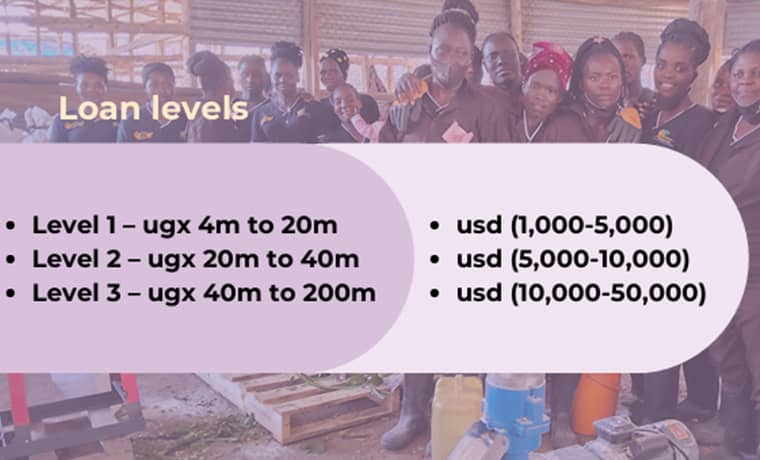
There are three levels for GROW project loans namely level one (4-20m), level two (20-40m) and level three (40-200m). Funded by World Bank and implemented by the GoU, GROW is a five-year project worth $217m, which comes to Shs850bn in Ugandan money.

It mainly targets to benefit women entrepreneurs who are already engaged in some form of economic activity and aren’t poor enough to qualify under PDM. There is also emphasis on supporting female refugees and other women entrepreneurs in refugee-hosting districts. At least 5% of the money and all the other opportunities deriving from GROW are preserved for female refugees and women in refugee-hosting districts.

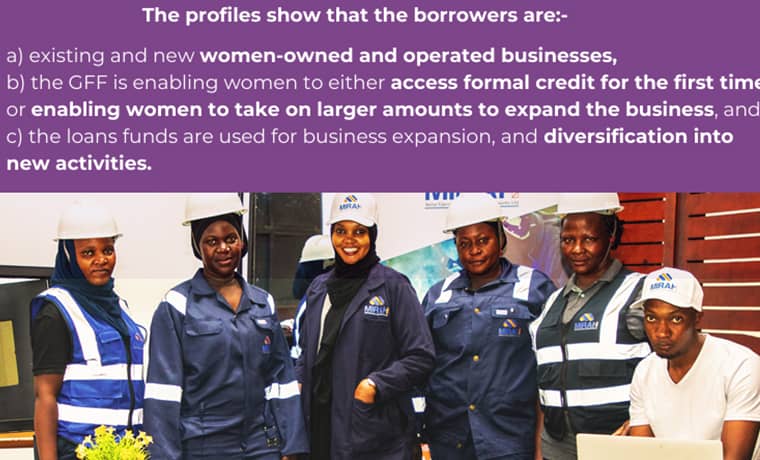
Both already existing and newly-incorporated women-owned business enterprises are eligible to benefit. Some of the women enterprises had been existing but without ever engaging with or accessing formal credit from financial institutions.

Through GROW project, such female entrepreneurs are enabled access to formal credit for the first time, which amplifies the Museveni government policy of deepening financial inclusion. Beneficiaries are also enabled to access larger amounts of credit to facilitate expansion and diversification of their already existing business enterprises.

PROFILING THE IMPACTED BENEFICIARIES:

As we illustrate in the following reporting, several individual women entrepreneurs have already been impacted and have been able to expand and diversify their businesses-courtesy of the GROW project loans. Beneficiaries are mainly from Greater Kampala Metropolitan Area and other regions of Uganda like Greater Masaka, Acholi, Lango, Busoga and Ankole etc.

The disbursement of the funds, which must be utilized within the designated period of five years, is being effected by the six Participating Financial Institutions (or banks) which were selected through a very competitive process. They include Centenary, Finance Trust Bank, Post Bank, Equity Bank and Stanbic.

Besides Pride Microfinance, Opportunity Bank and a few selected SACCOs (like UGAFODE, CBS PEWOSA etc) whose inclusion the President directed not very long ago, these six PFIs are mandated with operationalising the GROW Financing Facility (GFF) out of which all these project loans continue being disbursed.

From the reviewed literature, it’s clear that the GROW project overall objective is to increase access to entrepreneurial services that can enable women entrepreneurs grow, expand and diversify their business enterprises.

RELEVANT STATISTICS:

On average, 40% of the beneficiaries of the GROW project loans are first time borrowers; with 62% of the borrowers being married people compared to 30% who are single mothers and 4% who are widowed or divorced.

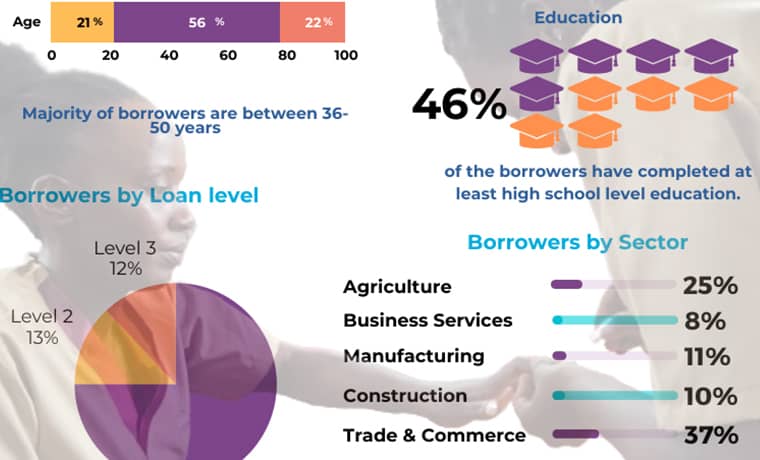
The other interesting demography that merits being noted is that majority of the borrowers (actually 56%) are aged between 36 and 50 years. 21% are aged 18-35, and 22% are aged 50-75 years. And as of last December, for education level, 46% of the borrowers had at least completed S6/UACE.

Looking at sectors, as of last December, 25% of the beneficiaries who borrowed and took out the money were in agriculture-related business enterprises, 8% in business services, 11% in manufacturing, 10% in construction, and 37% in trade & commerce.

Level one borrowers (taking out between Shs4m and Shs20m) are the majority, accounting for 75% of the monies disbursed as of last December. Level two borrowers (20-40m) accounted for 13% and level three (40-200m) accounted for 12%.

WHO TOOK OUT WHAT?

From the social services the sector, the GROW project beneficiaries’ story is illustrated as follows:

From Wakiso in the Greater Kampala Metropolitan Area (GKMA) is vocational training school owner Annet, who has been in the training & skilling business for now 15 years. Employing 25 other people besides herself, Annet has deals to train young women imparting on them skills to produce or make soap, bleach, shampoo and to also engage in industrial scale knitting for sweaters.

Currently, this GROW project beneficiary has a contract to skill 682 girls under the Makerere-based Infectious Diseases Institute (IDI)-funded “Dreams Project.” From the GROW project, Annet is grateful to have received an easily repayable loan of Shs75m payable within a period of 2 years and just 10% interest.

The already well-established entrepreneur says that she used the money from GROW to purchase of bar soap-making equipment, which was all she needed at that point in time to strengthen her business operations.

She used a land sale agreement and two guarantors as collateral to secure her GROW project loan. Annet, who already was a customer with Post Bank, is nevertheless thankful to the President for the GROW project initiative.

Innocent, a medical practitioner operating in the same Greater Kampala area specifically under Wakiso district, is another GROW project beneficiary who is grateful to the GoU and its and partners chiefly the World Bank.

The medical professional, who took out Shs20m from GROW, has since the year 2007 been operating two private health facilities in form of clinics. One is located in Bulaga-Nakabugo village in Wakiso district along Mityana Road and another one at Bwaise in Kampala City. She employs four female medical personnel, and also runs a private school as an additional source of income.

Equity has always been her bank and she has ever taken out loans before. From GROW, she was advanced a loan of Shs20m, contrary to the Shs50m she had initially applied and asked for.

She says she is now proud to have productively used the Shs20m loan to replenish and expand her clinics business. One guarantor and a land title was all she used as collateral to secure her GROW project loan.

THE F&B SECTOR:

Yet that isn’t all. The GoU’s GROW project has also positively impacted female entrepreneurs operating within the food & beverages sub sector. One of the beneficiaries is Hadija, a business lady who runs a lucrative restaurant & outside catering business in Nakasero, Kampala.

She started small by vending tea and she says she has been at it for now 30 years. She confesses that she has always operated on loans, making it clear that the GROW project’s isn’t the first loan she has thrived on.

She employees 10 young women to whom she pays a daily allowance. These help with moving around taking orders and delivering food to customers who are scattered all-over the Nakasero market neighbourhood.

A long-term customer of Equity Bank, Hadija says she is proud to have related with and maintained one same loans officer who has seen and supported her grow from the very small tea vending business she started out with. She used to borrow from an MDI before switching to Equity Bank.

She is grateful that under the GROW project arrangement, she was allowed to borrow Shs20m at interest of 10% and with a repayment period of 18 months. She found this to be cheaper and more patient capital than what she had all along been exposed to.

With the Shs20m, she says, she has been able to purchase equipment which she badly needed to add value, modernise and expand her outside catering business. Her residential property and restaurant served as collateral for the loan, besides the two guarantors who co-signed and endorsed onto the loan documents.

Ice cream maker Dorothy of Kawempe Kampala is another jubilant beneficiary of the GROW project loan product. The self-employed lady has been into the business of making/producing juice, ice cops, ice cream and ice cream cones for some good time. And speaking specifically she says this has been her thing for the last three years.

She employees 9 fellow young ladies as temporary workers whose pay is allowance-based. Being a first-time borrower, the DFCU bank customer took out a loan of Shs12m from GROW and was allowed a repayment period of 1 year.

She says she used the money to purchase value addition machinery, which she badly needed for her ice cream business and to also upgrade to 3-phase electricity supply. For collateral, she gave rental property which is in the names of her husband as the registered owner. Her husband also co-signed onto the loan as a guarantor.

Edith, a restaurant business owner from Mbarara City, is grateful for the Shs5m loan she received from GROW project funds. What she started as a small tea vending business in the year 2021 has since grown into a viable restaurant business.

She also offers outside catering and ushering services on top of preparing tea and juice for sale. She employs six workers who help her in running her rapidly-growing food & beverages business.

She is a customer of Centenary Bank where she had her bank account long before getting involved in the GROW project business. She was given a whole year within which to pay back the Shs5m.

She says the Shs5m enabled her to purchase value addition equipment including a juice dispenser, sauce pans, tea bowls and other utensils at the time she needed them most to be able to modernize and beautify her business operations. For collateral, she used her land title valued at Shs60m plus her husband who signed off as the guarantor of the loan.

Gulu City’s Sanyu is another GROW project beneficiary under the Food & Beverages sub sector. She first got into the restaurant business 8 years ago in Kampala from where she relocated the moment she established that Gulu was also becoming an equally busy Ugandan City.

Currently employing 35 workers, Sanyu was given a loan of Shs70m under the GROW project arrangement. She partly used the money to purchase and install furniture to enlarge the sitting capacity of her restaurant in Gulu City and buy other equipment besides diversifying her business foot print into offering accommodation services whereby she these days owns and operates a high-end guest house in Gulu town.

Besides being grateful to the GoU for the GROW project initiative, Ms Sanyu is convinced that the viability of all this investment and risk she took will gradually become clear and manifest for everyone to see and appreciate, as the profitability of her restaurant and guest house business grows.

Mbarara City’s Ms Nuriyat is another GROW project beneficiary. The female entrepreneur, who has owned and operated an auto (spare) parts business in Mbarara City for the last 10 years along Victor Bwana Road, is grateful for the Shs20m that was lent to her and thereby enabling her to remain viable and competitive in this otherwise male-dominated spare parts business arena.

Besides restocking and expanding her auto parts shop by having more stuff so that she reaches more customers, Nuriyat has also since relocated to take up bigger operational space, besides expanding into chicken roasting business, along Mahembe G’ente High Street where she currently has two stalls.

She has been a borrower and customer for Centenary Bank for the last 17 years, which is why there is certainty that repaying the Shs20m lent to her under GROW won’t be a challenge, moreover at 10% interest and in the repayment period of 18 months which she was given.

For collateral, Nuriyat (who continues to be celebrated for effectively and profitably breaking into such a male-dominated field) provided her rental property in the Rwobuyenje neighbourhood of Mbarara besides her husband and sister who signed off as guarantors for the loan.

ALICE’S 200M LOAN:

Yet that isn’t all about GROW project beneficiaries. For Alice, the Bukedi Tororo Municipality-based general merchandizer, wholesaler and construction dealer, the GoU and its partners basically the World Bank deserve all the praises in the world for having come up with the game-changing intervention called GROW.

Alice says she has been an effective business entrepreneur doing her business for the last 25 years and employs four people at her business premises in Tororo Municipality. The four work in her wholesale shop and another 20 workers in her construction business.

She has been a long-term customer and borrower for Centenary Bank, which raised her business pedigree and suitability as such a credit-worthy person, to the level that there was no hesitation lending to her Shs200m under the GROW project arrangement. She remains eternally grateful for the affordable interest and the two-year repayment period she was given under GROW.

She says she used the Shs200m to expand her general merchandise shop and to also replenish her construction business at the time this was very much necessary in especially the post-COVID period. The very experienced female entrepreneur, who used her land title for collateral, is optimistic that GROW’s Shs200m will result into her business expansion and growth in profitability too.

Here’s How Gov’t of Uganda Has Impacted Women Through GROW Project Loans- (Beneficiaries’ Profiles)

0

Through the PSFU-implemented GROW project (which in full is Generating Growth Opportunities & Productivity for Women Enterprises), the government of Uganda, with support of the World Bank, continues to support women-owned/operated business enterprises to grow, expand and even diversify into new areas.

Every woman-owned/operated business is eligible to (at the interest of just 10% per annum) borrow up to between Shs4m and Shs200m. Even co-owned businesses, in which women own or control up to 51% shareholding, qualify to borrow money and receive other forms of support like training, skilling and certification under the GROW project.

There are three levels for GROW project loans namely level one (4-20m), level two (20-40m) and level three (40-200m). Funded by World Bank and implemented by the GoU, GROW is a five-year project worth $217m, which comes to Shs850bn in Ugandan money.

It mainly targets to benefit women entrepreneurs who are already engaged in some form of economic activity and aren’t poor enough to qualify under PDM. There is also emphasis on supporting female refugees and other women entrepreneurs in refugee-hosting districts. At least 5% of the money and all the other opportunities deriving from GROW are preserved for female refugees and women in refugee-hosting districts.

Both already existing and newly-incorporated women-owned business enterprises are eligible to benefit. Some of the women enterprises had been existing but without ever engaging with or accessing formal credit from financial institutions.

Through GROW project, such female entrepreneurs are enabled access to formal credit for the first time, which amplifies the government of Uganda’s policy of deepening financial inclusion. Beneficiaries are also enabled to access larger amounts of credit to facilitate expansion and diversification of their already existing business enterprises.

PROFILING THE IMPACTED BENEFICIARIES

As we illustrate in the following reporting, several individual women entrepreneurs have already been impacted and have been able to expand and diversify their businesses-courtesy of the GROW project loans. Beneficiaries are mainly from Greater Kampala Metropolitan Area and other regions of Uganda like Greater Masaka, Acholi, Lango, Busoga and Ankole etc.

The disbursement of the funds, which must be utilized within the designated period of five years, is being effected by the six Participating Financial Institutions (or banks) which were selected through a very competitive process. They include Centenary, Finance Trust Bank, Post Bank, Equity Bank and Stanbic.

Besides Pride Microfinance, Opportunity Bank and a few selected SACCOs (like UGAFODE, CBS PEWOSA etc) whose inclusion the President directed not very long ago, these six PFIs are mandated with operationalizing the GROW Financing Facility (GFF) out of which all these project loans continue being disbursed.

From the reviewed literature, it’s clear that the GROW project overall objective is to increase access to entrepreneurial services that can enable women entrepreneurs grow, expand and diversify their business enterprises.

INTRIGUING STATISTICS:

On average, 40% of the beneficiaries of the GROW project loans are first time borrowers; with 62% of the borrowers being married people compared to 30% who are single mothers and 4% who are widowed or divorced.

The other interesting demography that merits being noted is that majority of the borrowers (actually 56%) are aged between 36 and 50 years. 21% are aged 18-35, and 22% are aged 50-75 years. And as of last December, for education level, 46% of the borrowers had at least completed S6/UACE.

Looking at sectors, as of last December, 25% of the beneficiaries who borrowed and took out the money were in agriculture-related business enterprises, 8% in business services, 11% in manufacturing, 10% in construction, and 37% in trade & commerce.

Level one borrowers (taking out between Shs4m and Shs20m) are the majority, accounting for 75% of the monies disbursed as of last December. Level two borrowers (20-40m) accounted for 13% and level three (40-200m) accounted for 12%.

WHO TOOK OUT WHAT?

Under agriculture (comprising of crops, livestock & poultry), some of the GROW project loans beneficiaries include Sarah from Masaka. A poultry farmer for now five years, Sarah had all along been a customer of Finance Trust Bank but had never engaged with institutionalized formal borrowing.

Leveraging the GROW Financing Facility (GFF), Sarah took out a loan of Shs10m with a repayment period of 1.5 years (18 months) at the interest rate of 10%. She says she utilized the money by building new shelter for her chicken. She also purchased 800 additional birds on top of buying vaccines and stocking more chicken feeds.

She is optimistic that this GROW-enabled recapitalization will double her monthly income to Shs3m. The loan was secured using collateral she jointly owns with her husband. She also had two guarantors of the loan.

THE OTHER BENEFICIARIES:

Using her Namiro Wakiso plot of land as collateral, Christine from Greater Kampala took out a loan of Shs10m to replenish her poultry feeds-making business, which has been a going concern since 2019 when she first founded it. She says she has organically been growing her business as opposed to rushing.

Lack of affordable credit had slowed her progress but with the GROW loan of Shs10m, she has been able to expand her poultry feeds production business by purchasing additional and more sophisticated feeds mixing machines. She is optimistic that her business is going to spectacularly grow to levels she had never imagined.

She has a whole year to repay GROW’s Shs10m with an interest of just 10% compared to commercial banks whose interest averages 20% and more. She is a customer of Equity Bank but always feared taking out bank loans because of the prohibitively very high interest charged.

Prior to the GROW loan, she had previously taken out a loan of just Shs1m from her bank, and not more because she was intimidated by the interest and repayment period, which would be unreasonably short.

Masaka piggery and coffee farmer Rose is another beneficiary of the GROW project loans under the agriculture category. She is a Centenary Bank customer and has been a coffee and pigs’ farmer since the year 2019. She employs seven employees on permanent basis and always hires a few casual laborers to boost her labor force whenever it’s the rainy season.

Using the Shs20m loan received under GROW, Rose has been able to purchase an irrigation scheme unit, fertilizers and insecticides to boost production capabilities and productivity at her coffee farm in Masaka.

The female entrepreneur, who previously had ever taken out a Shs10m loan from Centenary Bank, presented her coffee farm land title as collateral to secure the Shs20m loan from GROW project.

Her brother, who is a co-owner of the land, wrote for her a recommendation letter indicating his consent to their jointly-owned land being used as collateral. She also had two other guarantors signing up to strengthen her loan application.

Mbarara’s Maureen, a dairy farmer, is full of praises for GROW project for having enabled her to remain strongly competitive in the dairy farming arena, which she says has always been a male-dominated business. She has been at it for now 12 years, having started out with four bulls and three cows.

Her resilience has gradually paid off because, as of today, her herd has grown into something very formidable and dairy farming has now become the sustainable source of income for her family.

A pre-existing customer and borrower with Centenary Bank, Maureen was given a loan of Shs10m from the GROW Financing Facility and was given a whole two years within which to pay back. She invested GROW’s Shs10m to increase on her dairy farm’s productivity by purchasing two high-yielding dairy cows.

She is optimistic that in the long term, this will increase her overall income as a dairy farmer. For collateral, she used her cattle and the sales agreement for her land.

She is grateful to the GoU and its partner, the World Bank, for coming up with GROW project in order to emancipate women entrepreneurs.

Versatile entrepreneur Charity of Masaka is another GROW project beneficiary. Since the year 2020, she has been into the broiler poultry business and employs one other person. With support from GROW, she has been able to diversify into commercial tailoring as an additional business activity.

The Post Bank customer had in the past ever taken out a loan of Shs15m and is grateful for the Shs10m loan that was given to her under the GROW project. She is super grateful for the interest of 10% and the repayment period of 1 year.

Besides diversification, Charity used some of the money from GROW to replenish and expand her poultry business and to also re-establish herself as a coffee farmer. For collateral or security for the loan, Charity gave in the sales agreement for the land on which she operates. The good thing was that the land isn’t co-owned, she owns it alone.

There is also Regina, a bananas, pigs and goats farmer in Masaka. She employs two other people, besides herself. The same female entrepreneur also previously owned a furniture shop, which she has since bequeathed and passed on for her children to manage in Kampala.

She is a customer of Centenary Bank from which she had previously contracted two loans-one of Shs9m and another of 20m.  She is grateful for the Shs10m that was lent to her from GROW. She utilized the Shs10m by investing in value addition to improve on the quality of banana growing at her farm in Masaka.

She used part of the money to purchase fertilizers and to also go into coffee farming by establishing a coffee farm. She is hopeful that within the 12 months repayment period for GROW project loan, she will have sustainably established herself as a more viable diversified farmer of both coffee and bananas than she has ever been.

She leveraged her kibanja sales agreement and two guarantors as collateral/security to secure her loan from GROW. She is grateful that the process wasn’t as stressful and as bureaucratic as she had previously encountered while trying to borrow from the bank whose other more conventional loan products tend to be more complicated.

What Exactly Has the GoU Been Seeking to Achieve for Women Through the World Bank-Funded GROW Project?

0

For these five years (2021-2026) of government, the government of Uganda’s focus has chiefly been economically transformation millions of Ugandan households through Parish Development Model (PDM), an intervention through which each of Uganda’s 10,717 parishes is given Shs100m per year.

The money is to be lent out to hitherto economically-deprived households whose members have to belong to a SACCO. The idea is to transition such hitherto excluded households from subsistence to the money economy. They have to be induced into producing and selling or spending and purchasing something.

CONTRASTING WITH GROW:

Whereas PDM is for the very poor, the GoU has within the same period improvised and come up with another intervention aimed at economically emancipating those who aren’t poor enough to qualify for PDM.

These are individual Ugandans or households which are already engaged in some form of trading economic activity but require a push through access to affordable credit to be able to capitalize and expand their businesses.

Chiefly targeted to benefit and economically emancipate women entrepreneurs, who require capitalization but can’t viably borrow from the commercial banks, the intervention is called GROW (which in full is Generating Growth Opportunities & Productivity for Women Enterprises). It has come to famously be known as GROW project.
Whereas priority is on women-owned enterprises, men too can benefit from GROW mainly in two ways. One is if they are co-owners in a business enterprise where not less than 51% of the shareholding or ownership is in the hands of a woman or women. Men can also benefit and be impacted under GROW if they happen to be employees in such business enterprises.

GROW is a five-year project (January 2023-December 2027) whose total worth is $217m, which comes to Shs850bn in Ugandan money. The cash is from World Bank to the GoU which is implementing the project through the Gender Ministry and Private Sector Foundation Uganda (PSFU), which is implementing the part that was ordinarily meant for the Ministry of Finance.

The GROW project intervention seeks to help realize the GoU long term development objectives enshrined under the NDP-namely emancipating women into participation in leadership and economic decision making, while at the same time combating gender inequality. This inequality has historically disadvantaged women.

The Uganda government is leveraging the GROW project to help women grow and expand their businesses through increased access to affordable credit, training, skills development and other business development-related services.

The idea is to impact women-owned or controlled business enterprises in 136 districts, 11 Cities and 13 refugee-hosting districts. The project is designed in such a way that at least 5% of the financial assistance is ring-fenced to benefit refugees. A review of the PSFU-spearheaded GROW project aspects reveals that primary beneficiaries have to be women entrepreneurs, female refugees and Ugandan women in refugee-hosting districts.

It’s ideal that female entrepreneurs benefiting from GROW project funds are invested in women-dominated sectors like tourism, hospitality, catering, trade, education, health, textiles, garments, leather products and agriculture. The GoU also desires to see the GROW project funds used to, in a special way, emancipate women entrepreneurs seeking to transition or break into traditionally male-dominated sectors or fields like manufacturing, construction, the ICTs plus oil & gas

GROW project funds or support should enable women-owned business enterprises that are micro to grow into small size business enterprises and those that are small to grow into medium size. It’s also about increasing productivity under the female-owned business enterprises.

Within the five years of the project, the idea is to support 35,000 micros and 4,000 small ones to grow and expand into something bigger. Visionary as always, the GoU, led by President Museveni, hopes to create 295,000 direct jobs and 1,180,000 indirect ones during the PSFU-driven GROW project’s five years of existence.

A total of 60,000 women-owned business enterprises is to be impacted in the five years of GROW project. 5% or 3,000 of these have to be refugee-owned businesses. A total of 280,000 individual women entrepreneurs is targeted to be directly impacted or covered by GROW project funds (42,000 of whom have to be refugees and another 14,000 women from refugee-hosting districts/cities).

The GoU is targeting to impact a total of 1.6m indirect beneficiaries within the 5 years. These can be male employees or co-owners, male spousal partners, community members, household members and the resultant job creation beneficiaries.

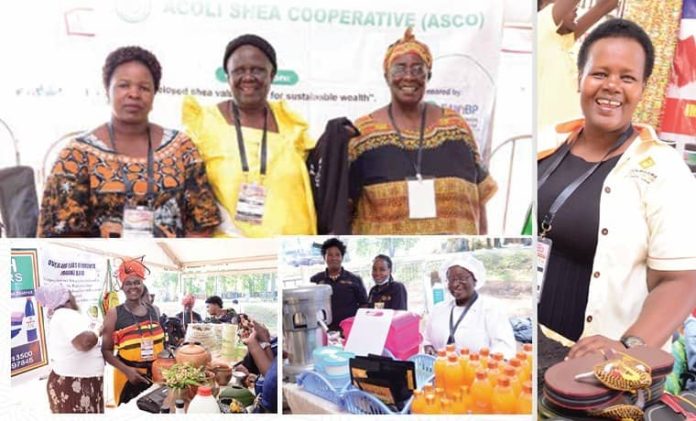
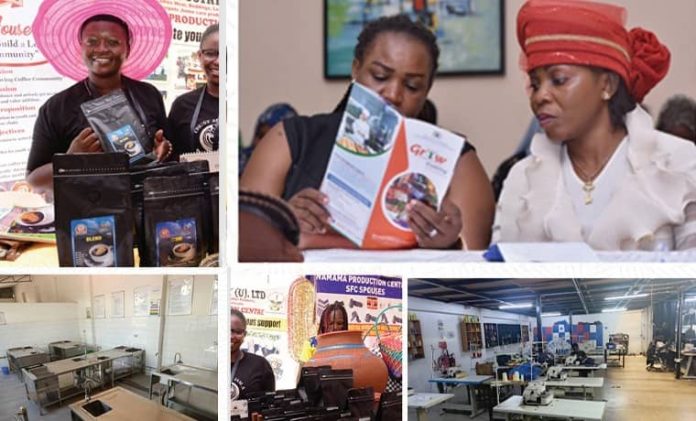
Besides the access to affordable credit-related support, GROW project also seeks to amplify women business enterprises through availing them with business/trading management skills and expertise-all at no cost. Offered at contracted training institutions like Mubs and Enterprise Uganda etc, GROW project beneficiaries are also facilitated to undergo trading sector-specific skills acquisition-all at no cost.

At the end of such training and skilling, the beneficiaries are also certified, which speaks to the certification component of the project. Besides training and support on the documentation and record keeping, beneficiaries are also sensitized about sustainable loan products accessible or obtainable at the six GROW-Participating Financial Institutions (PFIs). These include the following banks: Centenary, Equity, DFCU, Finance Trust, Stanbic and Post Bank.

Through the GROW project implementation, the GoU has also been enabled to generate data-backed evidence relating to the number of women entrepreneurs out there who qualify for and are in need of such support and emancipation. Through the same GROW project, the GoU has also been able to support hundreds of women to deepen their hands-on skilling through industry-specific placements and apprenticeship programs.

Here is a simple illustration: a young lady desiring to venture into restaurant business can be placed to work with a big hotel for say six months to become hands-on and learn best industry practices, while earning a GROW-offered monthly allowance of Shs1m per month. At the end of the 6 months apprenticeship period, that future restaurant owner (if serious) will have saved that Shs6m which she can use to boost the start of her own restaurant business.

There are also grant-earning opportunities under GROW for women entrepreneurs who participate in say business proposal-writing competitions and emerge victorious.

Under GROW, women are also exposed to mindset change clubs which in the end facilitate or enable peer learning. There is also a component on accelerating access to common user facilities, multi-purpose services and shared production facilities plus other gender-sensitive workplace infrastructure; all of which combine to enhance productivity among the project-targeted female entrepreneurs.

LEVELS OF BORROWING:

There are three levels of borrowing namely level one, which caters for female entrepreneurs eligible to borrow between Shs4m and Shs20m. There is also level two which caters for borrowers of Shs20-40m and finally level three, catering for borrowers of Shs40-200m.

Whereas the launching of the project had been done earlier on by the President of Uganda himself during the International Women’s Day celebrations, the actual disbursement of the affordable loans under the GROW project began at the beginning of this year 2025. The GoU disburses the cash to borrowers, who have been assessed to be eligible, through the six Participating Financial Institutions (Centenary, DFCU, Finance Trust, Equity, Stanbic and Post Bank).

WOMEN ENTREPRENEURS GETTING THE MONEY:

Available government literature that has been reviewed by this news publication shows that as of July 2025, a total of Shs120bn had been approved through the GoU approval processes to be disbursed or lent out to eligible borrowers through the 6 PFIs, which initially have a two-year project implementation agreement with the GoU.

It was targeted that a total of 4,007 women-owned/controlled business enterprises would be impacted or given the money within the first one year by the PFIs. 458 of these had to be refugees or women in RHDs. As of June 2025, a total of 2,958 GROW loans had been given out. Of these, 75% or 2,120 went to level one borrowers (falling under between Shs4m and Shs20m). 441 (14.9%) were level two (20-40m) and another 397 (13.4%) were level three (40-200m).

Banks or PFIs performed as follows: Centenary gave out 1,097 loans as at June 2025; DFCU 219, Equity Bank 167, Finance Trust 753, Stanbic 13 and Post Bank 709. As of June, a total of 6 borrowers had done so well with the borrowed money (taken out at very affordable interest of 10%) that they qualified for second loan within just 6 months of taking out the first loan under the PSFU-driven aspects of GROW project.

Talking about districts, the GROW project intervention was present and impacting women entrepreneurs and the targeted business enterprises within 113 districts and 8 cities as of June 2025.

And gratefully, the other remarkable thing evidencing the extent to which GROW project is doing well relates to the fact that, as of June 2025, successful borrowers had managed to pay back a total of Shs26bn (constituting 21.6%) and thereby enabling the Trust Towers-based Secretariat (closely working with the 6 PFIs) to have the cash available to support another subsequent set of borrowers.

In fact, the reviewed literature shows that of the Shs73.3bn that had been disbursed or lent out as at June 2025, Shs26bn was from GROW project repayments. All said and done, loans packaged/available under level one (4m-20m) had so far been the best performing and most impactful as of June.

Whereas the Secretariat’s target was to have given out 1,997 level one loans (as of June), 2,120 had been disbursed (representing an over performance at 106.2%). 441 or 38.7% had been given out under level 2 (20-40m) against the set target of 1,139 loans. Under level 3, of the targeted 431, a total of 397 (or 92%) had been disbursed as of June 2025. Overall, 2,968 (74%) loans disbursement rate was achieved under the three levels, against the set target of 4,007 loans.

The other remarkable impact is that GROW project has helped accelerate the government’s long-stated objective of deepening financial inclusion. This is illustrated by the fact that whereas 98% of the borrowers (overall) were individual women entrepreneurs, 28% of them were new borrowers, coming to the bank and borrowing for the first time. This simply means these were people becoming bank customers for the first time in order to qualify to access GROW project loans through any of the 6 PFIs.

The other interesting statistics is that 42.2% of the borrowers were in trading activities, against the 27.9% who borrowed to boost their enterprises in agriculture and agro-processing; 9.2% in construction & engineering and finally 8.5% in business and financial services.

The refugees are being impacted as well because of the 2,958 loans that were given out overall, 6 of them went to refugees (as of June 2025) and Shs38m was involved. And it was disbursed through Centenary bank. 5 of these refugee borrowers were urban refugees from Kampala and the other remaining one was from Koboko and took out Shs20m. All the refugee borrowers were under level one (4-20m).

In the RHDs, the number of loans issued to non-refugee business entrepreneurs stood at 159 as of June. The beneficiaries were from the 9 refugee hosting districts with exception of Madi-Okollo, Obongi and Terego.

The GROW project has also greatly helped to incentivize the women with disabilities (female PWDs) to get involved into the money economy and the financial inclusion space in order to get emancipated into more viable business entrepreneurs. This is so because as of June, a total of 6 female PWDs-owned businesses had received the GROW project loans (6 through Centenary Bank, 2 Finance Trust and one Post Bank). All of them borrowed under level one (4-20m).

When it comes to the minority communities, a total of 8 GROW project loans had as of June been taken out by the Benet woman through Post Bank, representing only 0.4% of the total of 2,958 loans that had been disbursed thus far as of that time. The other remarkable thing observable from the reviewed literature is that 55% of the PSFU-enabled GROW loans borrowers were (as of June 2025) aged between 31 and 55 years. And more than 55% of these were married people.

WHAT HAS BEEN REGRETTABLE SO FAR:

In the very first months of rolling out the Shs120bn which the GoU had approved for disbursement, up to 70% of the borrowers had been from the Greater Kampala Metropolitan Area, something which the President of Uganda didn’t like.

For their own business convenience, the six PFIs or banks had preferred lending to Kampala-based borrowers because they were found to have higher levels of financial literacy and therefore easier to recover the disbursed monies from.

A displeased President Museveni protested this and guided in one of the Cabinet meetings where the GROW project implementation was discussed. His guidance was that disbursement must deliberately be decentralized so that his beloved GROW project impacts people in different parts of the country, and not just Kampala.

Always there for the muntu wa wansi (the ordinary person), the President guided on how this identified mischief could be cured. He told Cabinet that he knows that some of those very hardworking and modestly-successful female entrepreneurs are easily intimidated by the many bureaucratic procedures and requirements the banks put on borrowers. To him, this is why banks had found it convenient and viable to concentrate much of the lending in the Kampala area.

He directed that the line Ministers work with the GROW project Secretariat to make sure that SACCOs, which tend to be more friendly and less-intimidating, are used or engaged to effect decentralisation of the GROW project loans disbursement. That’s how reputable World Bank-acceptable SACCOs like CBS’ PEWOSA, UGAFODE and others have since been engaged to come on board to improve coverage in non-Kampala areas to which the 6 PFIs/banks would ordinarily not be attracted because of business viability concerns.

The President guided that such SACCOs eliminate the requirement for collateral when giving out the GROW loans and instead leverage the arrangement of group guarantees. One’s membership to the SACCO should be sufficient guarantee for the loan repayment. The big man from Rwakitura decreed that this arrangement should be applicable to all GROW project loans where an individual borrower is taking not more than Shs30m.

The GoU rightly believes that involving the SACCOs and relaxing on the collateral security-related requirements will increase coverage and enable the GoU have the GROW intervention reach the targeted beneficiaries in many more districts and cities of Uganda instead of ending up being a Kampala-based thing.

At the instigation of the President, institutions like Pride Microfinance and Opportunity Bank too have had to be brought on board under the enlarged PFIs’ list. Any female Ugandan entrepreneur and therefore desirous to learn more about the GROW project loans is encouraged to either physically visit the PSFU/GROW project Secretariat at Trust Towers in Nakasero or directly reach out through the relevant toll-free line, which is 0800307777.